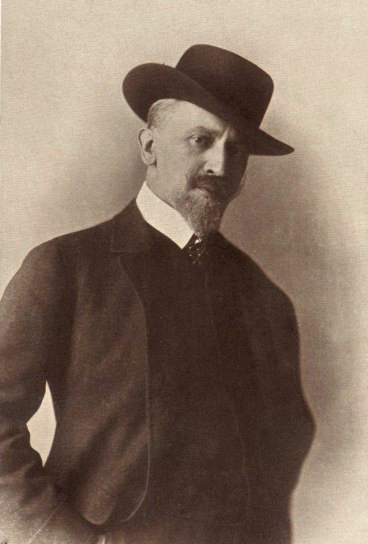
Why Franciszek Żmurko matters
Franciszek Zmurko is a documented, museum-collected Polish realist painter of the late 19th century, best known for polished, sensuous portraits and historical or mythological female subjects. He is not a blue-chip auction name: his market is small, geographically concentrated in Poland, and thinly traded. For a collector, he matters as a case study in academic-period Polish realism with real institutional grounding but a market that requires careful, source-by-source verification rather than reliance on any single price database.
- Born
- 1859-07-18, Lviv, Austrian Empire (present-day Ukraine)
- Nationality
- Polish
- Media
- Painting
- Movement
- Realism, Academic painting
- Education
- Early drawing lessons under Franciszek Tepa in his hometown; Academy of Fine Arts, Krakow, as an adolescent, under Jan Matejko; Vienna Academy, 1877 (brief); further study under Alexander von Wagner in Munich, late 1870s
- Signature motifs
- Female portraiture, Historical and mythological female subjects
By the numbers
- 1859 to 1910Life datesBorn Lviv, died Warsaw
- Not confirmedAuction recordArtprice cites up to USD 251,296 for paintings (category figure); FindArtInfo lists USD 64,725 across 20 tracked lots. No single lot with title, house, and date is confirmed.
- National Museum in WarsawMuseum holdingsHolds Morning Star (1898), inventory MP 4620 MNW
Selected works
Click any work to view it full screen.
Biography
Franciszek Zmurko was born on 18 July 1859 in Lviv (then Lemberg, in the Austrian Empire; present-day Ukraine). He took his first drawing lessons in his hometown from the painter and ethnographer Franciszek Tepa, who advised him to pursue formal academic training. As an adolescent he enrolled at the Academy of Fine Arts in Krakow, where he studied under Jan Matejko. In 1877 he moved to Vienna and was accepted at the Vienna Academy, but left soon after for Munich, where he studied under the history painter Alexander von Wagner. He returned to Krakow in 1880 and settled permanently in Warsaw in 1882, remaining there for the rest of his career.
Zmurko built a reputation for elegant, often sensuous depictions of women, exemplified by works such as Hetaera (1906), alongside historical subjects and society portraiture. Specific awards, exhibition venues, and a detailed exhibition history for individual paintings are not documented in the sources available for this profile.
Franciszek Zmurko died on 9 October 1910 in Warsaw, at age 51.
Critical reception
No verbatim, attributable critical commentary from named critics in major outlets has surfaced in current research. What is documented is institutional and popular recognition rather than modern art-historical debate: ongoing presence in Polish national museum collections and a lasting popular identity, reflected in Polish-language press coverage (Kurier Galicyjski) describing him informally as a painter associated with elegant depictions of women. His reputation rests more on this consistent, if lightly documented, recognition than on a settled critical consensus.
Market
Zmurko's secondary market is small, irregular, and inconsistently documented across price databases. Figures disagree sharply between sources: Artprice cites a category-level high of up to USD 251,296 for paintings, while FindArtInfo lists an auction record of roughly USD 64,725 across 20 tracked lots with two verified signatures. Neither source ties its figure to a specific work title, sale date, or auction house that can be independently confirmed, so no single auction record can be stated with confidence here. LotSearch records 21 sold lots for the artist, most of them, 18 pieces, at the Polish house Agra-Art, pointing to a niche market concentrated in Poland with infrequent and unevenly documented sales.
Top auction results
| Work | Price | Sale |
|---|---|---|
| No single confirmed record lot; auction databases disagree (see Market section) |
Museum collections
- National Museum in Warsaw
Authentication and provenance
No catalogue raisonne.
No catalogue raisonne has been published and no estate or foundation authentication body exists. Works are verified through auction-house cataloguing, provenance research, and inclusion in Polish national museum inventories.
Primary reference: https://en.wikipedia.org/wiki/Franciszek_%C5%BBmurko
What collectors should know
Zmurko has no published catalogue raisonne and no gallery or estate representation; his work is handled entirely through auction houses and dealers rather than any formal representing entity. Verification should rely on provenance, auction-house cataloguing, and cross-checking against museum inventories such as the National Museum in Warsaw, which holds an identified work. Because his name appears in the market under two spellings, Zmurko and the Polish form Żmurko, collectors and researchers should search both when checking provenance or prior sale history. Given how sharply auction price databases disagree on his top result, any single figure, including those cited above, should be checked directly against the originating auction house before being relied upon as a benchmark.
Further reading and resources
Data current as of 2026-07-11.

