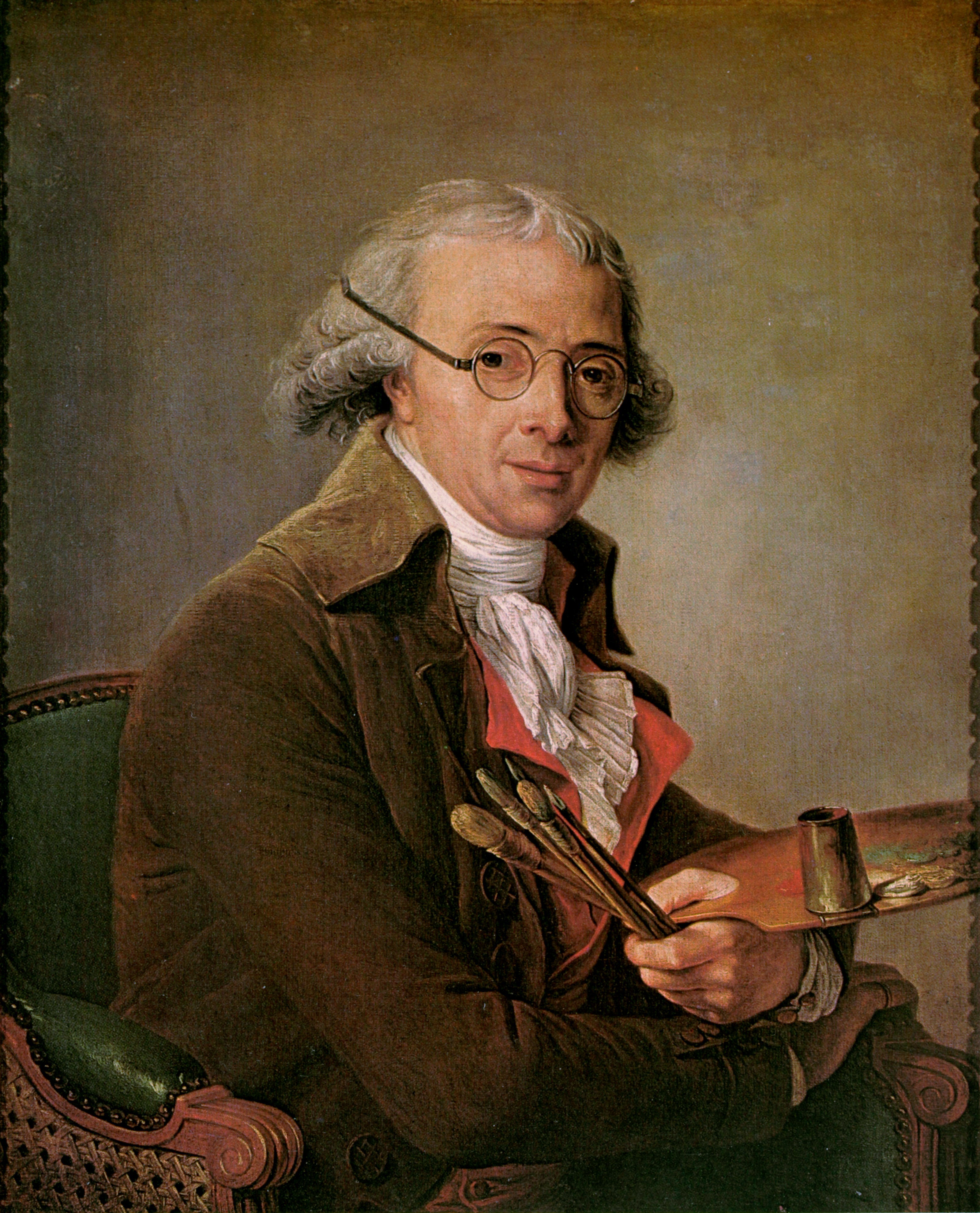
Why Francois-Andre Vincent matters
Francois-Andre Vincent was one of the leading history painters in France in the generation before the Revolution, a Prix de Rome laureate who was, for a time, considered a serious rival to Jacques-Louis David. His relevance today is chiefly art historical rather than commercial: most of his major paintings sit in national museum collections, and his auction market is thin, infrequent, and closely tied to museum grade provenance. For a collector, he represents the transitional moment between late Rococo elegance and Neoclassical discipline, and a case study in how a once prominent academic reputation can leave a surprisingly small public trading record.
- Born
- 1746-12-30, Paris, France
- Nationality
- French
- Media
- Painting, Drawing
- Movement
- Neoclassicism
- Education
- Studio of Joseph-Marie Vien, Paris, c. 1760; Academie Royale de Peinture et de Sculpture, Prix de Rome, 1768; Ecole Royale des Eleves Proteges, Paris, c. 1768 to 1771; Academie de France a Rome (pensionnaire), 1771 to 1775.
- Signature motifs
- History and mythological subjects, Portrait and figure drawings
- Representation
- Didier Aaron
By the numbers
- Estimate USD 400,000 to 600,000Auction highlightLa Jeune Napolitaine, Sotheby's New York, 26 January 2023; final realized price not publicly confirmed
- 1768Prix de RomeGermanicus Calming a Mutiny
- from 1791 or 1792Academie professorAcademie royale de peinture et de sculpture
- Old Master dealersMarketDidier Aaron and specialist Old Master galleries
Selected works
Click any work to view it full screen.
Biography
Francois-Andre Vincent was born in Paris on 30 December 1746, the son of Francois-Elie Vincent, a Genevan miniaturist. He trained first in his father's workshop and, around 1760, entered the studio of Joseph-Marie Vien, one of the formative figures of early French Neoclassicism. Vincent went on to study at the Academie Royale de Peinture et de Sculpture and, in 1768, won the Grand Prix, commonly called the Prix de Rome, for his history painting Germanicus Calming a Mutiny.
He spent roughly three years at the Ecole Royale des Eleves Proteges in Paris before leaving for Italy in 1771, where he lived for four years as a state funded pensionnaire at the Academie de France in Rome. He returned to Paris and was admitted to the Academie Royale in 1777 with his reception piece Saint Jerome, now held by the Musee Fabre in Montpellier, and was formally received as a full member in 1782.
In 1790 Vincent succeeded Charles-Nicolas Cochin as Keeper of the King's Drawings. He was elected professor at the Academie royale de peinture et de sculpture around 1791, and served as one of the commissioners overseeing the early national museum that would become the Louvre. In 1799 he married the painter Adelaide Labille-Guiard, who died in 1803. Francois-Andre Vincent died in Paris on 4 August 1816, at the age of sixty nine.
Critical reception
Modern scholarship treats Vincent as one of the most accomplished painters of the Neoclassical period in France. Museum literature, including material published by FRAME Museums, frames him explicitly as a peer and rival of Jacques-Louis David in the years before the Revolution, a reputation that has been restored to broader visibility through recent scholarly reassessment of his paintings and extensive graphic work after a long period in which David's reputation eclipsed his own. No verified verbatim assessment from a named contemporary critic in a major outlet could be confirmed for this profile, so none is quoted here.
Market
Vincent's public market is small and dominated by Old Master specialists rather than contemporary or postwar auction cycles. His most prominent recent public sale was La Jeune Napolitaine, a signed and dated 1774 painting, offered at Sotheby's New York on 26 January 2023 in a Master Paintings and Sculpture sale with a published estimate of USD 400,000 to 600,000, though the final realized price could not be confirmed from publicly available sources. Most of his recorded auction activity otherwise sits at far lower price points, reflecting a body of work that is largely absorbed into permanent museum collections rather than circulating privately. Active market access runs through Old Master dealers such as Didier Aaron, alongside specialist galleries that periodically offer his drawings and paintings.
Top auction results
| Work | Price | Sale |
|---|---|---|
| La Jeune Napolitaine (1774) | Estimate USD 400,000 to 600,000; final realized price not publicly confirmed | Sotheby's, New York, 2023-01-26 |
Museum collections
- Musee du Louvre, Paris
- Musee Fabre, Montpellier
- Metropolitan Museum of Art, New York
- National Gallery of Art, Washington, D.C.
- Albertina, Vienna
- Art Institute of Chicago
Awards and honors
- Prix de Rome (Grand Prix), Academie Royale de Peinture et de Sculpture, for Germanicus Calming a Mutiny (1768)
- Admitted to the Academie Royale with the reception piece Saint Jerome, now Musee Fabre, Montpellier (1777)
- Received (recu) as full member of the Academie Royale (1782)
- Keeper of the King's Drawings, succeeding Charles-Nicolas Cochin (1790)
- Elected professor at the Academie royale de peinture et de sculpture; sources vary between 1791 and 1792 (1791)
Authentication and provenance
No catalogue raisonne.
No published catalogue raisonne is confirmed for Vincent. Attribution and authentication rely on Academie records and museum and dealer scholarship.
Primary reference: https://en.wikipedia.org/wiki/Fran%C3%A7ois-Andr%C3%A9_Vincent
What collectors should know
There is no confirmed catalogue raisonne for Vincent, so attribution and authentication depend on Academie records and museum and dealer scholarship. His most visible recent auction moment is the 2023 Sotheby's sale of La Jeune Napolitaine, though the final price achieved was not confirmed in available sources, so any single result should be read cautiously given how few of his works come to market. Because major examples of his paintings and drawings are concentrated in institutions such as the Louvre, the Musee Fabre, the Metropolitan Museum of Art, and the National Gallery of Art, the available supply for private collectors is genuinely limited, and provenance tied to the artist's own academic career is the most important thing to verify before any purchase.
Further reading and resources
Data current as of 2026-07-11.

