Friedrich Pacher
Austrian (Tyrol; the area of his activity is now part of South Tyrol, Italy)
Panel painting · Mural painting (attributed)
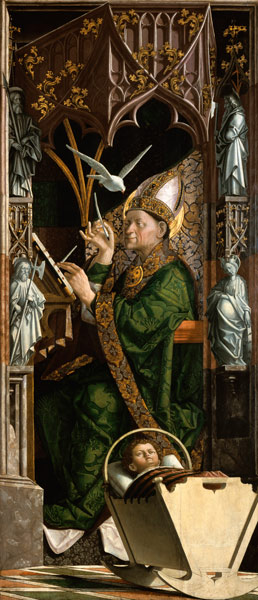
Why Friedrich Pacher matters
Friedrich Pacher is a documented figure in the workshop circle of Michael Pacher, one of the defining painters of the Late Gothic Alpine world, and he offers collectors a rare, carefully attributed entry point into that tradition. His surviving panels show a Tyrolean painter absorbing early Renaissance ideas from Andrea Mantegna and from the engraver known as Master E.S., while working inside a family and workshop system typical of the period. For collectors, he represents a thin but real market for pre-1500 Northern panel painting, where a documented but unconfirmed 2025 auction estimate has begun to draw attention to a name long overshadowed by his more famous workshop associate.
- Nationality
- Austrian (Tyrol; the area of his activity is now part of South Tyrol, Italy)
- Media
- Panel painting, Mural painting (attributed)
- Movement
- Late Gothic, Tyrolean workshop tradition
- Education
- No formal school or degree is documented. Trained in the workshop of Michael Pacher and first recorded as an independent master in Bruneck in 1474.
- Signature motifs
- Winged altarpieces, Saints and Passion narratives
By the numbers
- 1474 to 1508Documented activityFirst recorded as a master in Bruneck to the year of his death
- Neustift AbbeyConfirmed institutional holdingCatherine Altarpiece, 1483
- USD 150,000 to 250,0002025 auction estimateChristie's London, 5 February 2025; realized price not publicly confirmed
Selected works
Click any work to view it full screen.
Biography
No exact birth date for Friedrich Pacher is documented. Secondary reference databases, including Wikidata and PaintingsBefore1800, give a birth year of around 1435 and a birthplace of Neustift (present-day Novacella, South Tyrol), but more cautious scholarly sources, including the Web Gallery of Art and a review published by the Historians of Netherlandish Art, describe him only by his documented activity: he first appears as an independent master painter in Bruneck (South Tyrol) in 1474. Given the gap between these sources, his birth year and birthplace should be treated as unconfirmed.
Pacher trained inside the workshop of Michael Pacher, the better-known Tyrolean painter and sculptor. Art historians have long suspected, on stylistic and workshop grounds, that Friedrich was Michael's younger brother, but no documentary record proves the kinship, and the relationship is best described as a scholarly hypothesis rather than an established fact. Friedrich's own style shows the influence of Mantegna's Italian painting and of the graphic work of the engraver known as Master E.S., filtered through his training in Michael's atelier.
Working from Bruneck, Pacher produced the Catherine Altarpiece (Katharinen-Altar) of 1483, still held today at Neustift Abbey (Kloster Neustift, Abbazia di Novacella). He is also thought, though this remains debated, to have painted the outer wings of the St. Wolfgang Altarpiece in the parish church of St. Wolfgang im Salzkammergut, a work usually associated with Michael Pacher. Friedrich Pacher died in 1508. Some sources place his death in Bruneck, though the exact place is not consistently documented across the available literature and should be treated as a probable rather than certain detail.
Critical reception
Modern criticism of Friedrich Pacher is limited, and no verbatim quotation from a named critic in a major outlet could be confirmed for this profile. Scholarly literature, including a review of Old Master research published by the Historians of Netherlandish Art, treats him as a real but comparatively obscure workshop figure who collaborated with Michael Pacher on several projects, particularly mural work, rather than as an independent master with a settled critical reputation.
Market
Public auction databases, including Invaluable and MutualArt, record only a small number of lots attributed to Friedrich Pacher, and none of the realized prices for these lots could be confirmed in the sources reviewed. The most recent documented listing is a lot offered at Christie's London on 5 February 2025, carrying a pre-sale estimate of USD 150,000 to 250,000; the amount it actually sold for is not publicly available. Earlier listings include a Sotheby's lot on 4 December 2018 with an estimate of GBP 35,000 to 50,000 and an Auktionshaus Zeller lot on 15 April 2016 with no estimate stated in the sources consulted. Because no verified hammer price exists for any of these sales, no confirmed auction record can be stated for the artist at this time. There is no gallery or estate that currently represents Pacher or his body of work; as with most artists of his period, his paintings move between private collections, specialist Old Master auction houses, and church or monastic custodianship.
Museum collections
- Neustift Abbey (Kloster Neustift / Abbazia di Novacella), South Tyrol, home to the Catherine Altarpiece, 1483
- Parish Church of St. Wolfgang im Salzkammergut, Austria (disputed attribution, outer wings of the St. Wolfgang Altarpiece)
Authentication and provenance
No catalogue raisonne.
No catalogue raisonne exists for this artist. Attributions rest on connoisseurship and on documentary ties to Michael Pacher's Bruneck workshop, and some attributed works, including the outer wings of the St. Wolfgang Altarpiece, remain debated among specialists.
Primary reference: https://www.wga.hu/bio_m/p/pacher_f/biograph.html
What collectors should know
There is no catalogue raisonne for Friedrich Pacher, and attribution depends on connoisseurship and on the documentary record tying him to the Bruneck workshop, so provenance and expert opinion carry unusual weight. The market is thin and largely undocumented at the level of realized prices: public databases show only a handful of lots, including a Christie's London lot on 5 February 2025 estimated at USD 150,000 to 250,000, and no confirmed hammer price is available for any of them. Even basic biographical facts, including his birth year and exact place of death, remain unsettled in the literature. Several of his most important works, including the Catherine Altarpiece at Neustift Abbey and the disputed St. Wolfgang Altarpiece wings, sit in monastic or church custodianship rather than in museums or private hands, which limits future supply and adds to the scarcity of anything that does reach the market.
Further reading and resources
- Friedrich Pacher, biographyWeb Gallery of Art
- Friedrich Pacher (Q2696849)Wikidata
- Der Katharinen-Altar (1483) von Friedrich PacherKloster Neustift / Abbazia di Novacella
- Michael PacherWikipedia (context on the workshop and the disputed family connection)
- Friedrich Pacher, sold at auction pricesInvaluable
Data current as of 2026-07-11.

