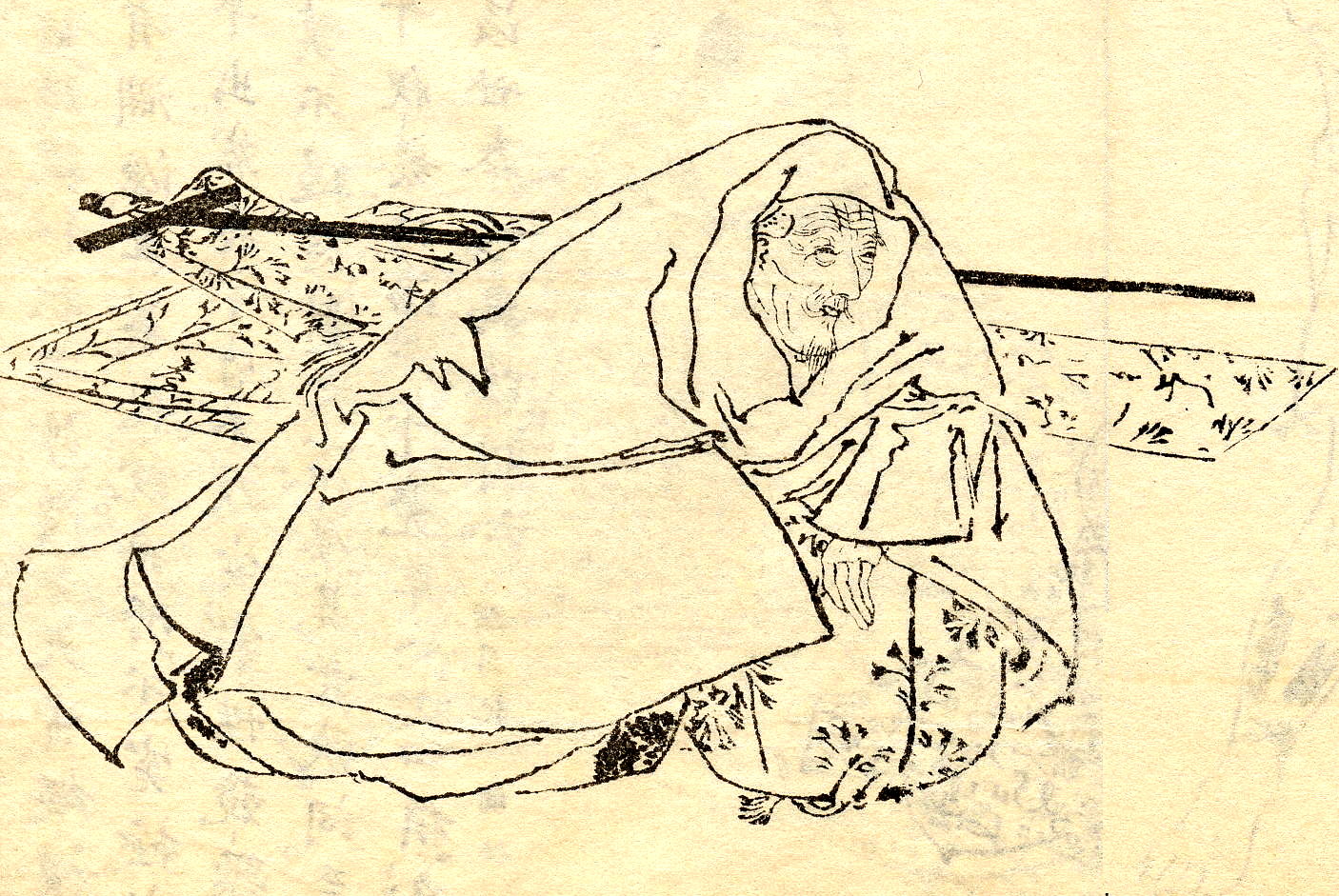
Why Fujiwara no Shunzei matters
Fujiwara no Shunzei, also known by his personal name Fujiwara no Toshinari and his monastic name Shakua, is one of the central figures of classical Japanese poetry. As the imperially appointed compiler of the Senzai Wakashu in 1188 and the leading arbiter of court poetry contests in his era, he shaped how waka was judged and written for a generation, and he raised the poet who would carry that influence forward, his son Fujiwara no Teika. For Masterworks Academy readers, his profile is instructive precisely because it sits outside the modern art market: there is no auction history, no gallery, and no catalogue raisonne to consult, only museum and temple documentation. He is a useful reminder that provenance and institutional standing, not price history, are what secure a pre-modern figure's place in the record.
- Nationality
- Japanese
- Media
- Waka poetry, Calligraphy
- Movement
- Late Heian to early Kamakura court poetry, Mikohidari poetic lineage
- Education
- No documented formal school or degree. Entered court service around age 13, circa 1127, and studied waka privately under Fujiwara no Mototoshi and Minamoto no Shunrai.
- Signature motifs
- Yugen aesthetic of quiet depth, Elegiac restraint in courtly diction
By the numbers
- 1114 to 1204LifespanLate Heian to early Kamakura Japan
- Senzai Wakashu, 1188Imperial anthologySeventh imperial waka anthology, compiled by imperial commission
- Roppyakuban Utaawase, 1193 to 1194Poetry contestServed as chief judge over a twelve-poet, six-hundred-round contest
- Tokyo National MuseumMuseum holdingCalligraphy fragment, gift of Takaki Seiu, inventory B-3536
Selected works
Click any work to view it full screen.
Biography
Fujiwara no Shunzei was born in 1114 into the aristocratic Fujiwara clan, with several sources placing his birth in Kyoto, though no source gives an exact day or month. He entered court service around age 13, roughly 1127, the standard path for a young Fujiwara noble, and in his youth studied waka privately under two established poets, Fujiwara no Mototoshi and Minamoto no Shunrai. He was for a time adopted into the Kanshuji branch of the Fujiwara and took the name Akihiro, before returning to the Mikohidari family and adopting the name by which he is known, Shunzei. Later in life he took Buddhist vows and used the monastic name Shakua.
His standing at court grew through his role as a judge in utaawase, formal poetry contests among the aristocracy, culminating in his position as chief judge of the Roppyakuban Utaawase, or Poetry Contest in Six Hundred Rounds, held in 1193 to 1194, in which twelve poets each submitted one hundred poems for his evaluation. By imperial commission he compiled the Senzai Wakashu, the seventh of Japan's imperial waka anthologies, completed in 1188, through which he promoted younger poets including his son Teika, the priest-poet Saigyo, and Princess Shokushi. In 1197 he set down his poetic theories in Korai futeisho, a treatise on the styles of poetry past and present. He is credited with founding the Mikohidari poetic lineage that his descendants, particularly Teika, would carry into the Kamakura period.
Shunzei died in 1204 in Kyoto. Major Western reference sources, including Encyclopaedia Britannica and English-language Wikipedia, give the date as 22 December 1204 at age 90, while some Japanese-language compilations give a date in late November or 29 December 1204 at age 91. The year and place of death are well established; the exact day is not, and this profile treats it as an open question rather than settling on one source's figure.
Critical reception
Reference works and specialist sites on classical Japanese poetry consistently describe Shunzei as an innovator of waka and one of the most authoritative poetic judges of his age, whose critical standards helped set the course toward the aesthetic later associated with the Shinkokinshu. His poetry and criticism are closely linked to the concept of yugen, an aesthetic of suggestive, quiet depth that later poets, including his son Teika, developed further. His judgments from the Roppyakuban Utaawase are still studied as a primary source for understanding how court poetry evolved in the late twelfth century. No exact, attributable verbatim quotation from a named critic in a major outlet could be confirmed for this profile, so none is reproduced here.
Market
Fujiwara no Shunzei is not a market-active artist. A thorough check of auction reporting, Japanese and Western art-market databases, and specialist coverage of Japanese manuscripts and calligraphy turned up no documented public auction sale of a work by him, so no price, currency, auction house, or sale date can be reported for him, now or historically. This is consistent with his status as a twelfth-century courtier whose surviving writing exists mainly as fragments held in national museum and temple collections rather than as a body of work that circulates through galleries or salerooms. The one confirmed institutional holding identified in current research is a calligraphy fragment, one of the Hino, Gosenshu, and Shuishu fragments, held by the Tokyo National Museum as a gift of Takaki Seiu, catalogued as B-3536. Readers should treat any claimed sale price or valuation for a "Shunzei" manuscript with caution absent verifiable auction-house documentation.
Selected exhibitions
| Years | Exhibition | Venues |
|---|---|---|
| Ongoing | Calligraphy by Three Nobles of the Nijo Family (one of the Hino, Gosenshu, and Shuishu fragments) | Tokyo National Museum, Japanese Gallery (Honkan) |
Museum collections
- Tokyo National Museum, Tokyo
Awards and honors
- Compiled the Senzai Wakashu, the seventh imperial waka anthology, by imperial commission (1188)
- Chief judge, Roppyakuban Utaawase (Poetry Contest in Six Hundred Rounds), 1193 to 1194 (1193)
- Composed Korai futeisho, a treatise on poetic styles of the past and present (1197)
Authentication and provenance
No catalogue raisonne.
No catalogue raisonne and no certificate-of-authenticity program exists for this twelfth-century courtier. The rare surviving manuscript and calligraphy fragments attributed to him are authenticated through museum and temple provenance records, not through a market-facing authentication body.
Primary reference: https://www.britannica.com/biography/Fujiwara-Shunzei
What collectors should know
There is no catalogue raisonne, no certificate-of-authenticity program, and no gallery or estate representation for Fujiwara no Shunzei, and none should be expected for a figure of his period. What exists instead is a small number of manuscript and calligraphy fragments held in institutions such as the Tokyo National Museum, authenticated through museum and temple provenance rather than through any market mechanism. There is no confirmed auction record to serve as a price benchmark. Anyone encountering a work offered as "by Fujiwara no Shunzei" should look for institutional provenance and scholarly attribution rather than relying on market comparables, since none of substance currently exist in the public record.
Further reading and resources
Data current as of 2026-07-18.

