Galileo Galilei
Italian, 1564 to 1642
Manuscripts and autograph documents · Printed scientific treatises
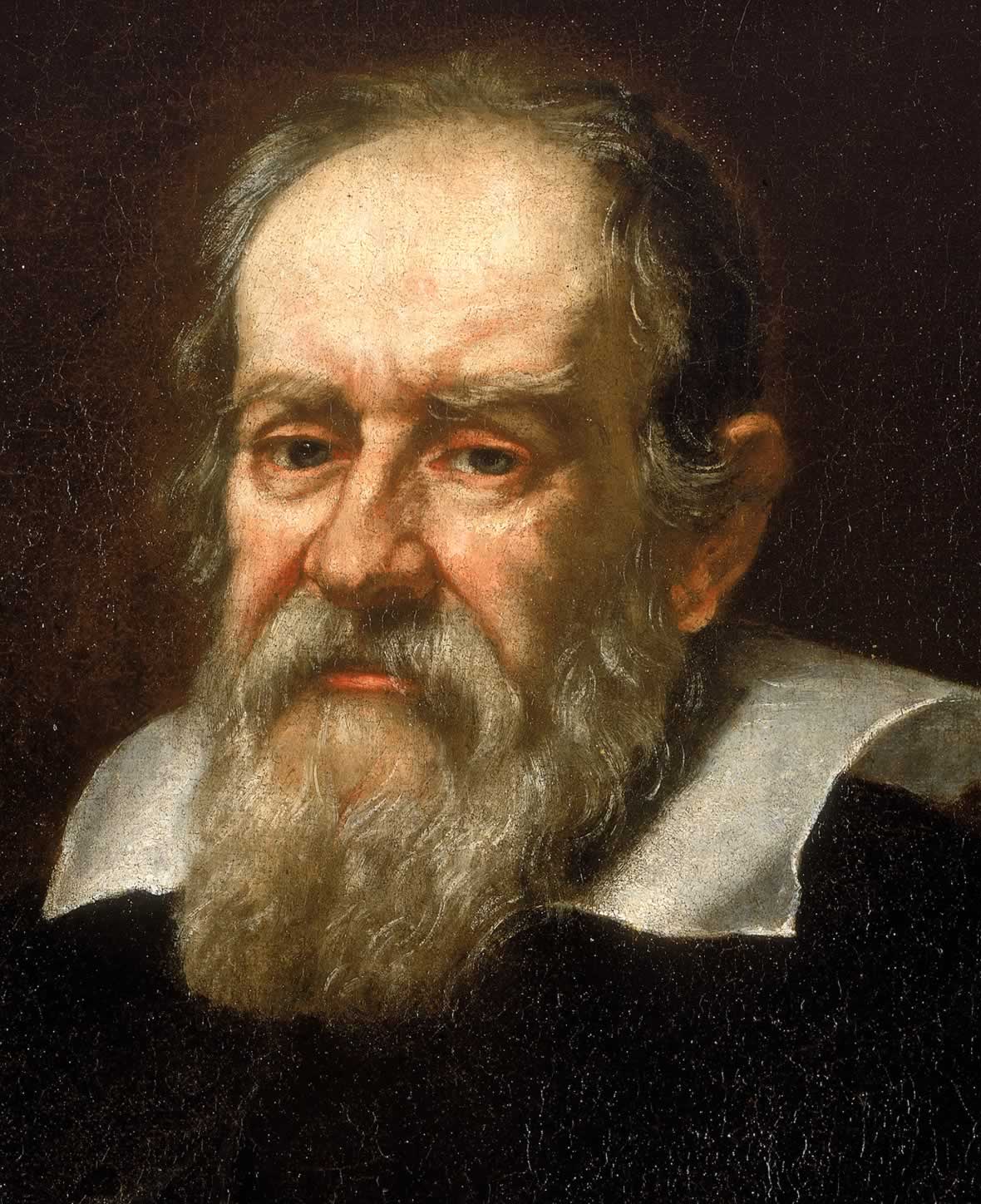
Why Galileo Galilei matters
Galileo Galilei (1564 to 1642) is not a visual artist in the conventional sense: he was an Italian astronomer, physicist, and mathematician whose telescopic discoveries and defense of a Sun-centered solar system helped found modern science. He appears in this format because his manuscripts, printed treatises, and autograph documents circulate as high-value collectibles, most recently a first edition that set a new auction record for him at Christie's in 2024. For a collector, Galileo is best understood as a rare-book and manuscript market figure rather than a gallery-represented artist: the material that trades is paper, not paintings, and its value rests on bibliographic and scholarly authentication rather than a gallery's or foundation's certification.
- Born
- 1564-02-15, Pisa, Grand Duchy of Tuscany (present-day Italy)
- Nationality
- Italian
- Media
- Manuscripts and autograph documents, Printed scientific treatises
- Movement
- Scientific Revolution
- Education
- Early schooling in Pisa; after his family's move to Florence, educated by Camaldolese Vallombrosan monks near Florence, late 1570s. Matriculated at the University of Pisa, Faculty of Medicine and Philosophy, in 1580. Left around 1585 without completing a degree.
- Signature motifs
- Autograph scientific manuscripts and letters, Early printed astronomical treatises
By the numbers
- USD 1.5MAuction highDialogo (first edition, 1605), Christie's London, 9 July 2024
- Astronomer, physicist, mathematicianField1564 to 1642
- Rare books and manuscriptsMarket categoryNot represented by a commercial gallery or estate
- NoneCatalogue raisonneAuthenticated bibliographically and through specialist auction departments
Selected works
Click any work to view it full screen.
Biography
Galileo Galilei was born on 15 February 1564 in Pisa, in the Grand Duchy of Tuscany. He received early schooling in Pisa and, after his family moved to Florence, he studied with Camaldolese Vallombrosan monks near Florence in the late 1570s, focused on logic, Greek, and the humanities. In 1580 he matriculated at the University of Pisa to study medicine and philosophy, but his interests shifted toward mathematics, and he left around 1585 without completing a degree.
He was appointed to the chair of mathematics at the University of Pisa in 1589 and moved to the same post at the University of Padua in 1592. Building on his own improved telescope, he made a series of discoveries beginning in 1609 and 1610, including the four large moons of Jupiter now called the Galilean moons, that reshaped the debate over the structure of the solar system. His advocacy of the Copernican, Sun-centered model, argued most fully in his 1632 Dialogue Concerning the Two Chief World Systems, brought him before the Roman Inquisition. In 1633 he was tried, found guilty of suspicion of heresy, forced to recant, and placed under house arrest for the rest of his life, mostly at his villa in Arcetri, near Florence. The Catholic Church later moved toward rehabilitating him, and in 1992 Pope John Paul II acknowledged the injustice of the original judgment against him. Galileo died at Arcetri on 8 January 1642.
Critical reception
Assessments of Galileo center on his scientific, not artistic, legacy. He is widely described, including by Encyclopaedia Britannica, as "the father of modern science." Historians of science have also noted his grounding in the visual training of his era, describing him as a skilled draftsman with ties to the Florentine art world, and his lunar drawings are sometimes cited as evidence that training in perspective sharpened his observational astronomy. The dominant narrative is one of vindication, a figure condemned in his own lifetime whose scientific standing, and the injustice of his 1633 trial, were later affirmed by both the scientific community and the Catholic Church itself.
Market
Because Galileo left no body of paintings, drawings, or sculpture, the market for his work is really a market for his writing: first editions of his printed treatises, and the rare surviving manuscripts, letters, and documents in his own hand. There is no gallery or estate that represents him; material is consigned through the books, manuscripts, and autographs departments of major auction houses, chiefly Christie's and Sotheby's, and it is often catalogued family-name-first, as "Galilei, Galileo," a bibliographic convention rather than a sign of a different market identity.
The current auction record is held by a first edition of Dialogo de Cecco di Ronchitti da Bruzene in perpuosito de la stella nuova (1605), Galileo's earliest published book, written under a pseudonym about the supernova of 1604. It sold for roughly GBP 1.1 million (about USD 1.5 million) at Christie's London on 9 July 2024, a result reported by Artnet News as a new auction record for Galileo. For context, a manuscript account of his earliest telescope observations has been reported to have traded for roughly USD 122,500, a reminder of how wide the range is across different classes of Galileo material, from major printed rarities to smaller autograph documents; the exact auction house and date for that sale are not confirmed in available sources.
Top auction results
| Work | Price | Sale |
|---|---|---|
| Dialogo de Cecco di Ronchitti da Bruzene in perpuosito de la stella nuova (first edition) (1605) | USD 1,500,000 (GBP 1,100,000 (approx.)) | Christie's, London, 2024-07-09 |
Selected exhibitions
| Years | Exhibition | Venues |
|---|---|---|
| Ongoing | Permanent collection: instruments, relics, and portraits of Galileo | Museo Galileo, Florence |
| 2026 | Galileo in Pisa | Archivio di Stato di Pisa, Palazzo Toscanelli (Galilean Days 2026) |
| 2025 to 2026 | Nights. Five centuries of stars, dreams, plenilunes | GAM, Galleria Civica d'Arte Moderna e Contemporanea, Turin |
Museum collections
- Museo Galileo, Florence
- Archivio di Stato di Pisa
- Uffizi Gallery, Florence (historical Medici collection; most instruments now held by Museo Galileo)
Awards and honors
- International Space Hall of Fame induction, New Mexico Museum of Space History (1991)
- Formal Catholic Church acknowledgment of the injustice of his 1633 conviction (Pope John Paul II) (1992)
Authentication and provenance
No catalogue raisonne.
No catalogue raisonne, gallery, or estate authentication program exists for Galileo. His manuscripts, letters, and printed books are authenticated through bibliographic scholarship, provenance research, and the specialist departments of major auction houses, alongside institutions such as Museo Galileo, which holds the principal collection of his instruments and relics.
Primary reference: https://www.museogalileo.it/en/galileo/life.html
What collectors should know
Collectors interested in Galileo are collecting rare books, manuscripts, and autograph material, not fine art, and the two markets run on different rules. There is no catalogue raisonne and no gallery or foundation authentication program; authenticity rests on bibliographic scholarship, provenance, and the expertise of specialist departments at houses such as Christie's and Sotheby's, alongside institutions like Museo Galileo in Florence, which holds the principal collection of his instruments and relics. Supply is extremely limited and uneven: a handful of major printed rarities have set headline prices, while autograph letters and documents trade at a wide range of levels depending on content and condition. Anyone approaching this material should treat it as adjacent to, rather than part of, the fine-art market that the rest of this framework is built around.
Further reading and resources
Data current as of 2026-07-18.

