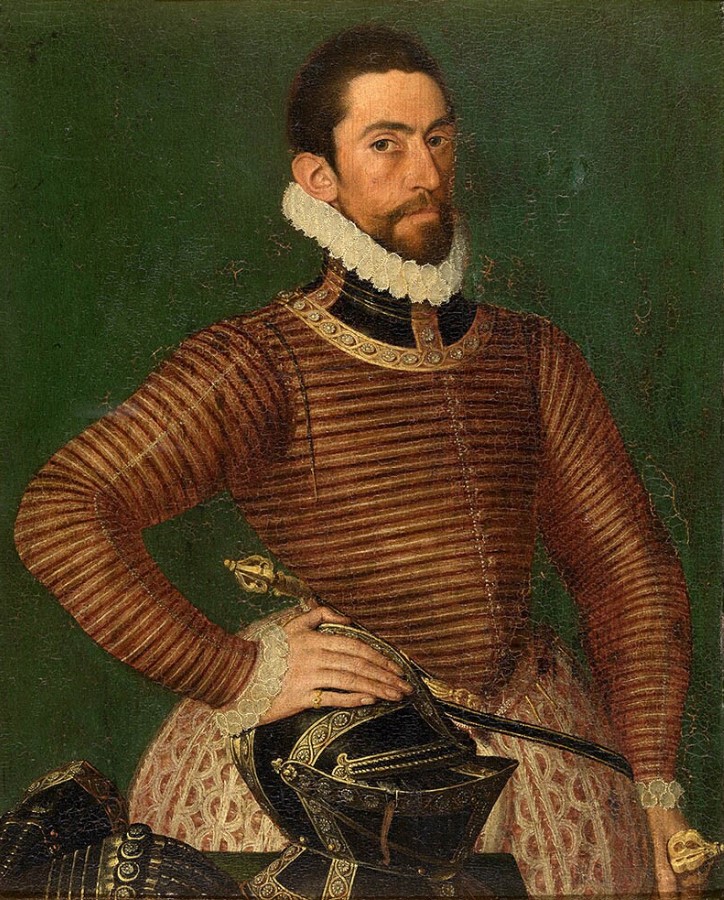
Why Gillis Claeissens matters
Gillis Claeissens is a rare case in the Old Masters market: a documented 16th century Bruges portraitist whose recognized body of work is still being reconstructed by scholars in real time. Research linking him to the so-called Monogrammist G.E.C. has, within the last two decades, moved paintings once given to his father or brothers back into his own name, and museums have followed with new acquisitions. For a collector, he represents an attribution story still in motion rather than a settled market, which is exactly why provenance and expert review matter more here than for almost any modern name.
- Nationality
- Flemish
- Media
- Painting
- Movement
- Northern Renaissance, Bruges School
- Education
- Trained in the workshop of his father, Pieter Claeissens the Elder. Admitted master, Guild of St Luke, Bruges, 18 October 1566. No formal academy existed in this form in 16th century Flanders.
- Signature motifs
- Court and civic portraiture, Religious altarpieces
By the numbers
- GBP 53,300Auction highRediscovered work, Dreweatts, Newbury UK, 10 February 2026; exact work title not publicly confirmed
- 1566Guild admissionMaster, Guild of St Luke, Bruges
- Bruges and BrusselsActivePortraits and altarpieces; recorded court connections under the Archdukes
- 17 December 1605DiedBruges
Selected works
Click any work to view it full screen.
Biography
Gillis Claeissens, also recorded as Egidius Claeissens, was born in Bruges, most sources give circa 1526 though a smaller strand of scholarship places his birth closer to 1536 or 1537. He was the son of the painter Pieter Claeissens the Elder, part of a family workshop that produced several generations of Bruges painters, including his brothers Antoon Claeissens and Pieter Claeissens the Younger.
He trained in his father's workshop and was admitted as a master to the Guild of St Luke in Bruges on 18 October 1566. His output centered on portraits and religious altarpieces. According to Sotheby's cataloguing of one of his rediscovered panels, he worked at the court of the Archdukes in Brussels and was, by the later 16th century, regarded as the leading portraitist in Bruges, working in a period that also included Pieter Pourbus. Modern scholarship has strengthened his individual profile by identifying him with the Monogrammist G.E.C., a set of initials attached to a group of portraits reassigned to him in recent research.
Claeissens died in Bruges on 17 December 1605, per Wikipedia's biographical entry; other consulted sources confirm only the year of his death.
Critical reception
Independent art-critical commentary on Claeissens specifically is thin; most of what exists comes from auction house and dealer cataloguing rather than named critics writing in general-interest outlets. Sotheby's cataloguing describes him as the leading portraitist active in Bruges in the later 16th century, working alongside Pieter Pourbus, and connects him to a court role under the Archdukes in Brussels. The more consequential development has been scholarly rather than critical: the identification of Claeissens with the Monogrammist G.E.C. has expanded his recognized corpus, illustrated by the Groeningemuseum in Bruges's acquisition of a portrait once catalogued elsewhere within the family workshop.
Market
Claeissens has no meaningful auction history in the modern sense, only a small number of documented transactions. The highest confirmed auction price found in current sources is GBP 53,300, for a rediscovered work sold at Dreweatts' Old Master, British and European Art sale in Newbury, UK, on 10 February 2026, though the exact work title could not be confirmed from available reporting. Separately, Sotheby's carried the panel Christ the Saviour Adored by Abbot Robert Holman, newly reattributed to Claeissens from an earlier Hans Memling attribution, in a 2018 Old Masters Evening Sale in London (lot 6) with an estimate of GBP 200,000 to 300,000. No confirmed hammer price for that lot appears in the sources reviewed, so it should be read as an estimate, not a realized result.
Outside the auction room, the market has moved through private and dealer channels: the Turin gallery Caretto & Occhinegro sold a Portrait of a Man in Armor, attributed to Claeissens, to the Groeningemuseum in Bruges, following its presentation at TEFAF Maastricht. The exact year of that sale was not specified in available reporting.
Top auction results
| Work | Price | Sale |
|---|---|---|
| Unidentified rediscovered work (exact title not publicly confirmed) | GBP 53,300 | Dreweatts, Newbury, UK, 2026-02-10 |
Selected exhibitions
| Years | Exhibition | Venues |
|---|---|---|
| 1956 | L'Art Flamand dans les collections Britanniques et la Galerie Nationale de Victoria | Musee Communal (Groeningemuseum), Bruges |
| n.d. | Long-term loan (as Peter Claeissens the Elder) | Ashmolean Museum, Oxford |
| n.d. | Exhibition history (pre-1956, as Peter Claeissens the Elder) | Royal Academy, London |
| n.d. | Exhibition history (pre-1956, as Peter Claeissens the Elder) | Birmingham City Museum and Art Gallery |
| n.d. (recent) | Presentation of Portrait of a Man in Armor, prior to acquisition by the Groeningemuseum | TEFAF Maastricht (Caretto & Occhinegro Gallery) |
Museum collections
- Groeningemuseum, Bruges
Awards and honors
- Admitted master, Guild of St Luke, Bruges (1566)
Authentication and provenance
No catalogue raisonne.
No catalogue raisonne exists for this artist. Attribution rests on guild records, connoisseurship, and recent scholarship identifying Claeissens with the Monogrammist G.E.C. Works are periodically reassigned among the Claeissens family workshop, meaning provenance and specialist review are essential to any purchase.
Primary reference: https://en.wikipedia.org/wiki/Gillis_Claeissens
What collectors should know
Because Claeissens worked inside a multigenerational family workshop that shared subject matter and, at times, a visual style, attribution to him specifically, rather than to his father Pieter Claeissens the Elder or his brothers, has shifted more than once and may shift again as scholarship continues. There is no catalogue raisonne, so due diligence depends on guild records, provenance history, and expert opinion rather than a settled reference catalogue. Public auction data is extremely limited, with only one confirmed realized price and one unresolved high estimate identified to date, so any single sale should be treated as a data point rather than a market trend.
Further reading and resources
Data current as of 2026-07-16.

