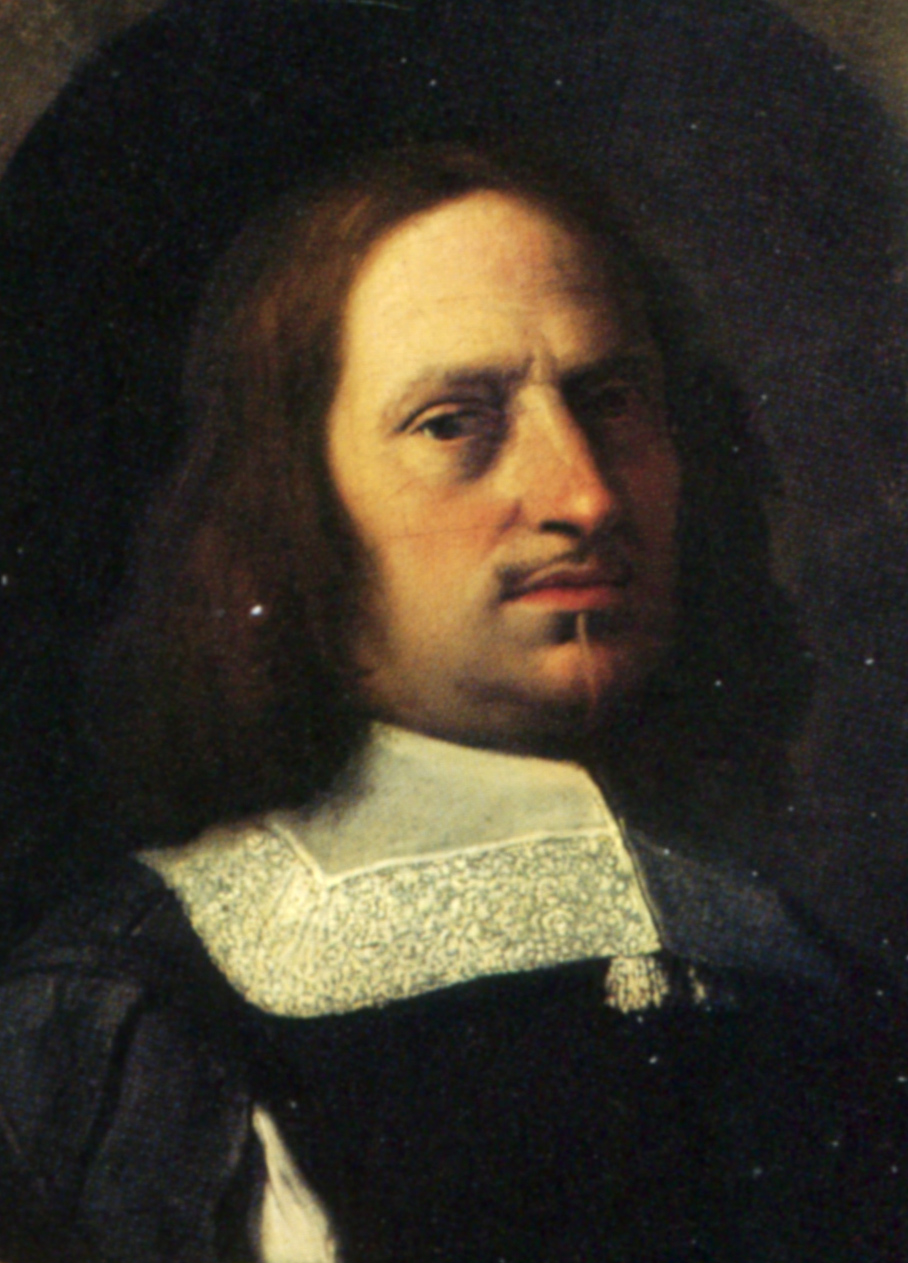
Why Giovanni Domenico Cerrini matters
Giovanni Domenico Cerrini, known in his own time as il Cavalier Perugino, is a documented figure of the Roman Baroque with paintings held today by the Museo del Prado, the Uffizi, and the Pinacoteca Nazionale di Bologna, among other institutions. He is not a market name in the way a modern or contemporary artist is, he has no gallery, no catalogue raisonne, and a thin auction footprint, but his presence in major museum collections and his documented ties to Guido Reni's circle and to Medici and papal-adjacent patrons make him a legitimate reference point for collectors of Italian Baroque painting. For Masterworks readers, he is a useful case study in how Old Master value is built on provenance and scholarship rather than on trading data.
- Nationality
- Italian
- Media
- Painting, Fresco
- Movement
- Baroque, Bolognese School
- Education
- Apprenticed under Giovanni Antonio Scaramuccia in Perugia, then trained in Guido Reni's Rome studio, circa 1630s. No formal academy degree is documented.
- Signature motifs
- Half-length figure compositions, Soft milky Bolognese-school coloring
By the numbers
- 1609 to 1681LifespanPerugia to Rome
- USD 147,996Auction recordDer Raub der Europa, Hampel Fine Art Auctions, 2026 (exact sale date not published)
- il Cavalier PeruginoKnown epithet
- 1656 to 1661Medici court patronageCourt of Grand Duke Ferdinando II de' Medici, Florence
Selected works
Click any work to view it full screen.
Biography
Giovanni Domenico Cerrini was born in Perugia in 1609. Standard references, including several language editions of Wikipedia, the Web Gallery of Art, and the Treccani Dizionario Biografico degli Italiani entry, confirm the year but do not reliably specify an exact day or month, so no precise birth date is given here.
He received his first training under Giovanni Antonio Scaramuccia in Perugia, then moved to Rome, where sources place him in or near Guido Reni's studio, with accounts hedging between the late 1620s and 1638 for when that contact began. In Rome he found patrons in Cardinal Bernardino Spada and Cardinal Giulio Rospigliosi, the future Pope Clement IX. His most significant surviving decorative commission is the nave ceiling and cupola fresco cycle at Santa Maria della Vittoria in Rome, dated to about 1654 to 1655. Between roughly 1656 and 1661 he worked in Florence at the court of Grand Duke Ferdinando II de' Medici, a period documented in Christie's Old Master notes and corroborated by museum sources. He is also recorded under the name Gian Domenico Cerrini in auction catalogues and older literature, a variant of the same identity rather than a different artist.
Cerrini died in Rome in 1681. French-language sources narrow this to April 1681, though the exact day is not reliably documented across the sources reviewed, so no precise death date or burial location is given here.
Critical reception
One of the last and weakest of the offshoots of the movement radiating from Bologna.
Assessments of Cerrini have generally placed him as a secondary figure within the artistic current that moved from Bologna to Rome in the early seventeenth century. Writing in Baroque Painting in Rome, the art historian Hermann Voss judged him "one of the last and weakest of the offshoots of the movement radiating from Bologna," while still singling out the nave ceiling and cupola of Santa Maria della Vittoria in Rome as his most successful decorative work. Contemporary eighteenth-century commentary, summarized rather than quoted verbatim in modern sources, credits him with developing a personal style built on soft, wavy contours and a light, milky palette. His standing during his own lifetime is better evidenced by his patrons, Cardinal Bernardino Spada, Cardinal Giulio Rospigliosi, and the Medici court in Florence, than by any surviving contemporary review.
Market
Cerrini's auction market is small and infrequent. According to MutualArt, his auction record is USD 147,996, achieved by "Der Raub der Europa" (The Rape of Europa) at Hampel Fine Art Auctions in 2026; the exact sale date within that year is not published in the sources reviewed. A separate, lower-value sale attributed to him realized GBP 4,125 at Chiswick Auctions in London on 17 March 2020. Research also located a painting titled Apollo offered at Christie's, but the accessible listing did not include a hammer price or sale date, so it cannot be compared to either figure above. Given how few Cerrini works reach public sale in a given year, any single result should be read as a data point rather than a stable market trend, and a broader search of historical auction databases could surface additional, unverified sales.
Top auction results
| Work | Price | Sale |
|---|---|---|
| Der Raub der Europa (The Rape of Europa) | USD 147,996 | Hampel Fine Art Auctions |
| Old Master lot attributed to Cerrini (full title not recorded in the available auction listing) | GBP 4,125 | Chiswick Auctions, London, 2020-03-17 |
Selected exhibitions
| Years | Exhibition | Venues |
|---|---|---|
| 1654 to 1655 | Nave ceiling and cupola fresco cycle | Santa Maria della Vittoria, Rome |
| 1656 to 1661 | Court painter to the Medici | Grand-ducal court of Ferdinando II de' Medici, Florence |
| c. 1630s to 1681 | Roman patronage of Cardinal Bernardino Spada and Cardinal Giulio Rospigliosi (later Pope Clement IX) | Rome |
| Permanent collection | Allegory of Time Destroying Beauty; Penitent Magdalen | Museo del Prado, Madrid |
| Permanent collection | Allegory of Painting, with Self-Portrait of the Artist | Pinacoteca Nazionale di Bologna |
| Permanent collection | Holy Family with Saint Elizabeth | Gallerie degli Uffizi, Florence (deposits) |
| Permanent collection | Holy Family with Saint Elizabeth and the Young John the Baptist | Bildergalerie Sanssouci, Potsdam |
| 17th century | Altarpieces and devotional paintings | Santa Maria in Vallicella, San Carlo ai Catinari, Sant'Isidoro, and Santa Maria in Traspontina, Rome |
Museum collections
- Museo del Prado, Madrid
- Pinacoteca Nazionale di Bologna
- Gallerie degli Uffizi, Florence
- Galleria Nazionale dell'Umbria, Perugia
- Bildergalerie Sanssouci, Potsdam
- Museo d'Arte della Citta di Ravenna
Authentication and provenance
No catalogue raisonne.
No catalogue raisonne has been published for this artist. Attribution rests on the art-historical literature, principally the Dizionario Biografico degli Italiani (Treccani) entry and Hermann Voss's Baroque Painting in Rome, along with museum curatorial documentation. Works should be verified through provenance research and Old Master specialists rather than any certificate program.
Primary reference: https://www.treccani.it/enciclopedia/cerrini-gian-domenico-detto-il-cavalier-perugino_(Dizionario-Biografico)/
What collectors should know
There is no catalogue raisonne for Cerrini and no certificate-of-authenticity program; attribution rests on the published art-historical literature and on museum and dealer scholarship, so provenance research matters more here than for artists with an established documentary apparatus. His auction market is thin, with very few public sales to draw on, which means headline prices, including the USD 147,996 auction record cited above, should be treated as an isolated data point rather than evidence of a trend. Collectors should also expect his name to appear inconsistently across sources, sometimes as Giovanni Domenico Cerrini and sometimes as Gian Domenico Cerrini or by the epithet il Cavalier Perugino, all of which refer to the same artist.
Further reading and resources
Data current as of 2026-07-16.

