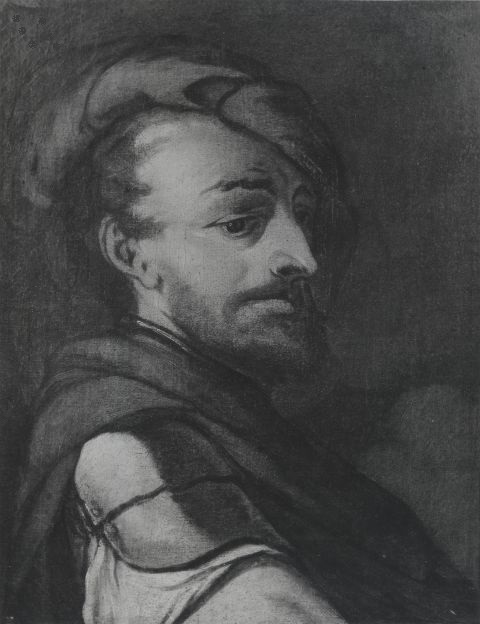
Why Giulio Carpioni matters
Giulio Carpioni was a leading painter and etcher of the early Baroque in the Veneto, known for small-scale mythological bacchanals and allegories that fused Venetian color with the realism he absorbed from Lombard painting. His work anchors the permanent Baroque holdings of major museums, including the Uffizi, the Kunsthistorisches Museum, the Gallerie dell'Accademia, and the Metropolitan Museum of Art. For a collector, he represents a category distinct from the contemporary market: a documented Old Master whose value rests on museum-grade scholarship and provenance rather than on gallery representation, an artist estate, or an active auction track record.
- Nationality
- Italian
- Media
- Painting, Etching
- Movement
- Baroque, Venetian school
- Education
- Workshop apprenticeship under Alessandro Varotari (Il Padovanino), Venice, circa 1630. No formal academy attendance or degree is documented.
- Signature motifs
- Bacchanalian mythological scenes, Etched allegories and pastoral idylls
By the numbers
- Venice and Vicenza, c. 1630 to 1678ActiveWorkshop apprenticeship under Padovanino; settled in Vicenza by 1638
- 8+ institutionsMuseum collectionsIncluding the Uffizi, the Kunsthistorisches Museum, and the Metropolitan Museum of Art
- None identifiedCatalogue raisonneAttribution relies on museum scholarship and documented provenance
- No confirmed recordAuction recordBest documented sale: USD 7,560, Pan and Syrinx, Freeman's, 22 February 2022; not verified as the artist's highest price
Selected works
Click any work to view it full screen.
Biography
Giulio Carpioni was born around 1613, probably in Venice, though no exact birth date is documented. Around 1630 he began training as a painter in the Venice workshop of Alessandro Varotari, known as Il Padovanino. The following year he traveled with Padovanino to Bergamo, where he came into contact with the realist tradition of Lombard painting, an influence that would shape his mature style alongside the Venetian colorism he learned from Padovanino.
By 1638 Carpioni had settled in Vicenza, which remained his base for the rest of his career and where he carried out numerous religious and mythological commissions for churches and noble families. He made his will at his home in Vicenza on 25 January 1678 and died there four days later, on 29 January 1678. Some later reference sources give his death year as 1679, and one isolated older reference places his death in Verona in 1674; the archival will and death record documented by the Dizionario Biografico degli Italiani support 1678, Vicenza, as the accurate date and place.
Critical reception
Because Carpioni worked in the seventeenth century, his recognition took forms different from a modern artist's: aristocratic and ecclesiastical patronage in Vicenza, and, over the following centuries, steady inclusion in the standard scholarly canon of Venetian Baroque painting. No formal prizes, court titles, or academy honors are documented for him. Later art history has treated him as a distinctive figure who folded Lombard realism, learned in Bergamo, into a Venetian palette derived from Padovanino and, more distantly, from Titian, while his etchings and paintings of bacchanals, satyrs, and mythological revelry became his most recognized subject. No verbatim, attributable critical quotation about Carpioni from a named critic in a major outlet could be confirmed in current research, so none is reproduced here.
Market
Carpioni's market is that of a documented but thinly traded Old Master. No catalogue raisonne of his work has been identified, and there is no gallery or estate that represents him in any contemporary commercial sense; paintings, drawings, and etchings attributed to him circulate through auction houses and specialist Old Master dealers. One documented sale is Pan and Syrinx, which sold for USD 7,560 at Freeman's in Philadelphia on 22 February 2022, though this figure is not confirmed to be the artist's highest price and should not be treated as an established record. A painting titled Joseph Pardons His Brothers has separately been offered by a dealer at an asking price near USD 19,000, but that is a retail listing rather than an auction result and should not be treated as a market benchmark. Collectors should expect any headline price for this artist to require independent verification against a professional auction-price database before it is relied upon.
Top auction results
| Work | Price | Sale |
|---|---|---|
| Pan and Syrinx | USD 7,560 | Freeman's, Philadelphia, 2022-02-22 |
Selected exhibitions
| Years | Exhibition | Venues |
|---|---|---|
| 2025 to 2026 | Ospiti al Chiericati (previously unpublished Carpioni portrait) | Museo Civico di Palazzo Chiericati, Vicenza |
| Permanent collection | The Triumph of Silenus | Gallerie dell'Accademia, Venice |
| Permanent collection | Neptune Pursuing Coronis | Uffizi Galleries, Florence |
| Permanent collection | The Kingdom of Hypnos | Kunsthistorisches Museum, Vienna |
| Permanent collection | Mythological bacchanals | Museo Nacional Thyssen-Bornemisza, Madrid |
| Permanent collection | Figure Studies (drawing) | Metropolitan Museum of Art, New York |
| Permanent collection | Bacchanal scenes | Gemaldegalerie Alte Meister, Dresden |
| Permanent collection | Works in British public collections | Ashmolean Museum, Oxford; The Box, Plymouth |
Museum collections
- Gallerie dell'Accademia, Venice
- Uffizi Galleries, Florence
- Kunsthistorisches Museum, Vienna
- Museo Nacional Thyssen-Bornemisza, Madrid
- Metropolitan Museum of Art, New York
- Museo Civico di Palazzo Chiericati, Vicenza
- Gemaldegalerie Alte Meister, Dresden
- Ashmolean Museum, Oxford
Authentication and provenance
No catalogue raisonne.
No catalogue raisonne has been identified for this artist. Attribution and verification rest on museum curatorial scholarship, including the Dizionario Biografico degli Italiani entry on Carpioni, and on documented provenance rather than any certificate program, since no such program existed for artists of this period.
Primary reference: https://www.treccani.it/enciclopedia/giulio-carpioni_(Dizionario-Biografico)/
What collectors should know
Carpioni is a documented, museum-collected Old Master without a catalogue raisonne, without current gallery or estate representation, and without a clearly established auction record in the public sources reviewed for this profile. That combination means collectors should lean heavily on museum-grade scholarship, such as the Dizionario Biografico degli Italiani entry and the collection catalogues of institutions like the Uffizi and the Thyssen-Bornemisza, and on documented provenance, rather than on price history, when evaluating a work attributed to him. Secondary sources still disagree in minor ways on his death year (1678 versus 1679) and, rarely, on the place of his death (Vicenza versus an isolated older reference giving Verona and 1674); the archival will and death record support 1678 in Vicenza as the accurate version.
Further reading and resources
Data current as of 2026-07-16.

