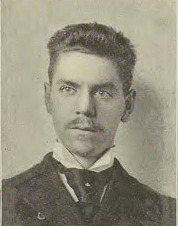
Why Harry Roseland matters
Harry Roseland was one of the most commercially successful Brooklyn genre painters of the late nineteenth and early twentieth centuries, best known for scenes of fortune-tellers reading tea leaves and palms and for depictions of Black domestic and farm life in the postbellum United States. For collectors, he represents a durable niche within American genre painting: a lifelong Brooklyn artist whose work sits in several regional and national museum collections but whose auction market remains thin and unevenly documented, which rewards careful attention to provenance over headline prices.
- Nationality
- American
- Media
- Painting, Genre scenes
- Movement
- American genre painting, Gilded Age
- Education
- Adelphi Academy, Brooklyn, under John B. Whittaker; brief study with James Carroll Beckwith in Manhattan. Largely self-taught; no formal degree documented.
- Signature motifs
- Fortune-tellers reading tea leaves and palms, Post-Civil War Black domestic and farm life, Brooklyn interior scenes
By the numbers
- USD 253,000Auction high (reported)Figure cited by Bedford Fine Art Gallery as the artist's high auction record; the underlying work, sale house, and sale date are not independently confirmed
- 1884 to 1932Documented career spanFrom his earliest recorded exhibitions to his last documented showings
- 5+ institutionsMuseum collectionsIncluding the Brooklyn Museum and Birmingham Museum of Art
- None confirmedCurrent representationWorks are handled by secondary-market dealers such as Questroyal Fine Art and Bedford Fine Art Gallery
Selected works
Click any work to view it full screen.
Biography
Harry Herman Roseland was born in Brooklyn, New York, to German immigrant parents. Published sources disagree on his exact birth year, giving dates ranging from 1865 to 1868, so no single year can be stated with confidence. He was largely self-taught as a painter, though he studied under John B. Whittaker at Adelphi Academy in Brooklyn and briefly with James Carroll Beckwith in Manhattan; some sources also mention possible brief study with Thomas Eakins in Philadelphia, though this is not consistently corroborated.
Roseland spent his entire career in Brooklyn and did not travel to Europe to study, unlike many of his American contemporaries. He became known for genre paintings of poor and working-class Black Americans in the decades after the Civil War, frequently depicting Black women as fortune-tellers reading the tea leaves or palms of well-dressed white clients, alongside scenes of laborers picking cotton or berries and everyday domestic life. He exhibited widely and consistently from the 1880s through the early 1930s, showing at the National Academy of Design, the Brooklyn Art Club, the Boston Art Club, the American Art Society in Philadelphia, the Pennsylvania Academy of the Fine Arts, and the Society of Independent Artists, and he received medals from several of these institutions.
Roseland died in 1950. Most sources place his death in New York, and one source, the Salmagundi Club, gives an exact date of December 22, 1950, in Brooklyn; this specific date has not been independently corroborated elsewhere and should be treated as provisional.
Critical reception
Roseland achieved recognition during his lifetime through a steady string of medals and prizes, including the Second Hallgarten Prize at the National Academy of Design in 1898 and gold medals from the Brooklyn Art Club, the Boston Art Club, and the American Art Society in Philadelphia. In 1899, the Brooklyn Daily Eagle noted that he had developed a following among local collectors and appeared likely to become one of Brooklyn's most successful resident artists, though the article did not attribute the observation to a named critic. Later assessments have focused less on formal innovation than on subject matter: his sustained attention to Black domestic life and fortune-telling scenes in the postbellum era is now discussed as a documented, if commercially motivated, record of the period's social types, alongside questions about how his white authorship shaped those depictions.
Market
Roseland's auction market is thin and unevenly documented compared with better-tracked American artists of his period. Bedford Fine Art Gallery cites a high auction record of USD 253,000 for the artist, but the specific work, auction house, and sale date behind that figure are not confirmed in any source reviewed. By contrast, documented individual results are far lower: a version of "The Fortune Teller" sold for a hammer price with buyer's premium of USD 3,600 at Cottone Auctions, and Artnet's public database lists a top individual result of USD 12,900. Collectors should treat the USD 253,000 figure as a reported high watermark rather than a verified benchmark, and expect typical realized prices for his smaller and more common subjects to fall well below it.
Top auction results
| Work | Price | Sale |
|---|---|---|
| Title unconfirmed; a Bedford Fine Art Gallery page associates the record with 'The Fateful Card' | USD 253,000 |
Selected exhibitions
| Years | Exhibition | Venues |
|---|---|---|
| 1884 to 1900 | National Academy of Design Annual | National Academy of Design, New York |
| 1888 | Brooklyn Art Club | Brooklyn Art Club, Brooklyn, New York |
| 1902 | South Carolina Inter-State and West Indian Exposition | Charleston, South Carolina |
| 1902 | Salmagundi Club Annual | Salmagundi Club, New York |
| 1904 to 1908 | Boston Art Club | Boston, Massachusetts |
| 1907 | American Art Society Annual | Philadelphia, Pennsylvania |
| 1888 to 1906, and 1932 | Pennsylvania Academy of the Fine Arts Annual | Philadelphia, Pennsylvania |
| 1930 | Brooklyn Society of Artists | Brooklyn, New York |
Museum collections
- Brooklyn Museum, New York
- Birmingham Museum of Art, Alabama
- Minneapolis Institute of Art, Minnesota
- Morris Museum, Morristown, New Jersey
- Heckscher Museum of Art, Huntington, New York
Awards and honors
- Second Hallgarten Prize, National Academy of Design (1898)
- Gold Medal, Brooklyn Art Club (1888)
- Bronze Medal, Salmagundi Club (1902)
- Medal, South Carolina Inter-State and West Indian Exposition (Charleston Exposition) (1902)
- Gold Medal, Boston Art Club (1904)
- Gold Medal, American Art Society, Philadelphia (1907)
- Prize, Brooklyn Society of Artists (1930)
Authentication and provenance
No catalogue raisonne.
No catalogue raisonne has been published and no estate authentication program is documented. Verification relies on period exhibition records, dealer provenance history, and the museum collections that hold his work.
Primary reference: https://en.wikipedia.org/wiki/Harry_Roseland
What collectors should know
There is no catalogue raisonne for Roseland and no estate authentication program; attribution and value depend on period exhibition records, dealer history, and comparison with securely documented works in museum collections such as the Brooklyn Museum and the Birmingham Museum of Art. No gallery or estate is confirmed to formally represent the artist today; his work circulates through specialist American-art and Americana dealers and regional auction houses. Given the wide gap between the reported all-time high and typical realized prices, and the unresolved details around the artist's exact birth year and death date, collectors should verify any specific sale claim independently rather than relying on a single dealer's stated record.
Further reading and resources
Data current as of 2026-07-16.

