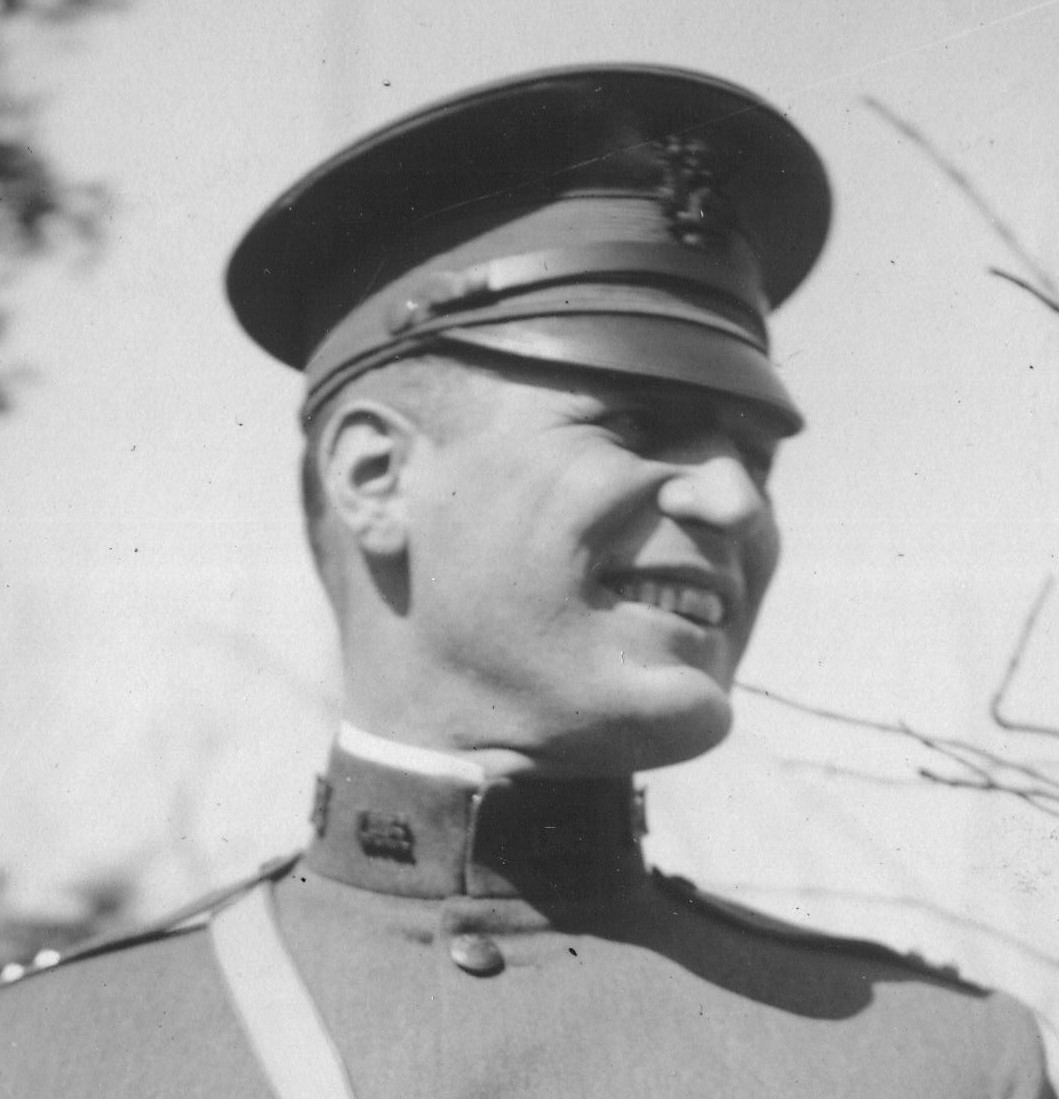
Why Harvey Dunn matters
Harvey Dunn is one of the central figures of the Golden Age of American illustration, a South Dakota homesteader's son who trained under Howard Pyle and became both a widely reproduced magazine illustrator and an official combat artist of the First World War. For a collector, his significance rests on two pillars: a body of prairie and war imagery that museums treat as a record of American life and history, and a teaching legacy, through his own studio and school, that shaped the next generation of illustrators. His market is thin and concentrated, which makes institutional context, more than any single sale, the best guide to his standing.
- Born
- 1884-03-08, Near Manchester, Dakota Territory (South Dakota), USA
- Nationality
- American
- Media
- Painting, Illustration
- Movement
- Golden Age of Illustration, Brandywine School
- Education
- South Dakota Agricultural College, preparatory art student, 1901 to 1902; School of the Art Institute of Chicago, 1902 to 1904; studied under Howard Pyle, Wilmington, Delaware, 1904 to 1906. No formal degree conferred.
- Signature motifs
- Prairie landscapes, World War I battlefield scenes, Magazine illustration
By the numbers
- USD 393,250Auction highThe Homesteaders, Coeur d'Alene Art Auction, 2022
- approx. 116 worksLargest collectionSouth Dakota Art Museum, Brookings (2014 count)
- Official artist-correspondentWWI serviceAmerican Expeditionary Forces, 1918
Selected works
Click any work to view it full screen.
Biography
Harvey Thomas Dunn was born on March 8, 1884, on a homestead near Manchester in what was then Dakota Territory. After roughly nine years of rural, one room schooling, he entered preparatory art courses at South Dakota Agricultural College in Brookings in 1901, where his teacher, Ada B. Caldwell, encouraged him toward formal art training. He studied at the School of the Art Institute of Chicago from about 1902 to 1904, then moved to Wilmington, Delaware, to study under the illustrator Howard Pyle from 1904 to 1906. Pyle's instruction, and the informal circle of students around him, is generally credited as Dunn's most formative training; by 1906 Pyle was encouraging him to open his own studio.
Dunn built a career as a magazine illustrator working from studios in New Jersey. During the First World War he served as a combat artist and artist-correspondent with the American Expeditionary Forces in France, one of eight illustrators selected as official AEF artists; many of his wartime drawings are now held by the Smithsonian Institution. After the war, in 1919, he opened a studio and art school in New Jersey, where he taught students over the following decades and became a significant influence on illustrators including Dean Cornwell and John Steuart Curry. He was elected to the National Academy of Design and to the Society of Illustrators Hall of Fame, and South Dakota State College awarded him an honorary Doctorate of Fine Arts in 1951.
Dunn's best known painting, The Prairie Is My Garden (1950), reflects a lifelong return to the South Dakota landscape of his childhood. In 1950 he donated his collection to South Dakota State College; that gift became the founding core of the South Dakota Art Museum, built specifically to house it and opened in 1970. Harvey Dunn died on October 29, 1952, at the age of 68, from cancer, at his home in Tenafly, New Jersey. A small number of secondary, non-English reference sources give his place of death as New York City, but this is not supported by the more detailed English-language biographical sources, which consistently point to Tenafly.
Critical reception
Dunn is consistently framed by museums and historians as one of Howard Pyle's most consequential students and as a bridge between commercial illustration and fine art painting of the American prairie and the First World War. The 2015 exhibition Masters of the Golden Age: Harvey Dunn and His Students, shown at the South Dakota Art Museum, the Norman Rockwell Museum, and the Biggs Museum of American Art, positioned him primarily as a teacher whose studio shaped a generation of illustrators. His election to the National Academy of Design and to the Society of Illustrators Hall of Fame, along with the Smithsonian's ongoing interest in his First World War drawings, point to a critical consensus that treats him as a serious historical artist rather than a purely commercial one. No verifiable verbatim critical assessment from a named critic in a major outlet could be confirmed for this profile.
Market
Dunn's market straddles American illustration and western/Americana painting, and it trades far more often through specialist dealers and regional auction houses than through the major evening sales that anchor most contemporary artist markets. The documented auction high is USD 393,250 for The Homesteaders (1942), reported as a new world record price for the artist at Coeur d'Alene Art Auction on July 23, 2022. Beyond that single result, public sale data for Dunn is sparse, and prices for his illustration work more broadly can vary widely with subject, publication history, and condition.
Top auction results
| Work | Price | Sale |
|---|---|---|
| The Homesteaders (1942) | USD 393,250 (USD 393,250) | Coeur d'Alene Art Auction, Reno, Nevada, 2022-07-23 |
Selected exhibitions
| Years | Exhibition | Venues |
|---|---|---|
| 1950 | Harvey Dunn Exhibition | Masonic Lodge, De Smet, South Dakota (first South Dakota exhibition of his work) |
| 2015 | Masters of the Golden Age: Harvey Dunn and His Students | South Dakota Art Museum, Brookings, South Dakota |
| 2015 to 2016 | Masters of the Golden Age: Harvey Dunn and His Students | Norman Rockwell Museum, Stockbridge, Massachusetts |
| 2015 | Masters of the Golden Age: Harvey Dunn and His Students | Biggs Museum of American Art, Dover, Delaware |
| 2020 to 2021 | ALL DUNN: The Complete Harvey Dunn Collection | South Dakota Art Museum, Brookings, South Dakota |
Museum collections
- South Dakota Art Museum, Brookings, South Dakota
- Smithsonian Institution, Washington, D.C.
- Brandywine Museum of Art, Chadds Ford, Pennsylvania
Awards and honors
- Honorary Doctorate of Fine Arts, South Dakota State College (1951)
Authentication and provenance
No catalogue raisonne.
No catalogue raisonne has been published for Harvey Dunn. The South Dakota Art Museum, built specifically to house the collection the artist donated to South Dakota State College in 1950, holds the largest body of his work (approximately 116 paintings, prints, and drawings, per a 2014 count) and functions as the primary institutional reference. Works on the secondary market are typically vetted through major auction houses and specialist illustration or western-art dealers rather than a certifying authority.
Primary reference: https://www.sdstate.edu/south-dakota-art-museum/harvey-dunn-illustrator
What collectors should know
There is no catalogue raisonne for Harvey Dunn and no current gallery or estate representation; his work moves through secondary market dealers such as Nygard Gallery and Gratz Gallery and Conservation Studio, and through auction houses handling American illustration and western art. A large share of his significant paintings, approximately 116 works as of a 2014 count, sit in a single institution, the South Dakota Art Museum, which sharply limits the number of major pieces that can circulate on the open market and makes each individual sale harder to benchmark against a broader track record. Given the thin sales history, provenance research and direct comparison to the South Dakota Art Museum's holdings are especially important before acting on any single price point.
Further reading and resources
Data current as of 2026-07-16.

