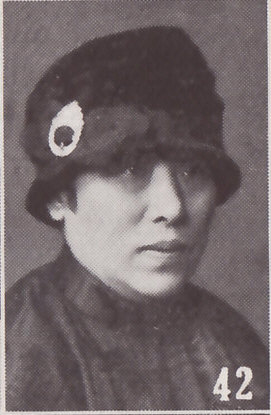
Why He Xiangning matters
He Xiangning was a Chinese painter and revolutionary who linked the founding of the Chinese republic to the modernization of Chinese ink painting. She studied art in Tokyo in the first decade of the twentieth century and later served as chairwoman of the China Artists Association in the 1960s. For collectors and historians, she matters as a bridge figure: a painter whose landscapes, flowers, and animal studies carried Lingnan-adjacent and Nihonga-influenced technique, produced by a person who was simultaneously a leading political actor in modern Chinese history.
- Born
- 1878-06-27, Hong Kong, China (sources vary; some list Nanhai, Guangdong, China)
- Nationality
- Chinese
- Media
- Ink painting, Chinese painting
- Movement
- Lingnan School (associated), Nihonga-influenced Chinese painting
- Education
- Private schooling in Hong Kong; preparatory teacher training linked to Tokyo Women's Normal School and Japan Women's University, Tokyo, from 1903; later art training under Tanaka Raisho and at a women's fine arts school in Tokyo sometimes linked to today's Joshibi University of Art and Design; exact program dates are not confirmed in available sources
- Signature motifs
- Landscape and flower painting, Animal painting
By the numbers
- Chairwoman, China Artists AssociationInstitutional role1960s; exact year undetermined in sources
- He Xiangning Art Museum, ShenzhenDedicated museumopened 1997
- He Xiangning: Ink and Intent2026 retrospectiveNational Gallery Singapore, April to August 2026
- No confirmed public auction recordAuction marketas of this research date; artist is listed on Artnet and MutualArt without a documented top sale
Selected works
Click any work to view it full screen.
Biography
He Xiangning was born on 27 June 1878; sources place her birth in Hong Kong, though some reference works instead cite Nanhai, Guangdong. As a young woman she persuaded her father to let her study alongside her brothers, an unusual step at the time. She married Liao Zhongkai, and the couple became close collaborators of Sun Yat-sen in the revolutionary movement that led to the founding of the Republic of China.
Following her husband to Japan around 1903, she pursued Japanese-language study and teacher-training preparatory courses connected to the Tokyo Women's Normal School and Japan Women's University. She later turned to art, training under the painter Tanaka Raisho and at a women's fine arts school in Tokyo sometimes linked to today's Joshibi University of Art and Design, before returning to Hong Kong around 1911; exact program dates and any additional instructors are not confirmed in available sources.
Through the following decades she combined an active painting practice, including fundraising exhibitions in Singapore and Manila in 1929, with senior roles in Chinese revolutionary and later national politics, holding positions within the Kuomintang and, after 1949, within the People's Republic of China. In the 1960s she served as chairwoman of the China Artists Association. She died of pneumonia on 1 September 1972 in Beijing at the age of 94, and was buried at the Liao Zhongkai Mausoleum in Nanjing alongside her husband.
Critical reception
Available English-language materials on He Xiangning come mainly from museum and exhibition texts rather than from named critics writing in major art publications, so no verbatim critical quotation could be confirmed for this profile. Institutional framing, from the He Xiangning Art Museum and from National Gallery Singapore's 2026 exhibition materials, consistently describes her as a leading ink artist whose landscape, flower, and animal painting developed out of her formal training in Tokyo, and as a rare case of an artist whose painting career ran in parallel with a senior political and revolutionary life. The recurring theme in these sources is the fusion of art and political conviction, most visibly in her fundraising exhibitions of the late 1920s and in her later role atop China's national artists' organization.
Market
No confirmed all-time auction record could be established for He Xiangning from the available research. She is listed as an artist on secondary-market reference sites such as Artnet and MutualArt, indicating some tracked auction presence, but no source in the current dossier documents a specific top sale with a work title, price, currency, house, and date. Her market visibility today is driven primarily by museum programming rather than by a well-established auction track record: the He Xiangning Art Museum in Shenzhen, founded in 1997 and dedicated to her life and work, and the 2026 traveling exhibition "He Xiangning: Ink and Intent" at National Gallery Singapore are the clearest signals of ongoing institutional interest.
Selected exhibitions
| Years | Exhibition | Venues |
|---|---|---|
| 2026 | He Xiangning: Ink and Intent | National Gallery Singapore, Wu Guanzhong Gallery |
| 2018 | Retrospective for the 140th anniversary of her birth | He Xiangning Art Museum, Shenzhen |
| 1997 | Opening of the He Xiangning Art Museum | He Xiangning Art Museum, Shenzhen |
| 1929 | Fundraising art exhibitions | Singapore and Manila (exact venues not specified in sources) |
Museum collections
- He Xiangning Art Museum, Shenzhen
Awards and honors
- Chairwoman, China Artists Association (decade of the 1960s; exact year undetermined in available sources) (1960)
- He Xiangning Art Museum founded in Shenzhen and dedicated to her life and work (1997)
Authentication and provenance
No catalogue raisonne.
No catalogue raisonne has been confirmed for He Xiangning and no commercial estate or gallery representation is documented. Attribution and archival research center on the He Xiangning Art Museum in Shenzhen, a public institution founded in 1997 and dedicated to her life and work.
Primary reference: http://www.hxnart.com/en
What collectors should know
He Xiangning's market is thin and not well documented at auction, and there is no catalogue raisonne or confirmed commercial gallery or estate representation to anchor attribution; the He Xiangning Art Museum in Shenzhen is the primary institutional reference point for her archive and body of work. Secondary sources disagree on some basic biographical details, including her exact birth year (1878 versus 1879 in a minority of reference works) and her birthplace (Hong Kong versus Nanhai, Guangdong), so provenance research should treat these points with care rather than assume a single settled account. Given the absence of a documented auction record, any claims about pricing or market trajectory for her work should be treated as unverified until primary auction data can be located.
Further reading and resources
Data current as of 2026-07-18.

