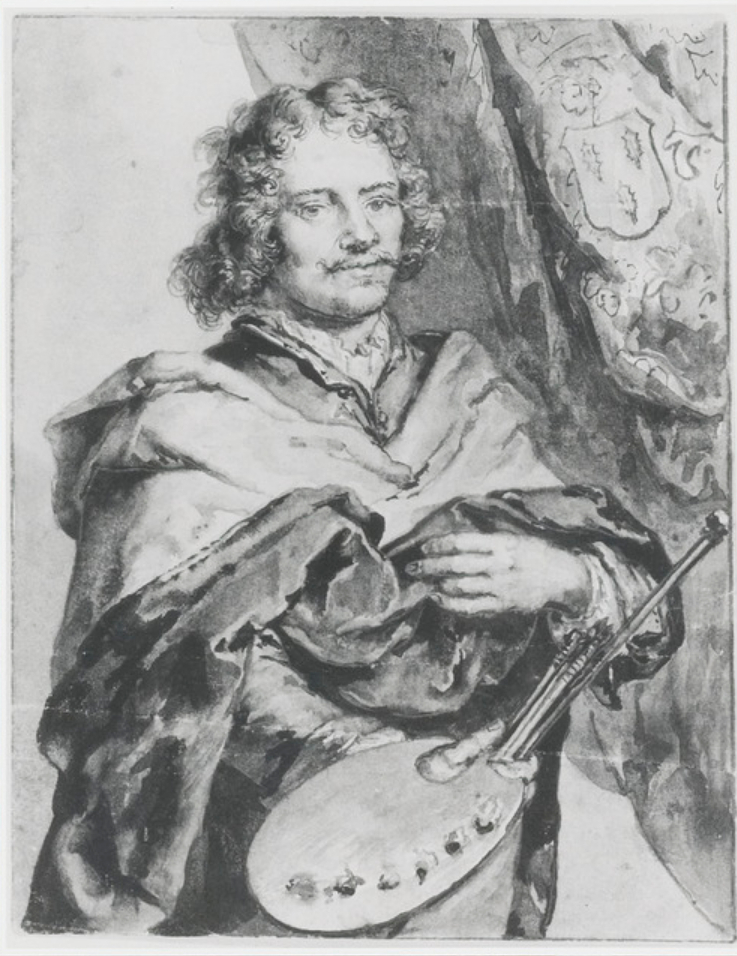
Why Hendrick ter Brugghen matters
Hendrick ter Brugghen was the first major Dutch painter to bring Caravaggio's dramatic lighting and street-level realism back from Rome to the Netherlands, and he is generally regarded as the most gifted of the Utrecht Caravaggisti. His life's work survives in a very small, fixed body of paintings, most of them already held by major museums, which makes him a study in scarcity: a foundational figure in European painting whose market consists of a handful of documented auction appearances rather than a living, expanding supply.
- Nationality
- Dutch
- Media
- Painting
- Movement
- Dutch Golden Age, Utrecht Caravaggism
- Education
- Apprenticed under Abraham Bloemaert in Utrecht, c. 1601 to c. 1607; studied in Rome and Milan, c. 1607 to 1614; enrolled as a master painter in the Utrecht Guild of Saint Luke, 1616.
- Signature motifs
- Caravaggist chiaroscuro, Half-length musicians and revelers, Candlelit genre scenes
By the numbers
- approx. USD 1.93MAuction highAggregate high reported by MutualArt; the specific work, auction house, and sale date behind this figure are not independently confirmed
- 1616 to 1629Active in UtrechtMaster painter, Guild of Saint Luke, from 1616
- Utrecht CaravaggismMovementLeading Dutch follower of Caravaggio
- 5 major institutionsMuseum collectionsIncluding the Metropolitan Museum, National Gallery London, and Art Institute of Chicago
Selected works
Click any work to view it full screen.
Biography
Hendrick ter Brugghen was born in 1588, probably in The Hague, and moved with his family to Utrecht in the early 1590s. As a boy of about thirteen, around 1601, he began to study painting under Abraham Bloemaert, one of the leading painters then working in Utrecht. Sometime after April 1607 he left for Italy, where he remained for close to a decade, based chiefly in Rome. There he studied the work of Caravaggio and the Caravaggisti at first hand, and by his own account "executed art for innumerable years." He is documented in Milan in the summer of 1614 before returning to Utrecht, where he is recorded as a witness in April 1615.
In 1616 ter Brugghen enrolled as a master painter in the Utrecht Guild of Saint Luke, formally establishing his practice in the city where he would work for the rest of his life. His mature paintings, half-length musicians, card players, and biblical scenes rendered in strong candlelit contrast, brought him wide recognition among contemporaries. According to the biographer Arnold Houbraken, Peter Paul Rubens, searching the Netherlands for a painter of real distinction, said he had found only one, referring to ter Brugghen by name. By the 1630s, work by ter Brugghen was in the collection of Charles I of England, and Elizabeth Stuart, the exiled Winter Queen and Charles's sister, is thought to have commissioned a mantelpiece painting from him. Writing in 1708, the biographer Cornelis de Bie described him as one of the most celebrated and talked about painters of his time.
Ter Brugghen died in Utrecht on 1 November 1629, at the age of forty-two, probably as a result of a plague epidemic then sweeping the city. He was buried in the Buurkerk.
Critical reception
Ter Brugghen's reputation has been consistent across four centuries, from contemporary praise to modern museum scholarship. The Leiden Collection's artist essay notes that in 1708 Cornelis de Bie described him as one of the "most celebrated and talked about painters of his time," and adds that "today the artist is widely regarded as the most gifted of the Dutch Caravaggists." The National Gallery, London, credits him as the first important painter influenced by Caravaggio to return to Holland, a framing echoed across museum scholarship. Critical attention tends to center on his distinctive cool, silvery light and psychological intimacy, qualities that set his work apart from the more theatrical Caravaggism of some of his Utrecht peers.
Market
Ter Brugghen's market is defined by extreme scarcity rather than turnover. Artprice records only 37 auction appearances for the artist across the modern era, a reflection of a body of work that is nearly four centuries old and largely absorbed into museum collections. Market aggregator MutualArt puts his highest recorded auction price at approximately USD 1.93 million for a painting, though the specific work, sale date, and auction house behind that figure could not be independently confirmed as of mid-2026. There is no gallery or estate representing the artist; every transaction takes place on the secondary market, generally at the major international auction houses handling Old Master sales.
Top auction results
| Work | Price | Sale |
|---|---|---|
| Unconfirmed lot (aggregate high price only, per MutualArt) | USD 1,932,136 |
Selected exhibitions
| Years | Exhibition | Venues |
|---|---|---|
| 2016 to 2017 | Beyond Caravaggio | National Gallery, London |
| n.d. (21st century, dates to be confirmed) | Ter Brugghen. From Holland to Italy in the Footsteps of Caravaggio | Gallerie Estensi, Modena |
Museum collections
- Metropolitan Museum of Art, New York
- National Gallery, London
- Art Institute of Chicago
- Alte Pinakothek, Bayerische Staatsgemaldesammlungen, Munich
- National Gallery of Art, Washington, D.C.
Authentication and provenance
No catalogue raisonne.
No published catalogue raisonne has been confirmed for ter Brugghen. Benedict Nicolson's 1958 monograph, Hendrick Terbrugghen, is the standard scholarly reference cited by major auction houses, but it is not confirmed here as a comprehensive raisonne. There is no artist estate or foundation. Attribution rests on museum and auction house connoisseurship, technical study, and provenance research.
Primary reference: https://www.theleidencollection.com/artists/hendrick-ter-brugghen/
What collectors should know
The defining fact of ter Brugghen's market is scarcity, not volatility. With only 37 recorded auction appearances and a highest reported price of approximately USD 1.93 million that cannot be tied to a specific, independently verified sale, the market offers very few comparable data points, and any single result should be read against that thin sample rather than as part of a smooth trend line. There is no catalogue raisonne and no estate to authenticate works, so provenance history and museum or specialist connoisseurship carry unusual weight when a painting does come to market. Because most major surviving works are already in institutional collections such as the Metropolitan Museum, the National Gallery in London, and the Art Institute of Chicago, a ter Brugghen appearing at auction is a genuinely rare event rather than a routine market occurrence.
Further reading and resources
Data current as of 2026-07-11.

