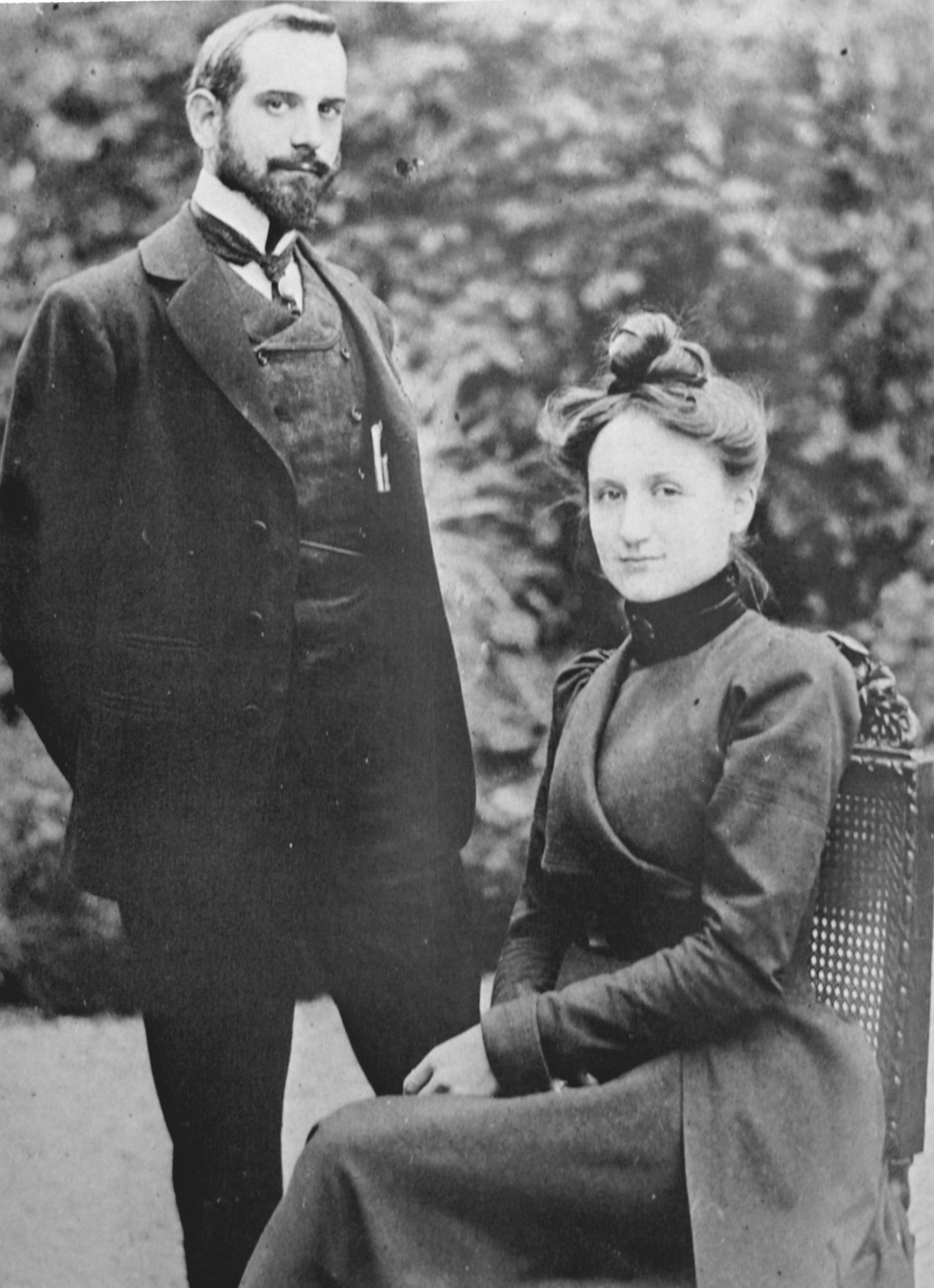
Why Henri Manguin matters
Henri Manguin was one of the founding painters of Fauvism, one of the small group of artists whose 1905 Salon d'Automne showing gave the movement its name. For a collector, he represents a way into the historic core of early twentieth-century French modernism at a market level well below his better-known Fauve peers, backed by real museum holdings across France, Spain, and Russia, but without the concentrated gallery or estate infrastructure that supports many of those peers' markets today.
- Born
- 1874-03-23, Paris, France
- Nationality
- French
- Media
- Painting, Works on paper
- Movement
- Fauvism
- Education
- Ecole des Beaux-Arts, Paris, studied under Gustave Moreau from 1894; no formal degree documented
- Signature motifs
- Mediterranean landscapes, Nudes in interiors, Still life
- Representation
- "Galerie Estades", "Helene Bailly Marcilhac"
By the numbers
- USD 1.15MAuction highLes Oliviers a Cavaliere, Sotheby's New York, 2016
- Founding FauveMovement1905 Salon d'Automne, la cage aux fauves
- 3 institutionsMuseum collectionsThyssen-Bornemisza, Pushkin Museum, Musee de Grenoble
- Multiple dealersRepresentationNo single estate gallery; work is exhibited and sold through galleries including Galerie Estades and Helene Bailly Marcilhac
Biography
Henri Charles Manguin was born on 23 March 1874 in Paris. Accounts vary on his secondary schooling, giving either the Lycee Condorcet, which he left in 1889, or the Lycee Colbert, left in 1890, but sources agree he abandoned formal schooling early to pursue painting. He entered the Ecole des Beaux-Arts in Paris around 1894, studying in the studio of Gustave Moreau alongside Henri Matisse, Albert Marquet, and Georges Rouault, a circle that would later form the nucleus of Fauvism.
Manguin first exhibited at the Salon des Independants and the Salon d'Automne in 1902. His defining moment came in 1905, when he showed paintings in the Salon d'Automne room that critic Louis Vauxcelles dubbed "la cage aux fauves," the exhibition that gave Fauvism its name and its public debut. Galerie Druet gave him a solo exhibition around 1906 to 1907. Unlike some of his Fauve colleagues, Manguin did not push toward increasingly radical distortion, instead developing a sustained practice of luminous landscapes, nudes, and still lifes centered on the Mediterranean coast, particularly around Saint-Tropez and Cavaliere.
In 1949 he left Paris to settle in Saint-Tropez. He died there on 25 September 1949, at age 75, after a short illness, according to the Museo Nacional Thyssen-Bornemisza.
Critical reception
Manguin's contemporaries placed him at the center of the Fauvist breakthrough: he was one of the artists in the notorious 1905 "cage aux fauves" room. Later museum framing, including from the Museo Nacional Thyssen-Bornemisza, describes his mature work as balanced, harmonious Mediterranean landscapes and still lifes, distinguishing his restrained, sun-filled palette from the more aggressive color and distortion pursued by Fauve colleagues such as Derain and Vlaminck. His standing has been reinforced by a series of museum retrospectives, including shows at the Musee Marmottan in 1988, the Musee Paul Valery in Sete in 1994, and the Fondation de l'Hermitage in Lausanne in 2018.
Market
Manguin's documented auction ceiling is Les Oliviers a Cavaliere (Olive Trees in Cavaliere, 1906), reported to have sold at Sotheby's New York on 9 November 2016 for USD 1,150,000 against an estimate of USD 1,000,000 to 1,500,000, per market-data aggregators; this exact date and location are not independently confirmed via a primary auction-house lot record. No higher price for a Manguin work has been identified through mid-2026. Market trackers place the realized-price ceiling for his paintings at that same figure, with works on paper trading far lower, around USD 34,564 at the high end, pointing to a market with a firm top and a long tail of smaller results. His work is not concentrated behind a single gallery or estate; it circulates through multiple secondary-market dealers, including Galerie Estades and Helene Bailly Marcilhac in Paris, and is tracked across aggregators such as Artsy and MutualArt.
Top auction results
| Work | Price | Sale |
|---|---|---|
| Les Oliviers a Cavaliere (Olive Trees in Cavaliere, 1906) (2016) | USD 1,150,000 | Sotheby's, New York, 2016-11-09 |
Selected exhibitions
| Years | Exhibition | Venues |
|---|---|---|
| 1902 | Salon des Independants | Paris |
| 1905 | Salon d'Automne (la cage aux fauves) | Paris |
| 1906 | La Libre Esthetique, 13th Exhibition | Brussels |
| 1906 to 1907 | Solo exhibition | Galerie Druet, Paris |
| 1976 | Centenary of Henri Manguin | Musee de l'Annonciade, Saint-Tropez |
| 1988 | Henri Manguin retrospective | Musee Marmottan, Paris |
| 1994 | Henri Manguin, Southern Light | Musee Paul Valery, Sete |
| 2018 | Manguin. La volupte de la couleur | Fondation de l'Hermitage, Lausanne |
Museum collections
- Museo Nacional Thyssen-Bornemisza, Madrid
- Pushkin Museum, Moscow
- Musee de Grenoble
Authentication and provenance
No catalogue raisonne.
No published catalogue raisonne has been identified for this artist. Works are authenticated case by case through dealers, auction houses, and museum curators rather than through a single centralized body or estate.
Primary reference: https://www.sothebys.com/en/artists/henri-charles-manguin
What collectors should know
No catalogue raisonne has been identified for Manguin, so provenance and authentication rest on dealers, auction houses, and museum curators rather than a single reference source or estate authority. His auction market is thin at the top, with one documented seven-figure result and most sales landing well below it, so any single price point should be read in that context rather than as a stable trend line. Because his work is traded across a wide range of dealers rather than through one representative, collectors should expect more variation in how works are presented and priced than with artists whose markets are concentrated behind a single gallery.
Further reading and resources
Data current as of 2026-07-10.

