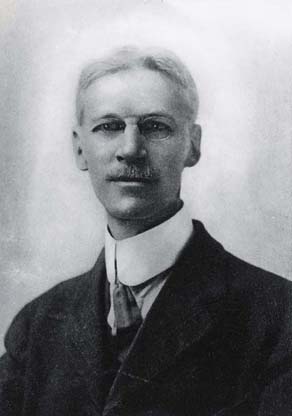
Why Henry Siddons Mowbray matters
Henry Siddons Mowbray was one of the Gilded Age's leading decorative muralists and a prominent American practitioner of Salon-style Orientalism, trained in Paris under Leon Bonnat and active among the same patrons who built New York's great Beaux-Arts institutions. He painted ceiling and wall murals for J. P. Morgan's library, the University Club of New York, the Appellate Division Courthouse, and the F. W. Vanderbilt mansion at Hyde Park, and he later directed the American Academy in Rome. For a collector, he represents a historically important but thin market: his major works are largely fixed inside architecture rather than available for sale, and his easel paintings turn up only occasionally at auction.
- Born
- 1858-08-05, Alexandria, Egypt
- Nationality
- American
- Media
- Painting, Mural painting
- Movement
- Orientalism, Academic/Beaux-Arts decorative tradition
- Education
- Drury Academy, North Adams, Massachusetts (secondary schooling); U.S. Military Academy, West Point, c. 1875 to 1876 (no degree, left after about a year); private study under Alfred Cornelius Howland, North Adams, Massachusetts, 1877 to 1878; Atelier Leon Bonnat, Paris, from about 1878 (exact duration not confirmed; some secondary accounts also mention contact with Jean-Leon Gerome, unconfirmed by primary sources).
- Signature motifs
- Orientalist genre subjects, Grand decorative ceiling murals
By the numbers
- 1878 to 1928Career spanParis atelier training under Leon Bonnat to his death
- Clark Prize, 1888National Academy of DesignElected an associate member the same year
- Director, 1902 to 1904American Academy in RomeSome sources cite the start as 1903
- Metropolitan Museum of Art; Detroit Institute of ArtsMajor collectionsAlso held by the Smithsonian American Art Museum
Selected works
Click any work to view it full screen.
Biography
Henry Siddons Mowbray was born Henry Siddons on August 5, 1858, in Alexandria, Egypt, to English parents. Orphaned young, he was raised in the United States by an aunt and her husband, and by about the late 1860s was living in North Adams, Massachusetts, where he attended the common schools and Drury Academy. In 1875 he was appointed a cadet at the United States Military Academy at West Point but left after about a year. Returning to Massachusetts, he took art lessons from the landscape painter Alfred Cornelius Howland in North Adams during the winter of 1877 to 1878.
In 1878 Mowbray left for Paris, where he trained in the atelier of Leon Bonnat; some secondary accounts also place him briefly in contact with Jean-Leon Gerome's studio, though this is not confirmed by primary institutional sources. He settled in New York on his return, and in 1888 won the Clark Prize and was elected to the National Academy of Design. From the mid-1880s he built a reputation for Orientalist genre subjects and, increasingly, for large-scale decorative murals commissioned by wealthy patrons and public institutions, including the ceiling and walls of the University Club library, murals for the Appellate Division Courthouse, ceiling paintings for J. P. Morgan's library and its later annex, and decorative ceilings for the F. W. Vanderbilt mansion at Hyde Park. He taught life drawing and painting at the Art Students League of New York from 1886 to 1901, and from 1902 to 1904 served as director of the American Academy in Rome.
Mowbray later made his home in Washington, Connecticut, where he died on January 13, 1928. The National Academy of Design's biographical record attributes his death to pneumonia. His papers, along with those of his family, are held at the Smithsonian's Archives of American Art.
Critical reception
Mowbray earned early institutional recognition, winning the National Academy of Design's Clark Prize and gaining election to the Academy in 1888, and his standing was reinforced when he was chosen to direct the American Academy in Rome from 1902 to 1904. His paintings were shown at the World's Columbian Exposition in Chicago in 1893, and his decorative commissions for J. P. Morgan, the University Club, the Appellate Division Courthouse, and the Vanderbilt family placed him among the sought-after muralists of the American Renaissance. A gallery biographical note attributes to the critic Royal Cortissoz, writing in 1930, a description of his decorative manner as marked by classical restraint and grace, though the original essay could not be independently verified. Later assessments continue to place him within the tradition of Orientalist Salon painting joined to large-scale, architecturally integrated mural work, and his continued presence in museum collections, including the Smithsonian American Art Museum, reflects that standing.
Market
A confirmed, fully documented all-time auction record for Mowbray, meaning a specific title, price, currency, auction house, and sale date, could not be established from available public sources. Auction houses such as Heritage Auctions have catalogued his paintings under the name Henry Siddons Mowbray with his standard 1858 to 1928 dates, so his work does reach the secondary market, but no single sale stands out in accessible records as a clearly verified high point. One televised appraisal has offered a rough estimate of roughly USD 50,000 to 75,000 for a single painting, but that figure is an estimate rather than a realized sale price and should not be treated as a market record.
Selected exhibitions
| Years | Exhibition | Venues |
|---|---|---|
| 1893 | World's Columbian Exposition | Chicago |
| c. 1900s | Library ceiling and wall murals | University Club, New York |
| c. 1900 | The Transmission of the Law (ceiling mural) | Appellate Division Courthouse, New York |
| c. 1905 to 1907 | East Room and Rotunda ceiling murals for J. P. Morgan | The Morgan Library and Museum, New York |
| c. 1899 | Ceiling murals | F. W. Vanderbilt Mansion, Hyde Park, New York |
| n.d. | Decorative murals | U.S. Federal Court building, Cleveland, Ohio |
| 1902 to 1904 | Director | American Academy in Rome |
| 1886 to 1901 | Instructor, life drawing and painting | Art Students League of New York |
Museum collections
- Metropolitan Museum of Art, New York
- Detroit Institute of Arts
- Smithsonian American Art Museum, Washington, D.C.
- The Morgan Library and Museum, New York (ceiling murals)
- University Club of New York (library ceiling and walls)
- Appellate Division Courthouse, New York
- F. W. Vanderbilt Mansion National Historic Site, Hyde Park, New York
Awards and honors
- Clark Prize, National Academy of Design (1888)
- Elected member, National Academy of Design (one source gives 1891 for election; both dates appear in the record) (1888)
Authentication and provenance
No catalogue raisonne.
No published catalogue raisonne has been identified for this artist. Works are generally verified through museum accession and exhibition records and through the Mowbray family papers held at the Smithsonian's Archives of American Art.
Primary reference: https://americanart.si.edu/artist/h-siddons-mowbray-3443
What collectors should know
No catalogue raisonne has been identified for Mowbray, so provenance research depends on museum accession records, exhibition history, and the family papers held at the Smithsonian's Archives of American Art. No gallery or estate currently represents him; his paintings circulate through auction houses and dealers handling historical American art, and past ownership includes firms such as Berry-Hill Galleries, Kenneth Lux Gallery, and Jordan-Volpe Gallery. A large share of his most important work exists as murals fixed inside buildings such as the University Club, the Appellate Division Courthouse, and the Morgan Library, which limits the supply of transactable paintings and means that any single auction result should be read with caution rather than treated as an established benchmark.
Further reading and resources
- Harry Siddons MowbrayWikipedia
- H. Siddons Mowbray, artist pageSmithsonian American Art Museum
- Harry Siddons Mowbray and Mowbray family papers, 1872 to 1976Archives of American Art, Smithsonian Institution
- Henry Siddons Mowbray, biographyNational Academy of Design
- H. Siddons MowbrayU.S. Commission of Fine Arts
Data current as of 2026-07-13.

