Why Horst Antes matters
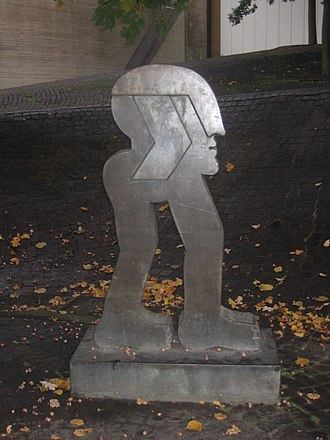
Horst Antes is one of the founding figures of postwar German figurative painting, best known for inventing the "Kopffussler," or head footer, a stocky, single-legged figure that he has reworked across painting, print, and sculpture since around 1960. His inclusion in three editions of documenta and a UNESCO painting prize at the Venice Biennale place him firmly inside the postwar canon, even though his auction market remains thin. For a collector, he represents a case where institutional standing runs well ahead of market liquidity.
- Born
- 1936-10-28, Heppenheim, Germany
- Nationality
- German
- Media
- Painting, Sculpture, Printmaking
- Movement
- New Figuration, Kopffussler figuration
- Education
- Staatliche Akademie der Bildenden Kunste Karlsruhe, 1957 to 1959, studied under HAP Grieshaber. No diploma or degree is documented in available sources.
- Signature motifs
- Kopffussler, head footer figure, Figurative color abstraction
- Representation
- Galerie Koch, Meyer Riegger, Galerie Jeanne
By the numbers
- EUR 280,600Auction highFigur Flora, Ketterer Kunst, Munich, 10 December 2011; reported price, see Market for verification note
- 1964, 1968, 1977Documenta appearancesKassel
- 1966Venice BiennaleGerman Pavilion; UNESCO Prize for Painting
- Galerie Koch; Meyer Riegger; Galerie JeanneRepresented by
Biography
Horst Antes was born on 28 October 1936 in Heppenheim, Germany. He studied at the Staatliche Akademie der Bildenden Kunste Karlsruhe from 1957 to 1959 under HAP Grieshaber, though no formal degree from that period is documented in the available record. His first solo exhibition was held at Galerie der Spiegel in Cologne in 1960, the same period in which he developed the Kopffussler figure that would become his signature motif and a touchstone of what critics later called New Figuration in Germany.
Early recognition came quickly: the Kunstpreis der Stadt Hannover in 1959, a Kulturkreis der Deutschen Wirtschaft scholarship in 1960, and the Prix des artistes at the second Biennale des jeunes artistes in Paris in 1961, a prize reportedly donated by Andre Malraux. Residencies followed at the Villa Romana in Florence (1962) and the Villa Massimo in Rome (1963), and in 1963 the Musee d'Art Moderne de la Ville de Paris gave him a solo show. He took part in documenta III in 1964, documenta 4 in 1968, and documenta 6 in 1977, and represented Germany at the 33rd Venice Biennale in 1966, where he received the UNESCO Prize for Painting.
His later career brought the Grand Prize at the 1991 Sao Paulo Biennial and the Hessian Culture Prize the same year. Solo museum exhibitions followed at the Sprengel Museum Hannover in 2002 and the Kunsthalle Wurth in 2006. Sources describe his later working life across Karlsruhe, Berlin, and locations in Italy, though they differ on the specific towns (Sicellino Castellina near Siena, Wolfartsweier, and Florence all appear), so the precise current arrangement should be treated as approximate. He remains active, with a major exhibition at the Sprengel Museum Hannover and a solo show at Galerie Koch in Hannover both marking his 90th birthday in 2026.
Critical reception
Antes is widely credited as a pioneer of New Figuration in Germany, a painter who moved from Art Informel toward a personal figurative language centered on the Kopffussler. Recent coverage tied to his 90th birthday in 2026, including exhibitions at the Sprengel Museum Hannover and Galerie Koch in Hannover, has reaffirmed this framing, describing him as a formative influence on postwar German art whose repeated reworking of a single invented figure gave him a distinct place alongside contemporaries pursuing more purely abstract or purely representational paths. Gallery texts consistently describe him as one of the most important representatives of new figurative painting in Germany, a characterization that lines up with his early prizes, his three documenta appearances, and his inclusion in major public collections.
Market
Horst Antes has a long exhibition history but a comparatively small and infrequently tested auction market. The highest price reported for his work is Figur Flora, cited at EUR 280,600 (roughly USD 375,600 at the time) at Ketterer Kunst in Munich on 10 December 2011, though this figure is drawn from a secondary auction-price compilation rather than a primary auction-house record, and a separate, dedicated review of his top auction results could not independently confirm any sale above EUR 39,600. That more recent figure comes from a 2025 Dorotheum sale in Vienna, and other recent results have also fallen well below the price cited for the 2011 lot. Collectors should treat the 2011 figure as reported rather than fully verified, and read any single result, high or low, as a data point from a shallow market rather than a stable trend.
Top auction results
| Work | Price | Sale |
|---|---|---|
| Figur Flora | USD 375,600 (EUR 280,600) | Ketterer Kunst, Munich, 2011-12-10 |
Selected exhibitions
| Years | Exhibition | Venues |
|---|---|---|
| 1966 | 33rd Venice Biennale | German Pavilion, Venice Biennale |
| 1964 to 1977 | documenta III, documenta 4, and documenta 6 | Kassel |
| 1991 | XXI Bienal de Sao Paulo | Sao Paulo Biennial |
| 2006 | Solo exhibition | Kunsthalle Wurth, Schwabisch Hall |
| 2025 | Ich bin das Haus | Meyer Riegger, Berlin |
| 2026 | Horst Antes. Eine Sammlung | Sprengel Museum Hannover |
| 2026 | Exhibition marking the artist's 90th birthday | Galerie Koch, Hannover |
Museum collections
- Sprengel Museum Hannover
- Ludwig Forum Aachen
- Museum of Modern Art, New York
- Museum Ludwig, Cologne
- Nationalgalerie, Berlin
- Israel Museum, Jerusalem
Awards and honors
- Prix des artistes, II Biennale des jeunes artistes, Paris (1961)
- Villa Romana Prize, Florence (1962)
- Villa Massimo Rome Prize, German Academy Villa Massimo (1963)
- UNESCO Prize for Painting, 33rd Venice Biennale (1966)
- Officer's Cross, First Class, Order of Merit of the Federal Republic of Germany (1989)
- Grand Prize, XXI Bienal de Sao Paulo (1991)
- Hessian Culture Prize (Kulturpreis des Landes Hessen) (1991)
Authentication and provenance
No catalogue raisonne.
No published catalogue raisonne or certificate-of-authenticity program is confirmed for Horst Antes. A painting compendium, Antes, Malerei 1958 to 2010, documents a large body of work but is a monograph rather than a certified catalogue raisonne. Verification runs through the artist and the galleries that currently handle his work.
Primary reference: https://www.horstantes.de/arbeiten/biografie
What collectors should know
There is no confirmed catalogue raisonne for Horst Antes, and no certificate of authenticity program is documented; verification currently runs through the artist himself and the galleries that handle his work, including Galerie Koch, Meyer Riegger, and Galerie Jeanne. No single gallery is documented as an exclusive representative or estate handler, since Antes is a living artist with work moving through several dealers at once. His auction history is thin relative to his institutional standing, so any single sale, including the unverified 2011 figure for Figur Flora, should be read as a data point from a shallow market rather than a stable price trend.
Further reading and resources
Data current as of 2026-07-16.

