Hypnerotomachia Poliphili (attributed to Francesco Colonna)
Italian, 1433 to 1527
Printed book (incunable) · Woodcut illustration
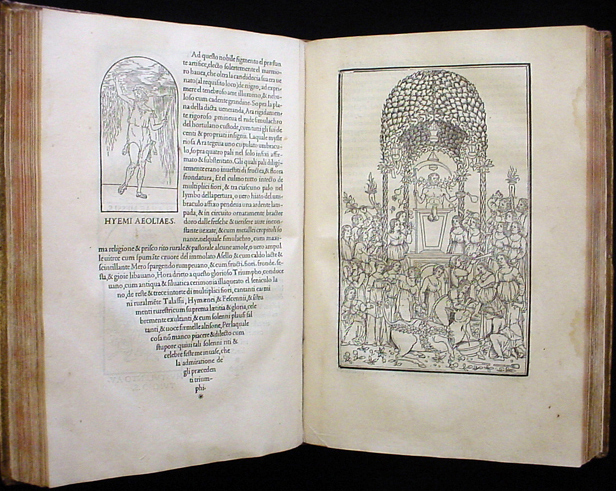
Why Hypnerotomachia Poliphili (attributed to Francesco Colonna) matters
Hypnerotomachia Poliphili is not the name of a painter or sculptor but the title of one of the most celebrated illustrated books of the Renaissance, printed in Venice by Aldus Manutius in December 1499. It matters to collectors of rare books and Renaissance material culture because it combines an ambitious dream narrative with 172 woodcut illustrations that shaped later European ideas about architecture, gardens, and the fusion of image and text. Because the record circulates under a title rather than a settled personal name, it is also a useful case study in how the market resolves authorship for anonymous or disputed historical works.
- Nationality
- Italian
- Media
- Printed book (incunable), Woodcut illustration
- Movement
- Italian Renaissance, Venetian humanism
- Education
- No documented schools, degrees, or years of study survive for either the text's traditionally credited author or the woodcuts' attributed designer; both remain subjects of ongoing scholarly attribution debate.
- Signature motifs
- Allegorical dream narrative, Architectural fantasy woodcuts, Hieroglyph-inspired imagery
By the numbers
- USD 233,500Auction high (documented)Rare Book Hub auction report, first edition; exact auction house and sale date not independently confirmed
- 1499First editionVenice, printed by Aldus Manutius
- Approximately 270 worldwideSurviving copiesEstimate from bibliographic surveys; not independently corroborated
- Francesco ColonnaAttributed author1433 to 1527, per the acrostic attribution; disputed
Selected works
Click any work to view it full screen.
Biography
The text is traditionally attributed to Francesco Colonna, described in museum and auction records as a Venetian Dominican friar, an attribution built on an acrostic formed by the initial letters of the book's chapters, which spells out his name. Museum records most often give his dates as 1433 to 1527, though the Metropolitan Museum lists an alternative range of circa 1453 to 1517, and scholars have proposed other candidates for authorship, including a Roman noble of the same name and figures such as Leon Battista Alberti. The identity of the author is explicitly described by Cambridge University Library as still debated.
The book's woodcut illustrations are unsigned. Auction houses and the National Gallery of Art attribute the designs to Benedetto Bordon, also spelled Bordone, a Paduan miniaturist active circa 1450 to 1530. Other institutions, including the Metropolitan Museum and the Museum of Fine Arts, Boston, catalogue the same woodcuts as the work of an unidentified or anonymous artist. No documented schools, degrees, or years of formal training survive for either the attributed author or the attributed illustrator.
Critical reception
Institutional and scholarly sources consistently describe the book as one of the most influential and elaborately illustrated works of Renaissance printing, prized for its dream-allegory narrative and its architectural fantasy woodcuts, which later informed European garden and architectural design. Writers on the book repeatedly return to its integration of image and text and to its erudite mixture of Italian, Latin, and Greek, aimed at a learned humanist readership. No exact, attributable quotation from a named critic in a major outlet could be verified for reproduction here, so none is included.
Market
Hypnerotomachia Poliphili does not have a conventional single-artist market. Copies of the 1499 first edition, and of later editions and facsimiles, circulate through the rare-book departments of major auction houses, including Christie's, Sotheby's, Forum Auctions, and Koller, and through specialist rare-book dealers rather than contemporary art galleries. The highest documented auction price identified in bibliographic auction-report sources is USD 233,500 for a first-edition copy, per Rare Book Hub; the exact auction house and sale date for that result could not be independently confirmed, so it should be treated as the best-documented figure available rather than a certain all-time record. An estimated 270 or so copies of the 1499 first edition survive in institutional and private hands worldwide, which means price is driven largely by edition, completeness of the woodcuts, binding, and provenance rather than by a broad, artist-level price curve.
Top auction results
| Work | Price | Sale |
|---|---|---|
| Hypnerotomachia Poliphili (first edition, Venice, Aldus Manutius, December 1499) | USD 233,500 (USD 233,500) |
Museum collections
- Metropolitan Museum of Art, New York
- National Gallery of Art, Washington, D.C.
- Isabella Stewart Gardner Museum, Boston
- Museum of Fine Arts, Boston
- Walters Art Museum, Baltimore
- Smith College Museum of Art, Northampton
- RISD Museum, Providence
- Cambridge University Library, Cambridge
Authentication and provenance
No catalogue raisonne.
There is no catalogue raisonne and no per-artist certification program. As a printed incunable, individual copies are authenticated through bibliographic collation against the Aldus Manutius, Venice, December 1499 first edition, comparison of the woodcut states, and provenance research, not through an artist's studio or estate.
Primary reference: https://www.metmuseum.org/art/collection/search/365313
What collectors should know
This is a rare book, not a work by a single named artist in the conventional sense, and both its authorship and its illustration are subject to ongoing scholarly debate rather than settled certainty. There is no catalogue raisonne; authenticity for any given copy rests on bibliographic collation against the December 1499 Aldus Manutius first edition, comparison of the woodcut states, and a documented chain of provenance. Collectors should treat edition, completeness, and condition, not a single artist's market trajectory, as the primary drivers of value, and should expect institutional and auction records to vary in how they name and date the attributed author and illustrator, and to treat any single reported auction price with caution until the sale details are fully corroborated.
Further reading and resources
Data current as of 2026-07-16.

