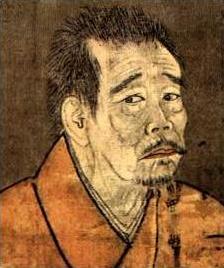
Why Ikkyu Sojun matters
Ikkyu Sojun is one of the most consequential figures in premodern Japanese art and religion, a Zen monk, poet, and calligrapher whose eccentric persona and restless calligraphy still shape how Japan understands Zen aesthetics, the tea ceremony, and the idea of the unorthodox holy man. His works sit in museums from Kyoto to Cleveland to New York, but he is a fundamentally different kind of subject for a collector than a modern or contemporary artist: there is no gallery, no estate, and, as of 2026, no confirmed auction record to anchor his market. For collectors, he represents connoisseurship-driven, provenance-first collecting rather than a data-rich price history.
- Nationality
- Japanese
- Media
- Calligraphy, Ink painting
- Movement
- Muromachi-period Zen Buddhism, Rinzai Zen, Daitoku-ji lineage
- Education
- No formal degrees. Monastic training from around age five at Ankoku-ji, Kyoto, then study under the Rinzai teacher Ken'o Soi, and from about 1415 under Kaso Sodon of the Daitoku-ji branch, who confirmed his enlightenment.
- Signature motifs
- "Wild orchid ink paintings", "One-line Zen calligraphy (ichigyosho)"
By the numbers
- 1394 to 1481LifespanMuromachi-period Zen monk, poet, and calligrapher
- NoneCatalogue raisonneAttribution relies on provenance and connoisseurship
- No established record priceAuction marketNo verified hammer price confirmed in dealer or press sources as of 2026
- NoneGallery representationHistorical figure; works held in museum and temple collections
Selected works
Click any work to view it full screen.
Biography
Ikkyu Sojun was born in 1394 in the Kyoto area; sources differ on the exact day, with some giving January 1 and others February 1, so the precise date should be treated as unresolved. He is traditionally said to have been an illegitimate son of Emperor Go-Komatsu, though this remains a matter of tradition rather than documented fact. Around age five he was sent to Ankoku-ji, a Rinzai Zen temple in Kyoto, as an acolyte under the name Shuken, and immersed in Chinese classics, poetry, and Buddhist sutras as part of the Gozan Zen curriculum. He continued his literary and Zen education through his early teens under the poet-monk Botetsu, associated with the Kennin-ji and Tenryu-ji temples, before entering strict training around age sixteen under the Rinzai master Ken'o Soi, who gave him the name Sojun.
After Ken'o's death, Ikkyu continued his training under Kaso Sodon of the Daitoku-ji branch of Rinzai Zen. Kaso confirmed his enlightenment and offered him a certificate, or inka, which Ikkyu is said to have refused or burned, and gave him the name Ikkyu. Known by the sobriquet Kyounshi, or "Crazy Cloud," he became famous for an unconventional life that included open relationships, criticism of clerical corruption, and a deliberately irreverent public persona alongside serious Zen practice. He later became abbot of Daitoku-ji and led its rebuilding after the Onin War of 1467 to 1477. He wrote extensively, most notably the poetry collection Kyounshu, and produced calligraphy and a small number of ink paintings, most recognizably works built around a wild orchid motif. He is traditionally credited with shaping aesthetic ideas that fed into the later development of the Japanese tea ceremony. Ikkyu died in 1481 at about age 87; sources give either November 21 or December 12 as the exact date, and place his death at Kyotanabe, near Shuon-an, the temple he had restored and where he is buried.
Critical reception
Museum and scholarly sources consistently place Ikkyu at the center of Muromachi-period Zen culture, describing him as the figure who revitalized the Daitoku-ji line of Rinzai Zen after the Onin War and helped shape later Japanese aesthetics, including the tea ceremony. His calligraphy and the small surviving body of ink paintings, especially the wild orchid compositions, are read by institutions as extensions of the same unorthodox, questioning sensibility found in his poetry. He remains a widely recognized figure in Japan today, in part through a long-running animated television series based on stories of his childhood, which cemented his popular image as a clever, irreverent young monk.
Market
No catalogue raisonne exists for Ikkyu Sojun, no gallery or estate represents his work, and no verified all-time auction record could be confirmed as of 2026. Works attributed to him, chiefly calligraphy scrolls and rare ink paintings, occasionally surface at Christie's and similar auction houses, but they are typically qualified as "attributed to," and published figures available in the trade are pre-sale estimates rather than confirmed hammer prices. Because so few autograph works circulate outside museum and temple holdings, sales are rare and thinly documented; one recent example, an ink painting attributed to Ikkyu offered in a 2024 Asian works of art sale, passed unsold against an estimate of USD 2,000 to 3,000. Any specific price claimed for his work should be checked against a verifiable saleroom result rather than taken at face value.
Selected exhibitions
| Years | Exhibition | Venues |
|---|---|---|
| 2018 | Daitokuji Shinju-an Special Viewing | Shinju-an, Daitoku-ji, Kyoto |
| 2017 | Calligraphy in One Line | Tokyo National Museum (Honkan, Room 3) |
| 2016 | Portrait of Linji Yixuan, with inscription by Ikkyu Sojun | Shinju-an, Daitoku-ji, Kyoto |
| ongoing | Portrait of the Priest Ikkyu Sojun (Important Cultural Property) | Nara National Museum |
| ongoing | Calligraphy with Willow and Swallows; Monk in a Landscape; Reflections of Priest Foyen | Cleveland Museum of Art |
| ongoing | Letter by Ikkyu Sojun (Century Akao Collection) | Keio University, Institute of Oriental Classics (Shido Bunko), Tokyo |
Museum collections
- Tokyo National Museum, Tokyo
- Nara National Museum, Nara
- Cleveland Museum of Art, Cleveland
- Metropolitan Museum of Art, New York (holds a work described as 'in the style of' the artist)
- Keio University, Institute of Oriental Classics (Shido Bunko), Tokyo
- MOA Museum of Art, Atami
- Miho Museum, Shiga
- Shuon-an (Ikkyu-ji) Museum Treasury, Kyotanabe
Authentication and provenance
No catalogue raisonne.
No catalogue raisonne exists for this fifteenth-century monk. Attribution rests on temple provenance, inscriptions, and connoisseurship, and many works in trade are described by dealers and museums as attributed to or in the style of Ikkyu rather than as confirmed autograph work.
Primary reference: https://www.nippon.com/en/japan-topics/b07211/ikkyu-sojun-the-enduring-legacy-of-a-zen-renegade.html
What collectors should know
Ikkyu Sojun's works exist almost entirely in institutional and temple hands, museums, a foundation collection, and a small circle of private holdings, rather than in an active commercial gallery market, and no catalogue raisonne exists to anchor attribution. Pieces that do appear at auction are usually qualified as "attributed to" or "in the style of," so provenance research and connoisseurship matter more here than they would for an artist with an established market. In the absence of a confirmed auction record, collectors should treat any specific price figure circulating for his work with real caution until it can be checked against a verified saleroom result.
Further reading and resources
Data current as of 2026-07-15.

