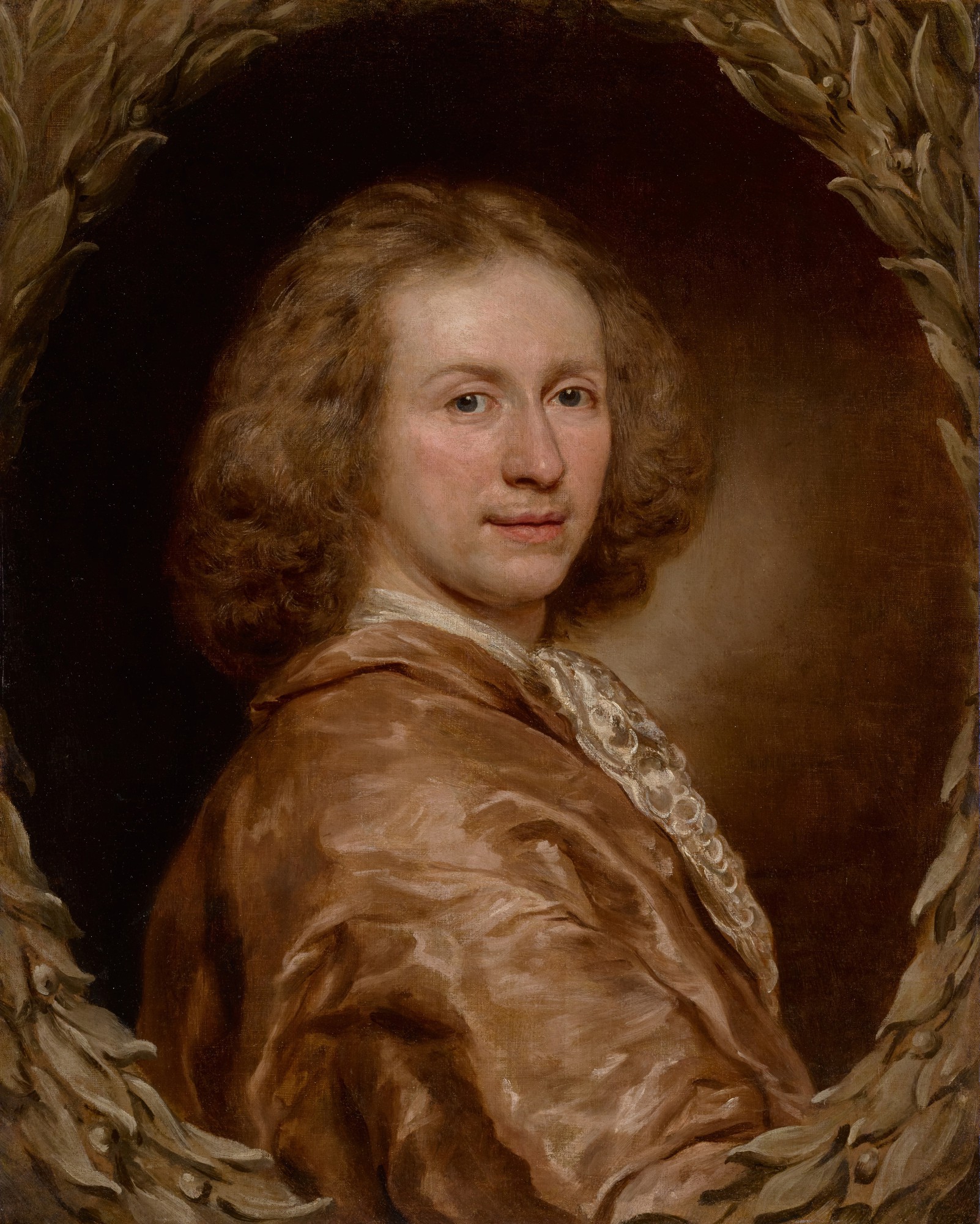
Why Jacob Ferdinand Voet matters
Jacob Ferdinand Voet was one of the most sought-after portrait painters of the late Baroque, the artist Roman cardinals, princes, and the celebrated Mancini sisters turned to when they wanted to be seen. His likenesses of the Chigi, Colonna, Spada, and Mancini families now form a visual record of papal Rome and the French court at Versailles's edge, and his paintings are dispersed across dozens of museums from Florence to Amsterdam to Windsor. For a collector, he represents a genuine Old Master rarity: a documented court painter to Louis XIV whose market remains thin and comparatively little studied, so provenance and scholarly attribution carry unusual weight.
- Nationality
- Flemish
- Media
- Painting, Portraiture
- Movement
- Flemish Baroque, Baroque portraiture
- Education
- No documented schools, academy, or degrees. Multiple reference sources state that his training is unrecorded. He was the son of the painter Elias Voet, which points to informal workshop training in Antwerp, but no confirmed apprenticeship record exists.
- Signature motifs
- Portraits of Roman cardinals and nobility, The Gallery of Beauties portrait series at Palazzo Chigi, Ariccia
- Representation
- No dedicated gallery or estate; historic Old Master market only, Works appear through Old Master dealers and international auction houses
By the numbers
- GBP 47,500 (approx. USD 59,400)Documented auction highPortrait of John Crewe, Christie's London, Old Masters Day Sale, 5 July 2019. Highest documented public result located in available sources; a comprehensive price database could not be checked, so this may not be the definitive all-time record.
- Rome, 1663 to 1679Career centerPortraits of the papal court and Roman aristocracy
- Painter to Louis XIVLater court roleDocumented in Paris, circa 1681 to 1689
- 20+ institutionsMuseum collectionsIncluding the Uffizi, the Prado, and The National Gallery, London
Selected works
Click any work to view it full screen.
Biography
Jacob Ferdinand Voet was born in Antwerp around 1639, with his baptism recorded there on 14 March 1639. He was the son of the painter Elias Voet. No apprenticeship or school record survives; some sources suggest informal workshop training under his father in Antwerp, while the Rijksmuseum notes he may instead have trained outside the Southern Netherlands, possibly in Paris. Both remain unconfirmed hypotheses.
Voet's documented career begins in Rome, where he was active as a portrait painter from roughly 1663 to 1679. There he became the fashionable portraitist of the papal court and Roman aristocracy, painting cardinals such as Flavio Chigi and Decio Azzolino, and the Mancini sisters, Maria and Hortense, nieces of Cardinal Mazarin. A suite of his portraits of noblewomen, known as the Gallery of Beauties, still hangs at Palazzo Chigi in Ariccia. From Rome he moved on to Milan in 1680, Florence in 1681, and Turin from 1682 to 1684, before briefly returning to Antwerp in 1684. He then settled in Paris, where he is documented as painter to King Louis XIV.
Voet died suddenly in Paris on 26 September 1689, at his home on the Quai de Guenegaud near the Pont Neuf. Some older reference works, including a few general encyclopedias, give an approximate death date of circa 1700, and at least one secondary source cites 1709; these appear to be outdated estimates superseded by more recent archival research, notably Francesco Petrucci's 2005 monograph and documentary work by Carlo Geddo, which converge on the 1689 date and location.
Critical reception
Voet was known in his own time by nicknames that speak to his reputation, Monsu Ferdinando and Ferdinando de' Ritratti, "Ferdinand of the portraits." He is treated in current scholarship as a leading specialist in Grand Siecle courtly portraiture, prized for the confidence and polish he brought to likenesses of cardinals, princesses, and the Roman and French elite. Francesco Petrucci's 2005 monograph remains the standard modern study of his career, and a recent exhibition devoted to his portraiture at the Palazzo Reale in Genoa, organized in collaboration with the Galleria Spada in Rome, reflects renewed institutional interest in his work.
Market
Voet's auction market is real but thin, and the public record does not support a confident statement of a definitive all-time record. The highest documented public result located is GBP 47,500 (about USD 59,400) for Portrait of John Crewe, of Crewe Hall, Cheshire, sold at a Christie's London Old Masters Day Sale on 5 July 2019. Two other results sit close behind: EUR 48,450 for a Portrait d'homme au noeud rose at Aguttes on 28 May 2015, and EUR 44,100 for Lavandieres at Christie's on 12 June 2024. Comprehensive price databases were not fully accessible for this research, so these figures represent the highest documented results located rather than a confirmed record. A Sotheby's New York day sale in 2016 carried an estimate of USD 60,000 to 80,000 for a Voet portrait, but the realized price could not be confirmed. Because sales of his work are infrequent and scattered across regional and international houses, any single auction result should be read as one data point rather than as a stable benchmark.
Top auction results
| Work | Price | Sale |
|---|---|---|
| Portrait of John Crewe (d. 1752), of Crewe Hall, Cheshire, half length, in an organza cloak and lace cravat (2019) | USD 59,382 (GBP 47,500) | Christie's, London, 2019-07-05 |
Selected exhibitions
| Years | Exhibition | Venues |
|---|---|---|
| 2020s (exact year unconfirmed) | Exhibition dedicated to the portraiture of Jacob Ferdinand Voet | Palazzo Reale, Genoa, in collaboration with Galleria Spada, Rome |
Museum collections
- Galleria degli Uffizi, Florence
- Galleria Doria Pamphilj, Rome
- Galleria Spada, Rome
- The National Gallery, London
- Museo del Prado, Madrid
- Rijksmuseum, Amsterdam
- Gemaldegalerie, Staatliche Museen zu Berlin
- Royal Collection Trust, Windsor Castle
Authentication and provenance
No catalogue raisonne.
No catalogue raisonne has been published. Francesco Petrucci's 2005 monograph, Ferdinand Voet (1639 to 1689), detto Ferdinando de' Ritratti, is the standard scholarly reference used for attribution, alongside archival research by Carlo Geddo cited in Rijksmuseum catalogue notes.
Primary reference: https://www.nationalgallery.org.uk/artists/jakob-ferdinand-voet
What collectors should know
There is no catalogue raisonne for Voet; attribution rests on the 2005 Petrucci monograph and on ongoing archival scholarship, so provenance documentation matters more than it would for an artist with a settled published catalogue. His paintings are held in a wide range of institutions, from major national galleries in London, Madrid, and Amsterdam to smaller French municipal museums in Alencon, Chartres, Orleans, Rouen, and Agen, which speaks to broad historical distribution but not to market depth. Collectors should also be aware that older reference sources disagree on his death date, some giving circa 1700 or even 1709 against the better-supported 1689, a reminder that even basic biographical facts for artists of this period can require cross-checking against the most recent scholarship. Finally, because confirmed auction results are scarce and comprehensive price databases were not fully accessible for this profile, prospective buyers should treat any quoted "record price" for Voet with caution until it can be checked against a fuller sales history.
Further reading and resources
Data current as of 2026-07-16.

