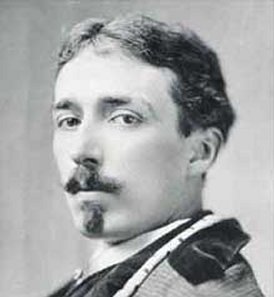
Why James Carroll Beckwith matters
James Carroll Beckwith was one of the leading society portraitists of the American Gilded Age, a Paris-trained painter who carried the polished, dark-toned naturalism of his teacher Carolus-Duran back to New York and used it to record the faces of the era's civic and cultural elite. For collectors, he matters as a documented link between the Paris ateliers of the 1870s and the professionalization of American art institutions, a painter whose work now sits in major museum collections but whose market remains thin, historical, and comparatively undercovered.
- Born
- 1852-09-23, Hannibal, Missouri, USA
- Nationality
- American
- Media
- Painting, Mural
- Movement
- Gilded Age American portraiture, Naturalism
- Education
- Chicago Academy of Design, c. 1868 to 1871, under Walter Shirlaw; National Academy of Design, New York, c. 1871 to 1873, under Lemuel Wilmarth; Paris, 1873 to 1878, in the studio of Carolus-Duran and, from 1875, at the Ecole des Beaux-Arts under Adolphe Yvon
- Signature motifs
- Genteel-tradition society portraiture, Naturalist figure and landscape painting, Exposition mural decoration
By the numbers
- 1852 to 1917Active yearsAmerican painter, portraitist, and muralist
- Studio of Carolus-Duran, 1873 to 1878Paris trainingAlso studied under Adolphe Yvon at the Ecole des Beaux-Arts
- Gold medal, 1895; medal, 1902Exposition honorsCotton States and International Exposition, Atlanta; South Carolina Inter-State and West Indian Exposition, Charleston (grade of the 1902 medal is not specified in available sources)
Selected works
Click any work to view it full screen.
Biography
Beckwith was born on September 23, 1852, in Hannibal, Missouri, and grew up in Chicago after his family relocated there while he was young. He began formal art study around 1868 at the Chicago Academy of Design under Walter Shirlaw, training that ended when the Great Chicago Fire of 1871 destroyed the school. He then moved to New York, where he studied for roughly two years at the National Academy of Design under Lemuel Wilmarth, working through the antique class into the life class.
In 1873 Beckwith left for Paris, where he spent about five years, the formative period of his career. He joined the newly opened studio of Emile-Auguste Carolus-Duran and became one of his closest students, at times serving as an informal assistant to the atelier. He also took drawing instruction from Adolphe Yvon and, after passing the entrance examination in 1875, attended classes at the Ecole des Beaux-Arts. During these years he formed a lasting friendship with fellow student John Singer Sargent. Beckwith also used his time in Paris, and later travels in Italy and Belgium, to study and copy the work of Baroque old masters.
He returned to New York in 1878 and built a long career as a portrait, landscape, and genre painter, exhibiting regularly at the National Academy of Design, the Brooklyn Art Association, the Pennsylvania Academy of the Fine Arts, the Boston Art Club, and the Art Institute of Chicago. He also worked as a muralist, decorating a dome of the Manufactures Building at the 1893 World's Columbian Exposition in Chicago, and taught for about two decades at the Art Students League in New York. He was an outspoken defender of academic naturalism against the rising modernist movements of his time, publishing an article in the New York Times in October 1915 that criticized Cubist, Futurist, and Pointillist painters. Beckwith kept detailed diaries from 1871 until his death; his wife later donated them, along with his papers, to the National Academy of Design, and additional papers are held by the Smithsonian's Archives of American Art.
Beckwith died of a heart attack on October 24, 1917, at age 65, in his apartment at the Hotel Schuyler on West 45th Street in New York City.
Critical reception
Beckwith was, in his own lifetime, a well-regarded and prize-winning portraitist, recognized with awards at the Paris Expositions Universelles of 1889 and 1890 (sources differ on whether the 1889 honor was a medal or an honorable mention), a gold medal at the 1895 Cotton States and International Exposition in Atlanta, a further medal at the Paris exposition around the turn of the century, and a medal of unspecified grade at the 1902 Charleston exposition. Later writers have generally described him as a highly successful painter within the genteel portrait tradition of his era who, once modernism took hold, receded from wide public recognition even as museums continued to collect his work.
Market
Beckwith's market is that of a historically significant but lightly traded Gilded Age painter. No verified all-time auction record can be confirmed from available sources. Known lots such as "The Letter" (John Moran Auctioneers), "The Hat Bath" (Christie's, New York), and "Nude Study" (New England Auctions) are documented as having come to market, but realized prices, sale dates, and sold status are not publicly confirmed for any of them. His work circulates mainly through regional and specialist American-art auction houses (among them Shannon's, Christie's, Heritage Auctions, John Moran Auctioneers, and various regional consignment galleries), typically under his full name or the shorter working signature "Carroll Beckwith," which he used throughout his career and preferred to his given first name. There is no gallery or estate currently representing him; dealers such as Spellman Gallery and Mark Murray Fine Paintings have handled his paintings on the secondary market without exclusive representation.
Selected exhibitions
| Years | Exhibition | Venues |
|---|---|---|
| 1887 to 1913 | Salon des Artistes Francais | Paris |
| 1889 to 1890 | Expositions Universelles | Paris |
| 1892 | Summer exhibition | Royal Academy of Arts, London |
| 1893 | World's Columbian Exposition | Manufactures Building, Chicago (mural commission) |
| 1895 | Cotton States and International Exposition | Atlanta |
| 1899 to 1900 | Exposition Universelle | Paris |
| 1902 | South Carolina Inter-State and West Indian Exposition | Charleston |
| 1904 | Louisiana Purchase Exposition | St. Louis |
Museum collections
- Metropolitan Museum of Art, New York
- Smithsonian American Art Museum, Washington, D.C.
- Wadsworth Atheneum Museum of Art, Hartford
- New-York Historical Society, New York
- Brooklyn Museum, New York
- Yale University
- Johns Hopkins University
- United States Military Academy, West Point
Awards and honors
- Gold Medal, Cotton States and International Exposition, Atlanta (1895)
- Medal, Exposition Universelle, Paris (year reported as 1899 in some sources, 1900 in others) (1899)
- Medal, South Carolina Inter-State and West Indian Exposition, Charleston (grade not specified in sources) (1902)
Authentication and provenance
No catalogue raisonne.
No published catalogue raisonne has been identified for Beckwith. Attribution generally rests on museum curatorial records, the artist's own diaries and papers held at the National Academy of Design and in the Smithsonian's Archives of American Art, and dealer and auction-house connoisseurship.
Primary reference: https://americanart.si.edu/artist/carroll-beckwith-312
What collectors should know
Beckwith's market is defined by scarcity of hard price data rather than scarcity of institutional validation. His paintings hang in the Metropolitan Museum of Art, the Smithsonian American Art Museum, the Wadsworth Atheneum, the New-York Historical Society, the Brooklyn Museum, and university collections at Yale, Johns Hopkins, and West Point, which supports his standing as a documented figure of the period. But no confirmed, sourced auction record exists to anchor value expectations, and his sales run mainly through regional and specialist houses rather than major evening sales. Collectors should treat any single reported price with caution, verify attribution through museum and archival records such as his diaries at the National Academy of Design, and expect a market driven by connoisseurship and academic interest more than by liquid, benchmarked pricing.
Further reading and resources
Data current as of 2026-07-13.

