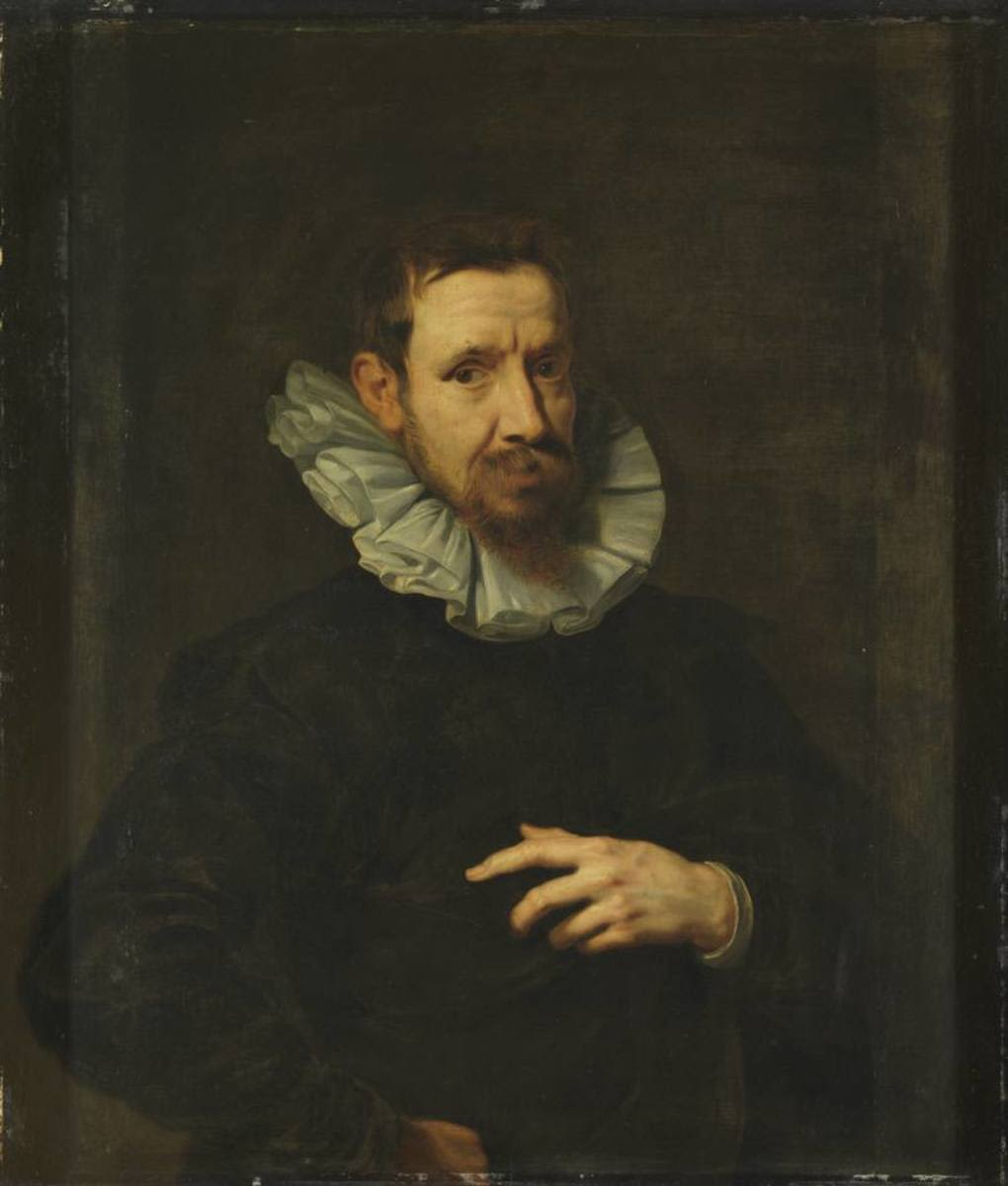
Why Jan I Brueghel matters
Jan I Brueghel, known to art history as Jan Brueghel the Elder, was one of the most inventive and commercially successful Flemish painters of the early seventeenth century. The son of Pieter Bruegel the Elder, he built a career on jewel-like detail, pioneering the flower still life and the paradise landscape, and collaborating with Peter Paul Rubens on shared canvases. His paintings hang today in the world's leading encyclopedic museums, and his market, while thin by the standards of a living artist, produces some of the highest prices realized for Northern European Old Masters.
- Nationality
- Flemish (Southern Netherlands)
- Media
- Painting, Watercolor miniature
- Movement
- Flemish Baroque
- Education
- Apprenticed under his grandmother, the miniaturist Mayken Verhulst (miniature and watercolor technique), and later under the painter and dealer Pieter Goetkint in Antwerp (oil painting), from 1583. Named Master of the Antwerp Guild of Saint Luke in 1597. No formal academic schooling or degrees are documented.
- Signature motifs
- Flower still life, Paradise landscape, Collaborative "gallery" paintings
By the numbers
- GBP 3.51MAuction highThe Edge of a Village with Figures Dancing, Sotheby's London, 2008; highest figure independently confirmed with title, price, house, and date
- 1568 to 1625LifespanBrussels to Antwerp
- Archduke Albert VII and Infanta IsabellaCourt painterBrussels court, from 1606
Selected works
Click any work to view it full screen.
Biography
Jan Brueghel was born in Brussels in 1568, the younger son of Pieter Bruegel the Elder. After his parents' deaths he was raised by his maternal grandmother, the miniaturist Mayken Verhulst, who gave him his first training in miniature painting and watercolor technique. He moved to Antwerp in 1583 to train in oil painting under the painter and dealer Pieter Goetkint, and some sources also credit study, probably, with the landscape painter Gillis van Coninxloo.
From 1589 to 1596 he worked in Italy, principally in Naples, Rome, and Milan, where he formed a lasting friendship with Cardinal Federico Borromeo, one of his most important lifelong patrons. Back in Antwerp, he was admitted as a Free Master to the city's Guild of Saint Luke in 1597 and later served as the guild's dean. He also spent a brief period at the Prague court of Holy Roman Emperor Rudolf II, and from 1606 served as court painter to Archduke Albert VII and the Infanta Isabella Clara Eugenia in Brussels. In this period he also produced celebrated joint works with Rubens, including collaborative "gallery" paintings that combined the two artists' specialties.
Jan Brueghel died in Antwerp on 13 January 1625, from complications of a cholera epidemic that swept the city that winter; the outbreak is also reported, by the Nationalmuseum in Stockholm, to have killed three of his children. A small number of reference sources give an alternate death date of 25 January 1625, but the weight of major art historical sources, including Encyclopaedia Britannica, Wikidata, CODART, and the Vlaamse Kunstcollectie, supports 13 January 1625.
Critical reception
Scholars and specialist institutions credit Jan Brueghel with introducing several new categories of Flemish painting, among them the flower still life, the paradise landscape, and the collaborative gallery picture, and CODART has described him as one of the most successful Flemish artists of the first quarter of the seventeenth century. Roughly 450 works are attributed to him across paintings and drawings, a body of work that has supported sustained museum and scholarly attention, including a focused exhibition on his drawings at the Snyders&Rockox House in Antwerp in 2013 and 2014. Critical discussion tends to center on his technical virtuosity at small scale, his partnership with Rubens, and his role as a bridge between his father's generation and the fully developed Flemish Baroque.
Market
One of the highest documented prices for Jan Brueghel the Elder is The Edge of a Village with Figures Dancing, which sold for GBP 3,513,250 at Sotheby's, London, on 9 July 2008. Press reports also cite an even higher price, close to GBP 3.85 million, for a Brueghel flower still life sold at Sotheby's London in a separate sale, but the exact date of that lot could not be confirmed, so no single all-time record can be stated with full confidence. Earlier notable results include a flower still life that set a record for the artist and for an Old Master still life at USD 560,000, sold at Sotheby Parke Bernet in New York in January 1978, and a work catalogued as "Jan Brueghel I" that realized EUR 70,200 at Dorotheum in Vienna. As with many Old Masters, individual results depend heavily on attribution strength, that is, whether a work is accepted as fully autograph, workshop, or circle of the artist, so prices for works bearing his name vary widely.
Top auction results
| Work | Price | Sale |
|---|---|---|
| The Edge of a Village with Figures Dancing | GBP 3,513,250 | Sotheby's, London, 2008-07-09 |
Selected exhibitions
| Years | Exhibition | Venues |
|---|---|---|
| 2013 to 2014 | Jan Brueghel I (1568 to 1625): An Excellent Draughtsman | Snyders&Rockox House, Antwerp |
Museum collections
- Alte Pinakothek, Bayerische Staatsgemaldesammlungen, Munich
- Museo del Prado, Madrid
- Kunsthistorisches Museum, Vienna
- Musee du Louvre, Paris
- Pinacoteca Ambrosiana, Milan
- J. Paul Getty Museum, Los Angeles
Awards and honors
- Master (Vrijmeester), Guild of Saint Luke, Antwerp (1597)
- Court painter to Archduke Albert VII and Infanta Isabella Clara Eugenia, Brussels (1606)
Authentication and provenance
No catalogue raisonne.
No confirmed, single published catalogue raisonne of paintings. Attribution is complicated by a large workshop and a family of painters working in overlapping styles, including his son Jan Brueghel the Younger. Works are studied and authenticated through museum curatorial scholarship, provenance research, and specialist references such as the online Jan Brueghel catalogue project.
Primary reference: https://www.nationalgallery.org.uk/artists/jan-brueghel-the-elder
What collectors should know
Because Jan Brueghel worked within a large family workshop, including his own son Jan Brueghel the Younger, and because no single published catalogue raisonne of his paintings is confirmed, provenance and connoisseurship carry unusual weight in this market. Attribution, whether a work is autograph, studio-assisted, or a later copy, is typically the single largest driver of price, more so than subject matter alone. Collectors should also expect a market defined by relatively infrequent, high-value single-lot sales at major Old Master auctions rather than a continuous trading history, so any one result should be read in the context of the specific work's condition and documented attribution rather than as a smooth market trend.
Further reading and resources
Data current as of 2026-07-18.

