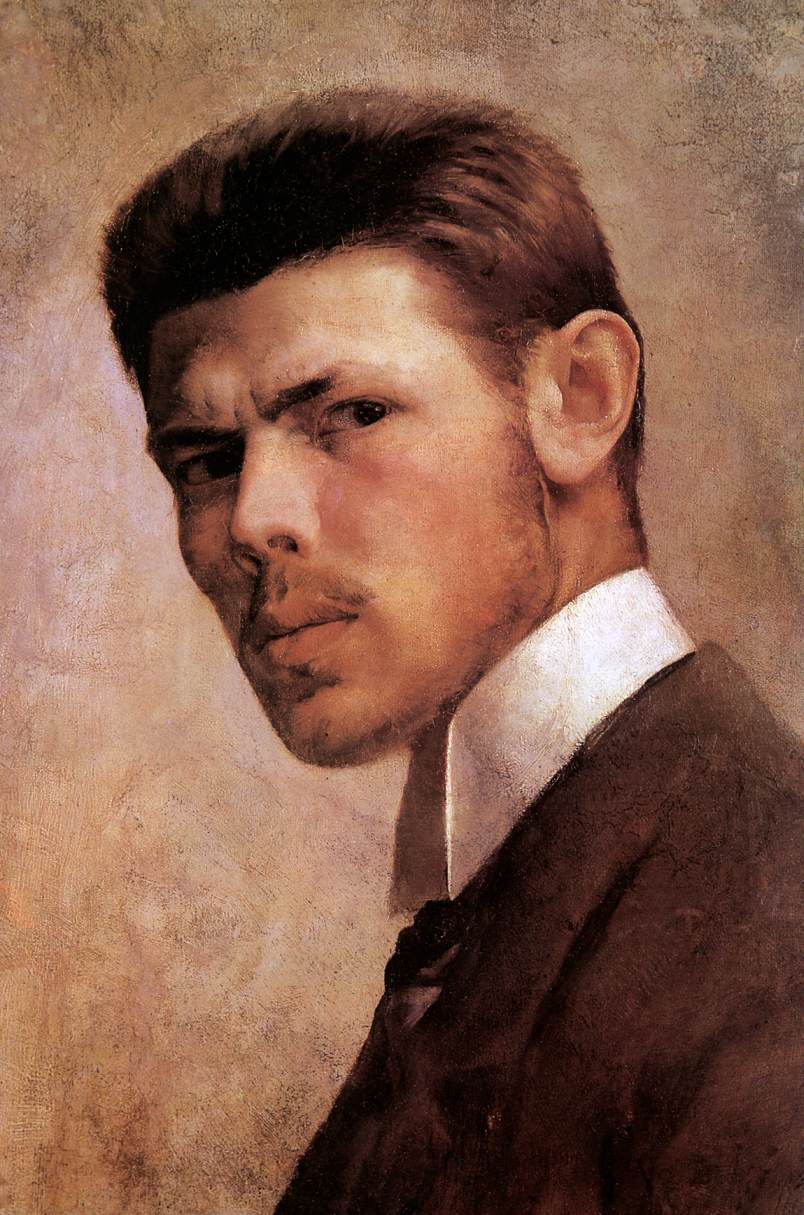
Why János Vaszary matters
János Vaszary was one of the most versatile painters of Hungarian modernism, moving from the Secession of the late 1890s through Post-Impressionism, Fauvism, and Art Deco over a career of more than four decades. For a collector, he represents a way into early twentieth-century Central European modernism at a market scale far smaller than comparable Western European names, with a record built primarily on Hungarian institutional recognition and a concentrated group of Hungarian auction houses rather than the international secondary market.
- Born
- 1867-11-30, Kaposvár, Hungary
- Nationality
- Hungarian
- Media
- Painting, Graphic arts
- Movement
- Hungarian Secession, Post-Impressionism, Art Deco
- Education
- Hungarian University of Fine Arts, Budapest, under János Greguss, and the School of Decorative Art (Pattern Drawing School), Budapest, under Bertalan Székely, early to mid-1880s. Munich Academy, from 1887, under Ludwig von Löfftz and Gabriel von Hackl. Académie Julian, Paris, sources give dates ranging from circa 1890 to 1899. No degree or diploma is documented at any stage.
- Signature motifs
- Garden and lakeside genre scenes, Beach and leisure scenes
By the numbers
- HUF 160,000,000 (approx. EUR 417,000)Auction highReported for Siesta, Kieselbach Gallery, Budapest, 2017; could not be independently corroborated. A comparable HUF 150,000,000 sale was reported in Hungarian press in May 2026.
- 1920 to 1932ProfessorshipHungarian University of Fine Arts, Budapest
- 2022 to 2023Major retrospectiveVaszary Rediscovered, Hungarian National Gallery
- None (historical artist)Current representationSecondary market handled by Kieselbach Gallery, Virág Judit Galéria, and Koller Gallery, Budapest
Biography
János Miklós Vaszary was born on 30 November 1867 in Kaposvár, Hungary, into a prominent Catholic family. He began his art training at the Hungarian University of Fine Arts in Budapest under János Greguss and at the School of Decorative Art (Pattern Drawing School) in Budapest under Bertalan Székely, then continued from 1887 at the Munich Academy under Ludwig von Löfftz and Gabriel von Hackl. He later studied at the Académie Julian in Paris, a period sources place variously between 1890 and 1899, after seeing an exhibition of paintings by Jules Bastien-Lepage; his biographers describe this as the end of his official studies. No source documents a formal degree from any of these institutions.
Vaszary was among the first representatives of the Secession in Hungary in the late 1890s, and his style continued to evolve through Post-Impressionism, Fauvism, and, later, Art Deco. He exhibited regularly at the National Salon in Budapest from a young age, held shows at the Ernst Museum in 1909, 1920, and 1924, and had a solo exhibition at the Műcsarnok (Art Gallery) in Budapest in 1912. During the First World War he exhibited as an official war painter at Budapest's press headquarters in 1916. In 1920 he became a professor at his alma mater, by then renamed the Hungarian University of Fine Arts, a position he held until his retirement in 1932. In 1924 he was among the founders of KÚT, the New Society of Artists.
He later settled in Tata, Hungary, where his garden and studio cottage inspired numerous paintings, and continued painting until his death. He died suddenly on 19 April 1939 in Budapest; his body was returned to Tata, where he was buried on 22 April 1939.
Critical reception
The Hungarian National Gallery, which mounted the major 2022 to 2023 exhibition Vaszary Rediscovered, describes him as one of the most versatile figures of twentieth-century Hungarian art and one of the most influential masters of his age, both as a painter and as a teacher. That exhibition presented twenty-four newly restored paintings recovered from the artist's studio and private collections, alongside established works from the museum's painting and graphic art holdings, and reinforced his standing as a central figure bridging the Hungarian Secession and later modernist currents. No exact, attributable quotation from a named critic in a major outlet could be confirmed in the available research; institutional descriptions of this kind are unsigned.
Market
Vaszary's market is anchored in Hungary. Hungarian press has reported an auction high of HUF 160,000,000 (approximately EUR 417,000) for Siesta, a 1907 composition reportedly sold at Kieselbach Gallery's Christmas auction in Budapest on 17 December 2017, described at the time as a record result for the artist; this specific sale could not be independently corroborated beyond that report. A comparably sized result was reported in Hungarian media in May 2026, a work described as a seascape that sold for HUF 150,000,000 (approximately EUR 416,000), roughly double its starting estimate, apparently at a Virág Judit Galéria sale; the exact title and sale date for that 2026 result could not be independently confirmed. Away from these two results, prices across international auction databases sit much lower: Lempertz has recorded a top result of EUR 47,500 for a Balaton lake scene, and Dorotheum has recorded results such as EUR 15,360 for individual works. There is no single gallery or estate that currently represents Vaszary; his secondary market is instead handled by a small group of Hungarian houses, principally Kieselbach Gallery, Virág Judit Galéria, and Koller Gallery, all in Budapest, alongside occasional lots at Sotheby's and other international platforms.
Top auction results
| Work | Price | Sale |
|---|---|---|
| Siesta (1907) | HUF 160,000,000 (approx. EUR 417,000) | Kieselbach Gallery, Budapest, 2017-12-17 |
Selected exhibitions
| Years | Exhibition | Venues |
|---|---|---|
| 1912 | Solo exhibition | Műcsarnok (Art Gallery), Budapest |
| 1909, 1920, 1924 | Solo and collection exhibitions | Ernst Museum, Budapest |
| 1916 | War painter exhibition | Press headquarters, Budapest |
| 1922 | Collection exhibition | Helikon Salon, Budapest |
| late 1920s onward | KÚT (New Society of Artists) exhibitions | Budapest |
| 1933 | Collection exhibition | Déri Museum, Debrecen |
| 2015 | Commemorative exhibition, Tata-period paintings | Kuny Domokos Museum, Tata |
| 2022 to 2023 | Vaszary Rediscovered | Hungarian National Gallery, Budapest |
Museum collections
- Hungarian National Gallery, Budapest
- Kuny Domokos Museum, Tata
- Déri Museum, Debrecen
- Art Institute of Chicago
Awards and honors
- Professor, Hungarian University of Fine Arts, Budapest (to 1932) (1920)
- Founding member, KÚT (Képzőművészek Új Társasága, New Society of Artists) (1924)
Authentication and provenance
No catalogue raisonne.
No catalogue raisonne of Vaszary's work has been published. Works are researched and priced primarily through Hungarian auction houses, most active among them Kieselbach Gallery, Virág Judit Galéria, and Koller Gallery, and cross-checked against the Hungarian National Gallery's holdings and exhibition history.
Primary reference: https://en.mng.hu/exhibitions/vaszary/
What collectors should know
Vaszary's market is thin by international standards and concentrated among a handful of Hungarian auction houses, so any single result, including the reported Siesta and 2026 results, should be read against a broader base of far lower prices rather than as a stable benchmark. No catalogue raisonne exists, which puts extra weight on provenance and on cross-checking a work against the exhibition history and holdings of the Hungarian National Gallery. Because he worked across Secession, Post-Impressionist, Fauvist, and Art Deco idioms over five decades, period and subject matter (his Tata garden and lakeside scenes carry particular institutional interest) matter more for value than a single unified "Vaszary style."
Further reading and resources
Data current as of 2026-07-11.

