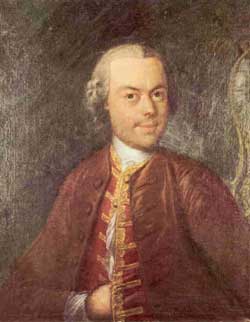
Why Pierre Jaquet-Droz matters
Pierre Jaquet-Droz is among the most celebrated makers of the Enlightenment, an eighteenth century Swiss watchmaker whose singing-bird cages and human-form androids fused precision mechanics with an almost theatrical sense of art. His three great automata, The Writer, The Musician, and The Draughtsman, are frequently cited by historians of science and robotics as some of the earliest convincing simulations of human behavior built from clockwork. For collectors, he represents a very different kind of market than painting or sculpture: an extremely small population of surviving eighteenth century objects, most already locked into permanent museum collections, set against a modern namesake watch brand that keeps his story in public view.
- Born
- 1721-07-28, La Chaux-de-Fonds, Principality of Neuchatel (present-day Switzerland)
- Nationality
- Swiss
- Media
- Automata, Horology, Mechanical art
- Movement
- Enlightenment-era automata, Early mechanical arts
- Education
- Primary schooling in La Chaux-de-Fonds. Studied humanities and philosophy at the College of Erasmus and the University of Basel, circa 1738 to 1740, and theology at the Academy of Neuchatel, circa 1740. No completed degree is documented. Apprenticed in watchmaking under Josue Robert.
- Signature motifs
- Singing-bird automata, Writing android (The Writer), Drawing and musical androids (The Draughtsman, The Musician)
- Representation
- No commercial gallery representation, Legacy maintained by Montres Jaquet Droz SA and Swiss museum partners
By the numbers
- USD 2.53MAuction highSinging Bird Scent Flask, Sotheby's New York, 2011
- 1738 to 1790Career spanWorkshop founded in La Chaux-de-Fonds to the maker's death
- Musee d'art et d'histoire de NeuchatelPermanent collectionThe Writer, The Musician, and The Draughtsman automata, on view since 1909
- No commercial galleryRepresented byLegacy maintained by Montres Jaquet Droz SA and Swiss museums
Selected works
Click any work to view it full screen.
Biography
Pierre Jaquet-Droz was born on 28 July 1721 in La Chaux-de-Fonds, then part of the Principality of Neuchatel. He attended elementary school in his hometown before studying humanities and philosophy in Basel, at the College of Erasmus and the University of Basel, around 1738 to 1740, and theology at the Academy of Neuchatel around 1740. No completed degree from either institution is documented. He apprenticed in watchmaking under Josue Robert and established his own workshop in La Chaux-de-Fonds by 1738.
Working with his son Henri-Louis Jaquet-Droz and his associate Jean-Frederic Leschot, Jaquet-Droz built a series of automata that toured the courts of Europe and drew acclaim for their combination of engineering and theatrical illusion. The workshop's best known creations, an android that writes with a quill, one that draws, and one that plays a small organ, were shown publicly in Neuchatel in 1774 to wide acclaim. Jaquet-Droz died on 28 November 1790 in Biel, Switzerland, then commonly called Bienne, leaving the workshop's later direction to his son and to Leschot.
The three 1774 automata were purchased by the Societe d'histoire et d'archeologie de Neuchatel in 1906 and donated to the city, where they were installed on 1 May 1909 on condition that they remain operational and on public display. They have been the flagship exhibit of the Musee d'art et d'histoire de Neuchatel ever since.
Critical reception
Historians of horology and of early automata consistently place Jaquet-Droz at the top of his field. A 2025 psychobiographical study published in History of Psychiatry examines Jaquet-Droz's androids as an early case study in the mechanical simulation of human behavior, underscoring his continued relevance to historians of science, psychology, and robotics as much as to art criticism in the conventional sense. The recurring theme across this literature is that his automata are read simultaneously as engineering feats and as works of art, built to persuade viewers that a machine could convincingly imitate a living, thinking being.
Market
The market for Jaquet-Droz's own work is defined by scarcity. The all-time auction record is USD 2,530,000, paid at Sotheby's New York on 22 June 2011 for a Singing Bird Scent Flask attributed to his workshop, a price the brand itself has described as a record for an antique Jaquet-Droz piece. A signed Jaquet-Droz clock known as the Effinger sold for CHF 256,000, a result the brand's own historical notes count among its record sales, well below the 2011 record. The three most famous automata are not on the market at all: they have been the property of the City of Neuchatel since 1909 and are displayed permanently at the Musee d'art et d'histoire de Neuchatel. Separately, the modern Jaquet Droz watch brand, now part of the Swatch Group, produces contemporary automaton wristwatches under the same name. These are a distinct commercial product line rather than works by the historical maker, though the brand actively promotes his legacy.
Top auction results
| Work | Price | Sale |
|---|---|---|
| Singing Bird Scent Flask (2011) | USD 2,530,000 (USD 2,530,000) | Sotheby's, New York, 2011-06-22 |
Selected exhibitions
| Years | Exhibition | Venues |
|---|---|---|
| 1774 | Public debut of three automata: The Writer, The Musician, and The Draughtsman | Neuchatel, Switzerland |
| 1909 | Automata gifted to the City of Neuchatel and permanently installed | Musee d'art et d'histoire de Neuchatel (MAHN) |
| 2018 | The Story of the Unique | Jaquet Droz Boutique, Marina Bay Sands, Singapore |
| 2021 | Robot. The Human Project | MUDEC, Museo delle Culture, Milan |
Museum collections
- Musee d'art et d'histoire de Neuchatel (MAHN), Switzerland
Authentication and provenance
No catalogue raisonne.
No catalogue raisonne of Pierre Jaquet-Droz's automata and clocks has been published. Attribution rests on workshop signatures such as Jaquet-Droz or Jaquet-Droz and Leschot, museum provenance records, and the historical archive maintained by the modern Jaquet Droz watch brand.
Primary reference: https://en.wikipedia.org/wiki/Pierre_Jaquet-Droz
What collectors should know
There is no catalogue raisonne of Jaquet-Droz's work, and attribution depends on workshop signatures, such as Jaquet-Droz or Jaquet-Droz and Leschot, together with museum provenance records and the historical archive maintained by the modern Jaquet Droz brand. The population of surviving, signed eighteenth century pieces is very small, and the most historically important examples are already held permanently by Swiss museums and will not come to market. Because so few comparable objects trade, any single auction result, including the 2011 record price, should be read as a data point about that specific object rather than as a stable benchmark for the maker as a whole. Collectors should also take care to distinguish the eighteenth century workshop's rare objects from the unrelated, contemporary watches sold today under the Jaquet Droz brand name.
Further reading and resources
Data current as of 2026-07-16.

