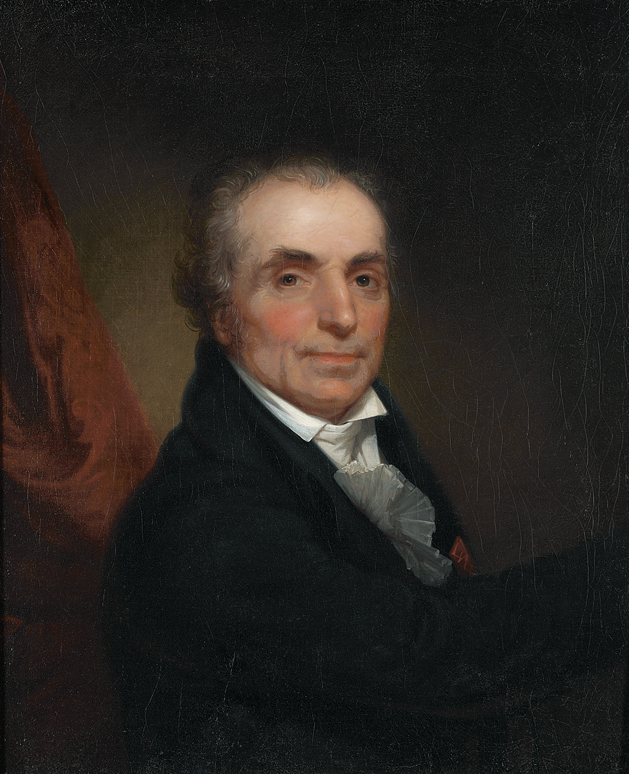
Why Jean-Antoine Houdon matters
Jean-Antoine Houdon is the sculptor most associated with the face of the Enlightenment. His portrait busts of Voltaire, Diderot, Rousseau, Benjamin Franklin, Thomas Jefferson, George Washington, and later Napoleon fixed the physical likeness of that era's leading intellectual and political figures for posterity. For collectors, he represents a case where reputation rests almost entirely on museum ubiquity and historical significance rather than on market volume: his works appear in nearly every major encyclopedic museum collection, but they reach the auction block rarely, and only a handful of results define the market.
- Born
- 1741-03-20, Versailles, France
- Nationality
- French
- Media
- Sculpture
- Movement
- Neoclassicism, French Enlightenment sculpture
- Education
- Académie royale de peinture et de sculpture, Paris, entered 1752; Prix de Rome 1761; École royale des élèves protégés, Paris, 1761 to 1764; Académie de France à Rome, approximately 1764 to 1768
- Signature motifs
- Portrait busts of Enlightenment figures, Neoclassical marble and terracotta sculpture
- Representation
- "No current gallery or estate representation; works circulate through auction houses, dealers, and museum collections"
By the numbers
- USD 2.92MAuction highBust of Benjamin Franklin, white marble, Sotheby's New York, 5 December 1996
- 1752 to 1828Career spanAcadémie royale entry to death
- 1761Prix de RomeAwarded at age 20
- No current gallery representationRepresented byDeceased 1828; secondary market and museum collections
Selected works
Click any work to view it full screen.
Biography
Jean-Antoine Houdon was born on 20 March 1741 in Versailles, France. He entered the Académie royale de peinture et de sculpture in Paris in 1752 and studied under Jean-Baptiste Lemoyne and Jean-Baptiste Pigalle. In 1761, at age twenty, he won the Prix de Rome for sculpture, which carried a three-year preparatory term at the École royale des élèves protégés in Paris (1761 to 1764) followed by a scholarship at the Académie de France à Rome, where he worked from about 1764 to 1768.
Back in Paris, Houdon built his reputation as a portraitist, sculpting Voltaire, Denis Diderot, Jean-Jacques Rousseau, and the naturalist Buffon among many others. In 1785 he traveled to the United States and to Mount Vernon to take a life mask of George Washington in preparation for the full-length marble statue later installed in the Rotunda of the Virginia State Capitol. He also modeled Benjamin Franklin and Thomas Jefferson during their years in France. He was named a chevalier of the Legion of Honor in 1804, and his later career included a terracotta portrait of Napoleon Bonaparte (1806). Houdon died in Paris on 15 July 1828 and was interred at Montparnasse Cemetery.
Critical reception
Institutional consensus places Houdon at the center of French Enlightenment sculpture. The Metropolitan Museum of Art's collection essay describes him as "the preeminent sculptor of the French Enlightenment," known above all for a portrait practice that secured his fame among contemporaries and later generations alike. Smarthistory's account of his George Washington commission situates him as the leading Neoclassical portrait sculptor working in France by the mid-1780s, and the Liebieghaus Skulpturensammlung, presenting a dedicated exhibition of his work, has likewise emphasized his standing as one of the most successful portrait sculptors of his era. Across these assessments, the recurring theme is that Houdon's realism and psychological candor, rather than idealization, made his sitters recognizable as individuals, which is part of why his busts of Franklin, Jefferson, and Washington remain touchstones of how those figures are visualized today.
Market
Houdon's auction market is thin, defined by a small number of exceptional results rather than sustained turnover. The record price is USD 2,917,500 for a white marble bust of Benjamin Franklin, sold at Sotheby's New York on 5 December 1996. A plaster bust of Thomas Jefferson sold for USD 2,860,000 at Christie's New York on 29 May 1987, the second-highest price recorded for the artist. More recently, two rediscovered marble busts, of Rousseau and of Buffon, brought a combined USD 1.475 million at Cottone Auctions in Geneseo, New York, in March 2024, a reminder that fresh-to-market Houdon works can still surface. Attribution matters directly to price: a plaster bust of George Washington catalogued as "workshop of Jean-Antoine Houdon," rather than as an autograph work, sold for a considerably lower USD 964,174 at Thierry de Maigret in Paris in June 2024.
Top auction results
| Work | Price | Sale |
|---|---|---|
| Bust of Benjamin Franklin (white marble) | USD 2,917,500 (USD 2,917,500) | Sotheby's, New York, 1996-12-05 |
| Bust of Thomas Jefferson (plaster) | USD 2,860,000 (USD 2,860,000) | Christie's, New York, 1987-05-29 |
Selected exhibitions
| Years | Exhibition | Venues |
|---|---|---|
| 2003 to 2004 | Jean-Antoine Houdon, Sculptor of the Enlightenment | National Gallery of Art, Washington, D.C. |
| 2019 to 2020 | Guests of Honor from the Musée du Louvre: Jean-Antoine Houdon's Portraits of Americans in the Age of Enlightenment | Detroit Institute of Arts |
| circa 2009 | Jean-Antoine Houdon, Sculpture and Sensibility | Liebieghaus Skulpturensammlung, Frankfurt am Main |
| 1928 | Centenary tribute exhibition | Pennsylvania Museum (now Philadelphia Museum of Art) |
Museum collections
- The Frick Collection, New York
- Metropolitan Museum of Art, New York
- National Gallery of Art, Washington, D.C.
- Musée du Louvre, Paris
- Museum of Fine Arts, Boston
- Virginia State Capitol, Richmond
- Worcester Art Museum, Worcester
- Musée des Beaux-Arts, Angers
Awards and honors
- Prix de Rome, Académie royale de peinture et de sculpture (1761)
- Chevalier, Legion of Honor (1804)
Authentication and provenance
No catalogue raisonne.
No comprehensive catalogue raisonne has been published for Houdon. The National Gallery of Art's 2003 to 2004 exhibition catalogue, Jean-Antoine Houdon, Sculptor of the Enlightenment, is the closest scholarly reference point. Because his studio produced multiple versions of many portraits in marble, terracotta, plaster, and bronze, later or workshop casts are often catalogued as 'workshop of Houdon' rather than fully autograph, so provenance and scholarly attribution carry unusual weight.
Primary reference: https://www.metmuseum.org/essays/jean-antoine-houdon-1741-1828
What collectors should know
Because Houdon's studio produced multiple versions of popular subjects across marble, terracotta, plaster, and bronze, and because no consolidated catalogue raisonne exists, attribution is the single biggest variable in value. Works catalogued as autograph command far more than versions described as "workshop of" or "after" Houdon, as the gap between the 1996 Franklin bust and the 2024 workshop Washington bust illustrates. Auction supply is genuinely scarce and can be unpredictable, with long gaps between major appearances followed by occasional rediscoveries, so any single sale should be read against provenance and scholarly literature (notably the National Gallery of Art's 2003 to 2004 exhibition catalogue) rather than treated as a stable price trend.
Further reading and resources
Data current as of 2026-07-10.

