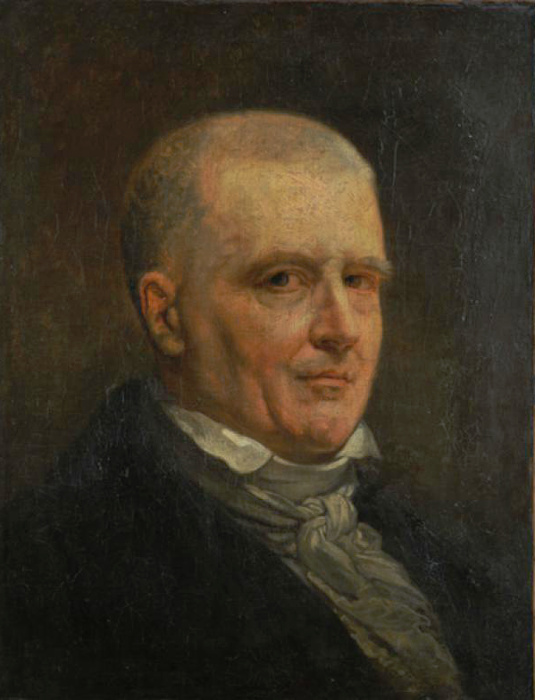
Why Jean-Honore Fragonard matters
Jean-Honore Fragonard is one of the defining painters of French Rococo, an artist whose fluid, rapidly brushed scenes of courtship, gardens, and private pleasure came to define the visual imagination of Enlightenment-era France. His paintings and drawings anchor the collections of the Louvre, the Metropolitan Museum of Art, the Wallace Collection, and other major institutions, and his rare auction appearances have produced some of the highest prices ever recorded for an 18th-century French master. For a collector, he is a study in how scarcity, museum saturation, and documentation shape value at the top of the Old Master market.
- Born
- 1732-04-05, Grasse, France
- Nationality
- French
- Media
- Painting, Drawing, Etching
- Movement
- Rococo
- Education
- Studied under François Boucher (and, per some sources, Jean-Simeon Chardin) in Paris. Won the Prix de Rome in 1752. Attended the Ecole Royale des Eleves Proteges, Paris, 1752 to 1756. Resident at the French Academy in Rome, 1756 to 1761.
- Signature motifs
- Garden courtship and swing scenes, Rapidly brushed fantasy figure portraits
- Representation
- "No contemporary gallery or estate representation; works trade through Old Master auction houses and specialist dealers"
By the numbers
- GBP 17,106,500Auction highPortrait of Francois-Henri, 5th duc d'Harcourt, Bonhams London, 2013; approx. USD 27.9M per MutualArt
- 1752Prix de RomeQualified for royal academy training in Paris and Rome
- 1765Academie RoyaleElected after the Salon success of Coresus et Callirhoe
- 9+Museum collectionsIncluding the Louvre, the Met, the Getty, the Wallace Collection, and the Hermitage
Selected works
Click any work to view it full screen.
Biography
Jean-Honore Fragonard was born on 5 April 1732 in Grasse, France. He trained in Paris in the studio of Francois Boucher, with some sources also citing early instruction from Jean-Simeon Chardin, before winning the Prix de Rome in 1752 for a painting of Jeroboam Sacrificing to Idols. That prize led to further training at the Ecole Royale des Eleves Proteges in Paris from 1752 to 1756, and then to a crown-funded residency at the French Academy in Rome, where he remained until 1761.
Back in Paris, Fragonard made his public debut at the Salon of 1765 with the large history painting Coresus et Callirhoe, now in the Louvre. Its critical success won him admission to the Academie Royale de Peinture et de Sculpture, the premier art institution of France, and raised hopes that he would revive history painting. Instead, he turned toward private patronage, producing intimate, sensual scenes of gardens, swings, and courtship for aristocratic collectors, including the celebrated painting The Swing, now at the Wallace Collection in London. He also produced the loosely brushed "fantasy figure" portraits and, later in his career, a series of decorative panels for Madame du Barry's pavilion at Louveciennes.
The French Revolution ended the aristocratic patronage that had sustained his practice, and Fragonard's fortunes declined sharply. He spent his final years largely out of public view and died on 22 August 1806 in Paris, at the age of 74. His reputation faded through the 19th century before a broader critical and market rediscovery in the 20th century restored him to his current standing as one of the most important French painters of his era.
Critical reception
Fragonard is treated by major museums as one of the central figures of French 18th-century art. The Metropolitan Museum of Art has written that he "developed an exuberant and fluid manner as a painter, draftsman, and printmaker," and situates his mature work as an elaboration of "the Rococo idiom established by Antoine Watteau and Francois Boucher." Later scholarship and museum programming, including the National Gallery of Art's 2017 exhibition on his fantasy figure portraits, has emphasized his technical daring, particularly the speed and confidence of his brushwork. Historically, his reputation suffered after the French Revolution swept away the private patrons who had sustained him, and it was not fully restored until 20th-century exhibitions and scholarship recovered his standing alongside Watteau and Boucher as one of the three defining painters of French Rococo.
Watch
Market
Fragonard's market is defined by scarcity rather than volume. The great majority of his significant paintings are already held by major museums, so auction supply of top-tier works is thin, and prices at the summit of the market can move sharply on a single result. His all-time auction record is the Portrait of Francois-Henri, 5th duc d'Harcourt, which sold for GBP 17,106,500 (roughly USD 27.9 million by MutualArt's conversion) at Bonhams London on 5 December 2013, then a record for the artist. His second-highest known result is Philosophe lisant (also called The Reading Philosopher), a long-unrecorded painting that sold at Ivoire Reims (Petit & Petit) in Epernay, France, on 26 June 2021 for a price reported at roughly EUR 7.68 million (about GBP 6.6 million, USD 9.2 million), well below the 2013 record but a reminder that unrecognized Fragonards can still appear on the market. There is no confirmed catalogue raisonne for the artist, so provenance research and curatorial opinion carry particular weight in establishing both attribution and value.
Top auction results
| Work | Price | Sale |
|---|---|---|
| Portrait of Francois-Henri, 5th duc d'Harcourt (2013) | USD 27,934,412 (GBP 17,106,500) | Bonhams, London, 2013-12-05 |
Selected exhibitions
| Years | Exhibition | Venues |
|---|---|---|
| 1765 | Salon of 1765 | Academie Royale de Peinture et de Sculpture, Paris |
| 1756 to 1761 | Residency, French Academy in Rome | French Academy in Rome, Rome |
| 2011 | Musee Jean-Honore Fragonard opens | Musee Jean-Honore Fragonard, Grasse |
| 2017 | Fragonard: The Fantasy Figures | National Gallery of Art, Washington, D.C. |
| 2021 | Reinstallation of The Swing after conservation | Wallace Collection, London |
Museum collections
- Musee du Louvre, Paris
- Musee Jean-Honore Fragonard, Grasse
- Wallace Collection, London
- Metropolitan Museum of Art, New York
- The Frick Collection, New York
- National Gallery of Art, Washington, D.C.
- Museum of Fine Arts, Boston
- J. Paul Getty Museum, Los Angeles
- State Hermitage Museum, St. Petersburg
Awards and honors
- Prix de Rome (1752)
- Reception into the Academie Royale de Peinture et de Sculpture, following the Salon success of Coresus et Callirhoe (1765)
Authentication and provenance
No catalogue raisonne.
No published catalogue raisonne is confirmed in current research. As with most 18th-century Old Masters, attribution and authentication rest on provenance history, museum curatorial scholarship, and comparison against documented paintings and drawings rather than a single certifying body or artist archive.
Primary reference: https://www.metmuseum.org/essays/jean-honore-fragonard
What collectors should know
Fragonard is a deceased Old Master with no representing gallery or estate; his works move through Old Master auction houses such as Bonhams, Christie's, and Sotheby's, and through specialist dealers, rather than a primary market. Because so much of his major output already sits in museum collections, the number of significant works available to collectors is small, and any single sale, whether a record price or a rediscovered painting, can carry outsized weight in how his market is read. The absence of a confirmed catalogue raisonne makes provenance documentation and museum or scholarly opinion especially important when evaluating a Fragonard, and collectors should expect meaningful price variation between fully documented, exhibited works and less-documented or newly surfaced ones.
Further reading and resources
Data current as of 2026-07-09.

