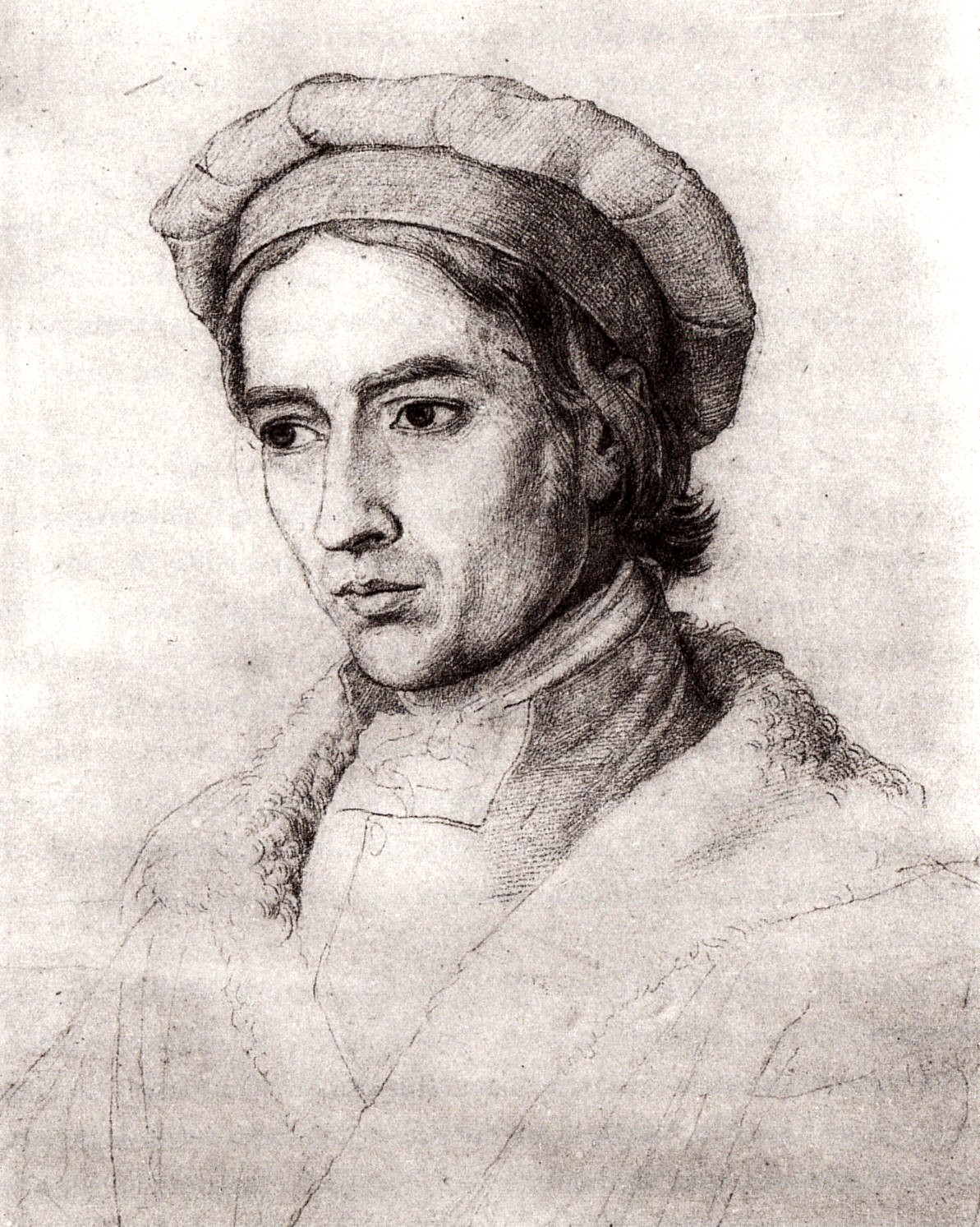
Why Johann Friedrich Overbeck matters
Johann Friedrich Overbeck was a founder and the longtime leader of the Nazarene movement, the group of German painters who left the Vienna academy in the early nineteenth century to pursue a revival of sincere, medieval-inspired Christian art in Rome. His fresco cycles and altarpieces shaped how religious history painting was practiced for a generation and remain foundational reference points for museums with major nineteenth-century German holdings, from Berlin to Frankfurt to Washington. For collectors, he represents a rare category: a historically significant, museum-anchored painter whose market is thin, largely institutional, and driven more by scholarly and museum interest than by trading volume.
- Born
- 1789-07-03, Lübeck, Free Imperial City of Lübeck (present-day Germany)
- Nationality
- German
- Media
- Painting, Fresco, Drawing
- Movement
- Nazarene movement, Neoclassicism
- Education
- Gymnasium, Lübeck; Academy of Fine Arts, Vienna, from 1806, under Heinrich Friedrich Füger. No degree documented.
- Signature motifs
- Linear Nazarene draftsmanship, Biblical and devotional narrative cycles
- Representation
- Gallery 19C
By the numbers
- EUR 624,300Auction highThe Banishment of Hagar (1841), sold 2016; auction house and exact sale date not publicly documented in available sources
- Co-founder, Lucas Brotherhood (Lukasbund)Founding role1809, Vienna, with fellow students seeking a Christian revival in art
- Foreign Honorary MemberHonorAmerican Academy of Arts and Sciences, 1864
- Gallery 19CRepresented bySecondary-market gallery; no estate or exclusive representation documented
Selected works
Click any work to view it full screen.
Biography
Johann Friedrich Overbeck was born on 3 July 1789 in the Free Imperial City of Lübeck. He received a classical education at the local Gymnasium, where his uncle taught, before leaving Lübeck in March 1806 to enter the Academy of Fine Arts in Vienna, where he studied under Heinrich Friedrich Füger. Dissatisfied with academic instruction, he and a small circle of fellow students, including Franz Pforr, founded the Lucas Brotherhood (Lukasbund) in 1809, seeking to restore what they saw as the honesty and craft of late medieval and early Renaissance Christian art. In 1810 the group relocated to Rome, where they became known as the Nazarenes. Overbeck converted from Protestantism to Roman Catholicism in 1813 and remained in Rome for the rest of his life.
His major public commissions defined the movement's reach. Between 1816 and 1817 he contributed to the fresco cycle Joseph Sold by His Brethren in the Casa Bartholdy, Rome, alongside fellow Nazarenes; the frescoes were later transferred to what is now the Alte Nationalgalerie in Berlin. He worked on frescoes at the Villa Massimo in Rome from 1817 to 1829, and in 1829 completed the Rose Miracle of St. Francis in the Portiuncula Chapel at Assisi, often cited as one of his central works. Later paintings included The Triumph of Religion in the Arts (1840, Stadel Museum, Frankfurt) and The Assumption of the Madonna (1855, Cologne Cathedral). In 1864 he was elected a Foreign Honorary Member of the American Academy of Arts and Sciences.
Overbeck died in Rome on 12 November 1869, at the age of eighty, and was interred in the Chapel of St. Francis in the Church of San Bernardo alle Terme, Rome.
Critical reception
Overbeck is treated in art-historical literature as the central figure of the Nazarene movement, credited with steering German religious painting away from academic Neoclassicism and toward a deliberately simplified, linear style drawn from Perugino, Raphael, and late medieval devotional painting. Institutions such as the National Gallery of Art and the Alte Nationalgalerie present him as a key transitional figure between Romanticism and later religious revivalist painting in Germany. No exact, attributable critical quotations from named critics in major outlets could be verified for this profile, so none are reproduced here.
Market
Overbeck's secondary market is small and infrequent relative to his historical stature. The best-documented auction result is The Banishment of Hagar (1841), which sold in 2016 for EUR 624,300 against an estimate of EUR 459,000 to 734,000; the specific auction house and exact sale date are not confirmed in currently available sources. Artprice confirms the artist has a track record of public auction appearances across paintings, drawings, and etchings, but a precise count and detailed pricing history sit behind subscription access. His most important works tend to move toward institutions rather than circulate repeatedly at auction, though no further institutional acquisition of The Banishment of Hagar since its 2016 sale is confirmed in currently available sources.
Top auction results
| Work | Price | Sale |
|---|---|---|
| The Banishment of Hagar (1841) (2016) | EUR 624,300 |
Selected exhibitions
| Years | Exhibition | Venues |
|---|---|---|
| 1816 to 1817 | Joseph Sold by His Brethren, fresco cycle | Casa Bartholdy, Rome (frescoes now installed at the Alte Nationalgalerie, Berlin) |
| 1817 to 1829 | Villa Massimo fresco cycle | Villa Massimo, Rome |
| 1829 | Rose Miracle of St. Francis | Portiuncula Chapel, Assisi |
| 1840 | The Triumph of Religion in the Arts | Stadel Museum, Frankfurt am Main |
| 1855 | The Assumption of the Madonna | Cologne Cathedral, Cologne |
| 1981 | German Masters of the Nineteenth Century: Paintings and Drawings from the Federal Republic of Germany | The Metropolitan Museum of Art, New York |
Museum collections
- Alte Nationalgalerie, Berlin
- Städel Museum, Frankfurt am Main
- Bayerische Staatsgemäldesammlungen (Neue Pinakothek), Munich
- National Gallery of Art, Washington, D.C.
- Cologne Cathedral, Cologne
Awards and honors
- Foreign Honorary Member, American Academy of Arts and Sciences (1864)
Authentication and provenance
No catalogue raisonne.
No published catalogue raisonne has been identified for Overbeck. Works are verified primarily through documented provenance, exhibition and commission records, and the holdings of institutions such as the Alte Nationalgalerie and the Stadel Museum.
Primary reference: https://en.wikipedia.org/wiki/Johann_Friedrich_Overbeck
What collectors should know
Overbeck's market is thin: relatively few works appear at public auction in any given year, and pricing data on the highest-value transactions, including auction house and precise sale date for his auction-record painting, are not fully public. There is no catalogue raisonne, so provenance, exhibition history, and documented institutional ownership carry more weight than they would for an artist with a settled scholarly catalogue. Because his most significant works tend to be absorbed into major museum collections, collectors should expect availability to be limited and should treat any individual sale result as a data point from a small, illiquid market rather than a stable trend line.
Further reading and resources
Data current as of 2026-07-10.

