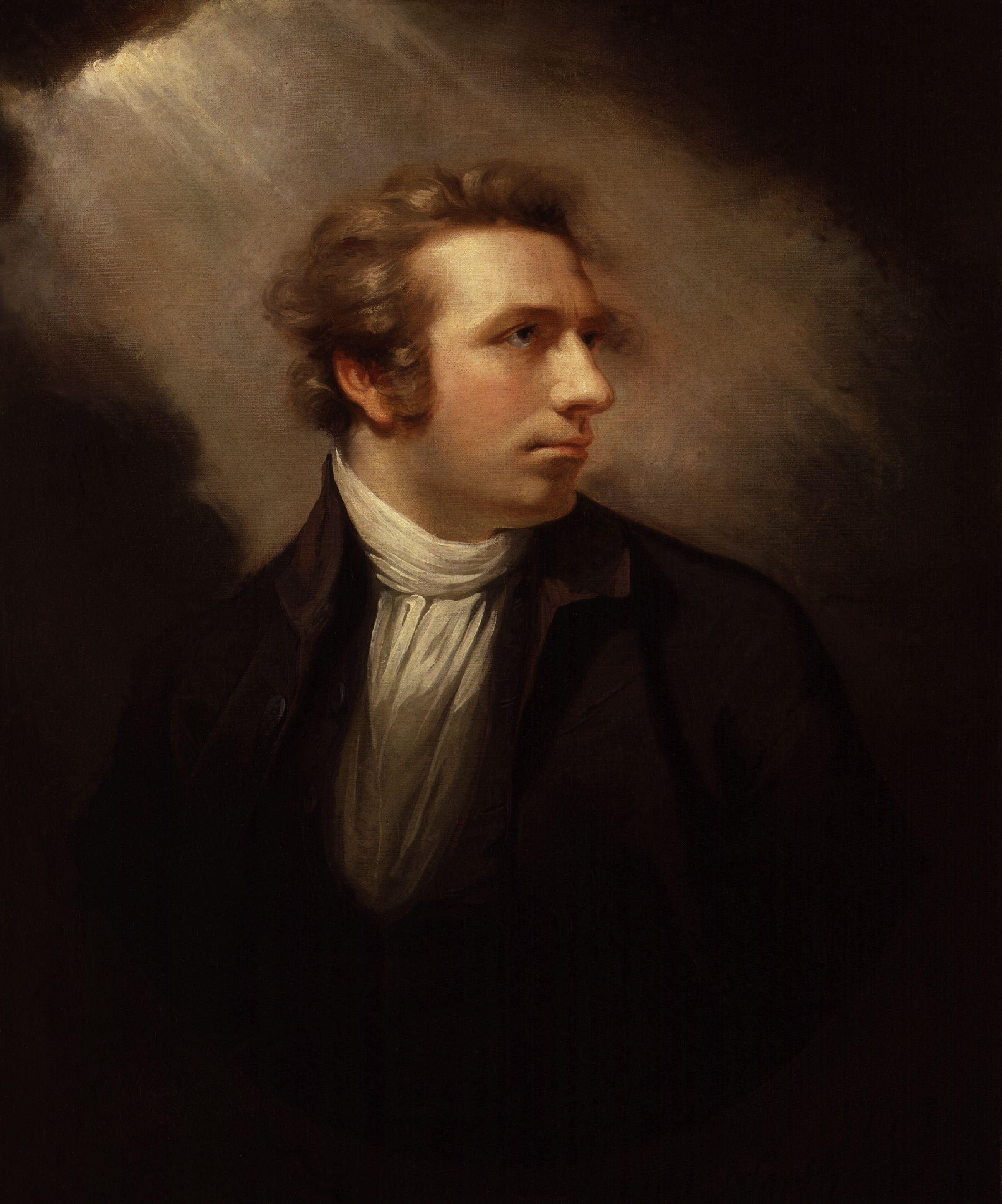
Why Johann Heinrich Füssli matters
Johann Heinrich Füssli, known in the English-speaking art world and on the international auction market as Henry Fuseli, is one of the pivotal figures between the Enlightenment and Romanticism. His 1781 painting The Nightmare fixed a new visual vocabulary for dread and the unconscious more than a century before Freud, and his exaggerated, theatrical figures shaped younger British contemporaries, including William Blake. For collectors, he is a case study in an Old Master whose reputation and museum presence far outrun the thin volume of his auction market.
- Born
- 1741-02-07, Zurich, Switzerland
- Nationality
- Swiss-British
- Media
- Painting, Drawing
- Movement
- Romanticism
- Education
- Collegium Carolinum, Zurich (classical and theological education, trained for the ministry); independent study of antique sculpture and the works of Michelangelo in Rome, 1770 to 1778
- Signature motifs
- Nightmare and dream imagery, Shakespearean and Miltonic subjects, Exaggerated Mannerist figure poses
By the numbers
- USD 3.51MAuction highChristie's New York, 2021; sources differ on both the exact sale date and the title of the record work (reported as The Nightmare or The Incubus Leaving Two Young Women)
- 1790Royal AcademicianRoyal Academy of Arts, London
- 1799Professor of Painting, RARoyal Academy of Arts, London
- No current gallery representationRepresented byOld Master market; works circulate through museums and major auction houses
Selected works
Click any work to view it full screen.
Biography
Füssli was born on 7 February 1741 in Zurich, Switzerland, the son of the painter Johann Caspar Füssli. He was educated at the Collegium Carolinum in Zurich, where he received a classical education in Greek, Latin, and modern languages under Johann Jakob Bodmer and Johann Jakob Breitinger, and trained for the ministry. Political conflict in Zurich forced him to leave the city in the early 1760s. He traveled through Berlin before settling in London in 1764, where he initially worked as a writer, translator, and critic.
Encouraged by Joshua Reynolds to pursue painting, Füssli left England in 1770 to study in Italy, remaining mainly in Rome until 1778. There he immersed himself in classical antiquity and the work of Michelangelo, developing the muscular, dramatically foreshortened figure style that would define his mature work. Back in London by 1779, he exhibited The Nightmare at the Royal Academy in 1782, a sensation that made his name. Later in the decade he contributed Shakespeare subjects to the publisher John Boydell's Shakespeare Gallery. He was elected an Associate of the Royal Academy in 1788 and a full Academician in 1790. In 1799 he became Professor of Painting at the Royal Academy and mounted his own ambitious Milton Gallery in Pall Mall, London, illustrating the poetry of John Milton. In 1816 the sculptor Antonio Canova named him an honorary member of the Accademia di San Luca in Rome, alongside John Flaxman and Thomas Lawrence.
Füssli died on 16 April 1825 at Putney Hill, London, at the house of the Countess of Guildford, aged 84, and was buried in the crypt of St Paul's Cathedral.
Critical reception
Füssli's contemporaries and later critics consistently single out the intensity of his imagination. Johann Wolfgang von Goethe, an early collector of his drawings, is reported to have remarked on the sheer fury in Füssli's art, and Antonio Canova's decision to name him an honorary member of Rome's Accademia di San Luca in 1816, alongside Flaxman and Lawrence, reflects the esteem in which his peers held him. Art historians place him at the hinge between Neoclassicism and Romanticism, noting his influence on William Blake and, much later, on Symbolist and Surrealist painters drawn to his treatment of dream and terror. The recurring critical theme is his willingness to distort anatomy and scale for psychological effect, a choice some 18th century critics found extreme but which later generations read as prophetic.
Market
Füssli's market is that of a canonical but thinly traded Old Master. His auction high stands at USD 3,510,000, achieved at Christie's New York in 2021, a price Christie's own artist overview describes as a world auction record for him. Published sources differ on both the exact sale date and the title of the record-setting canvas, naming it variously as The Nightmare and The Incubus Leaving Two Young Women, which is not unusual for an artist who painted several closely related versions of his best-known subjects. Below that record, specialist Old Master dealers have placed the working range for his paintings roughly between USD 250,000 and USD 3,000,000, reflecting a market driven by scarcity and museum-quality condition rather than by frequent turnover.
Top auction results
| Work | Price | Sale |
|---|---|---|
| Record sale, title reported variously as The Nightmare and The Incubus Leaving Two Young Women (see fact-ledger) (2021) | USD 3,510,000 (USD 3,510,000) | Christie's, New York |
Selected exhibitions
| Years | Exhibition | Venues |
|---|---|---|
| 1782 | Royal Academy annual exhibition | Royal Academy of Arts, London (first showing of The Nightmare) |
| 1780s to 1790s | Boydell's Shakespeare Gallery | London |
| 1799 | Milton Gallery | Pall Mall, London |
| 2018 to 2019 | Johann Heinrich Fussli. Drama und Theater | Kunstmuseum Basel |
| 2022 to 2023 | Fussli, the Realm of Dreams and the Fantastic | Musee Jacquemart-Andre, Paris |
| 2022 to 2023 | Fuseli and the Modern Woman: Fashion, Fantasy, Fetishism | Courtauld Gallery, London |
Museum collections
- Kunsthaus Zurich
- Kunstmuseum Basel
- Tate, London
- Courtauld Gallery, London
- Musee du Louvre, Paris
- Detroit Institute of Arts
- Yale Center for British Art, New Haven
- Metropolitan Museum of Art, New York
Awards and honors
- Associate, Royal Academy of Arts, London (1788)
- Royal Academician, Royal Academy of Arts, London (1790)
- Professor of Painting, Royal Academy of Arts, London (1799)
- Honorary member, Accademia di San Luca, Rome (1816)
Authentication and provenance
No catalogue raisonne.
No published catalogue raisonne was confirmed in research for this profile. Works are traced through museum provenance, Royal Academy exhibition records, and the small circle of Old Master specialists and auction houses, notably Christie's, that regularly handle his paintings and drawings.
Primary reference: https://www.christies.com/en/artists/henry-fuseli
What collectors should know
No catalogue raisonne of Füssli's paintings was confirmed in research for this profile, so provenance research typically runs through museum records, Royal Academy exhibition history, and the handful of Old Master specialists and auction houses that regularly handle his work. Because he painted multiple versions of his signature subjects, buyers should expect careful cataloguing questions around title, date, and version before any acquisition. There is currently no gallery or estate formally representing his work; it circulates through museum deaccessions, private collections, and the major international auction houses, which is the main reason his public sale record remains comparatively short and each result carries outsized weight.
Further reading and resources
Data current as of 2026-07-13.

