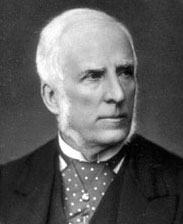
Why John Callcott Horsley matters
John Callcott Horsley is a significant figure in Victorian art history less for setting critical trends than for shaping the institutions and visual culture around him. As a Royal Academician, a long-serving Treasurer of the Royal Academy, and one of the founders of the Cranbrook Colony of genre painters, he sat at the center of the Victorian art establishment for half a century. He is also widely credited as the designer of the first commercially produced Christmas card, a piece of visual culture far better known today than most of his paintings. For a collector, he represents a historical market that is thin, defined by a single major auction result rather than a continuous price history.
- Born
- 1817-01-29, London, England
- Nationality
- British
- Media
- Painting, Illustration
- Movement
- "Victorian academic painting", "Cranbrook Colony"
- Education
- Dr Henry Sass's Academy, Bloomsbury, London, from about 1830; Royal Academy Schools, London, registered 1831, awarded a gold medal in the antique
- Signature motifs
- "Victorian genre and domestic scenes", "Historical and religious subjects"
By the numbers
- GBP 361,250Auction highShowing a Preference, Christie's London, 17 June 2008; best documented result, full ranking unconfirmed
- Elected 1864Royal AcademicianRoyal Academy of Arts, London
- 1882 to 1897Treasurer, Royal Academy
- 1843First Christmas cardCommissioned by Henry Cole
Biography
John Callcott Horsley was born on 29 January 1817 in London, the son of the composer William Horsley and a relative and protege of the painters Augustus Wall Callcott and William Mulready, both of whom encouraged his early training. After general schooling in Kensington, he was sent at about age thirteen, around 1830, to Dr Henry Sass's academy in Bloomsbury, a well-known preparatory school for the Royal Academy, where fellow students included figures who would later become his artistic contemporaries. He registered at the Royal Academy Schools in 1831 and won a gold medal in the antique.
Horsley began exhibiting at the Royal Academy in 1836 with The Pride of the Village, and went on to show genre paintings there regularly for decades, into the 1890s. In 1843 his cartoon of St Augustine Preaching won a prize in the Westminster Hall competition held to select decorators for the new Houses of Parliament, and in 1844 he was chosen as one of six painters commissioned to execute frescoes there, including Religion, installed in the House of Lords in 1845. That same year, 1843, he designed what is widely regarded as the first commercially produced Christmas card, commissioned by Henry Cole, and he also designed the so-called Horsley envelope, an early prepaid mailing envelope that anticipated the postage stamp.
With fellow painters Thomas Webster, George Bernard O'Neill, and Frederick Daniel Hardy, Horsley helped form the Cranbrook Colony, meeting each summer to paint in the Kent village of Cranbrook. He was elected an Associate of the Royal Academy in 1855 and a full Royal Academician in 1864. From 1875 to 1890 he served as Rector of the Royal Academy Schools. He served as Treasurer of the Royal Academy from 1882 until his retirement from the post in 1897, and after 1870 was heavily involved in organizing the Royal Academy's winter Old Masters exhibitions at Burlington House.
Horsley died on 18 October 1903 in London, a date and place corroborated by Encyclopaedia Britannica, Wikipedia, the Kensington Society, and Find a Grave records of his burial at Kensal Green Cemetery.
Critical reception
Horsley's standing rests substantially on his institutional role rather than on a single defining body of celebrated paintings. His genre paintings were popular exhibition fixtures at the Royal Academy for decades, and his role within the Cranbrook Colony placed him at the center of a recognizable strand of mid-Victorian domestic genre painting. Modern reference sources note that he is often reduced to "the designer of the first Christmas card," a reputation that now overshadows his standing as a working Royal Academician and painter of genre and historical subjects.
Market
Horsley's auction market is small and thinly documented. The best-attested high price is GBP 361,250 (about USD 572,724 at the time), paid for Showing a Preference at Christie's London on 17 June 2008. Aggregated price databases such as LotSearch also rank other Bonhams London lots, including The Morning Walk and Checkmate, Next Move, among his highest results, but without publishing exact hammer prices, so the complete ranking of his top sales cannot be confirmed with full confidence. No later sale identified in the sources reviewed approaches the Christie's figure, and works on paper and prints attributed to him have traded far lower, in the low thousands of dollars. Collectors should treat Horsley's market as a historical, thinly traded one rather than one with an active, continuously updated price curve.
Top auction results
| Work | Price | Sale |
|---|---|---|
| Showing a Preference | USD 572,724 (GBP 361,250) | Christie's, London, 2008-06-17 |
Selected exhibitions
| Years | Exhibition | Venues |
|---|---|---|
| 1836 | The Pride of the Village | Royal Academy, London |
| 1843 | St Augustine Preaching (Westminster Hall Cartoon Competition, prize entry) | Westminster Hall, London |
| 1844 to 1845 | Religion (fresco, installed in the House of Lords) | Houses of Parliament, London |
| 1836 to 1893 | Genre paintings shown at successive annual exhibitions | Royal Academy, London |
| After 1870 | Organizer, winter Old Masters exhibitions | Burlington House, Royal Academy, London |
| 1875 to 1890 | Rector of the Royal Academy Schools | Royal Academy, London |
Museum collections
- Tate, London
Awards and honors
- Prize, Westminster Hall Competition, for the cartoon St Augustine Preaching (1843)
- Associate of the Royal Academy (ARA) (1855)
- Royal Academician (RA) (1864)
- Treasurer of the Royal Academy (served to 1897) (1882)
Authentication and provenance
No catalogue raisonne.
No catalogue raisonne has been identified for this artist, and no certificate-of-authenticity program is documented. Works should be verified through auction house provenance research and Royal Academy exhibition records.
Primary reference: https://www.tate.org.uk/art/artists/john-callcott-horsley-277
What collectors should know
There is no known catalogue raisonne for Horsley, and no formal authentication program has been identified, so provenance and exhibition history carry more weight than they would for an artist with an established scholarly catalogue. His market is anchored by a single, well documented 2008 sale rather than a deep or continuous sales history, and other high-value lots recorded in aggregated databases lack confirmed prices, so any single result should be read with that caveat rather than as evidence of a broad, liquid market. Buyers should also be aware that his name appears in market databases under slightly different spellings, most commonly as "John Calcott Horsley," which refer to the same artist and should be cross-checked when researching comparable sales.
Further reading and resources
Data current as of 2026-07-11.

