John James Audubon
French-American, 1785 to 1851
Watercolor · Hand-colored engraving · Oil painting
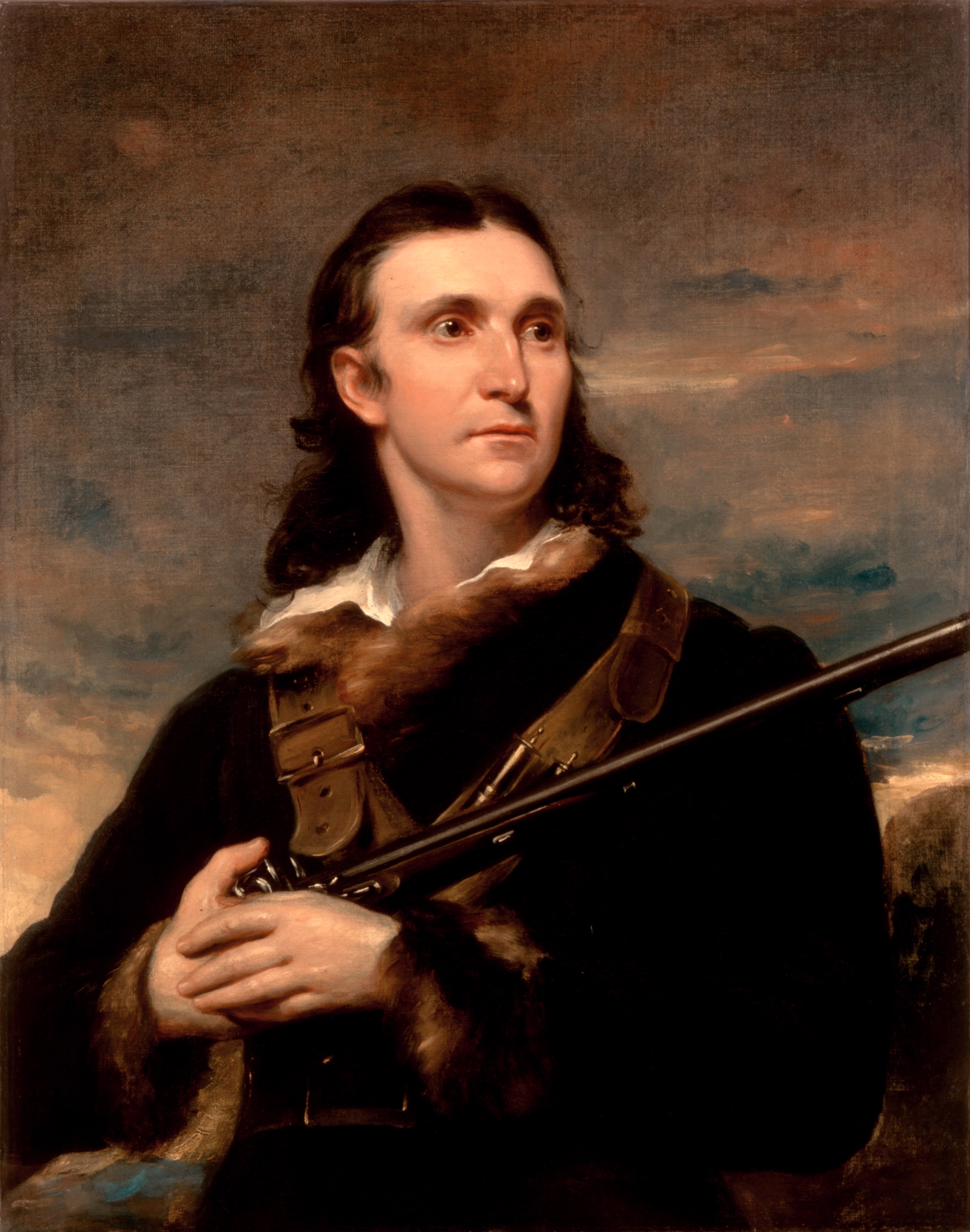
Why John James Audubon matters
John James Audubon occupies a unique place at the intersection of art, natural science, and the rare-book market. His life-size, dynamically posed engravings of North American birds, collected in The Birds of America, remain one of the most ambitious and technically demanding illustrated projects ever completed, and complete surviving copies now rank among the most valuable printed works in the world. For collectors, Audubon is less a conventional living-market artist than a benchmark of the rare-book and historical-Americana trade, where scarcity of complete, well-provenanced sets drives price far more than any single auction cycle.
- Born
- 1785-04-26, Les Cayes, Saint-Domingue (present-day Haiti)
- Nationality
- French-American
- Media
- Watercolor, Hand-colored engraving, Oil painting
- Movement
- Natural history illustration
- Education
- No university degree. Tutored at home in France in mathematics, geography, music, drawing, and fencing; about one year at a military school, circa 1797 to 1798; a few months of drawing study in Paris, 1802 to 1803.
- Signature motifs
- Life-size, dynamically posed bird portraits, Double-elephant folio format, "The Birds of America"
- Representation
- Audubon Galleries (specialist dealer)
By the numbers
- USD 11.5MAuction highThe Birds of America, complete copy, Sotheby's, London, 7 December 2010
- The Birds of AmericaPrincipal work435 hand-colored, life-size plates, published in parts 1827 to 1838
- Fellow, Royal Society (London)ElectedEarly 1830s; reported to be the second American so honored, after Benjamin Franklin
- National Audubon SocietyConservation legacyLocal Audubon societies named for him began with Massachusetts, 1896, about 45 years after his death
Selected works
Click any work to view it full screen.
Biography
John James Audubon was born Jean-Jacques Rabin on 26 April 1785 in Les Cayes, Saint-Domingue, then a French colony and now Haiti. His father, Jean Audubon, was a French sea captain and plantation owner; the identity of his mother is contested in the historical record, described in some sources as a French chambermaid named Jeanne Rabine who died soon after his birth, and in other scholarship as a mixed-race Saint-Domingue housekeeper named Catherine "Sanitte" Bouffard. He was raised largely in France under the loose supervision of his stepmother, and his early education consisted of home tutoring in mathematics, geography, music, drawing, and fencing rather than formal schooling. Around age twelve he spent about a year at a military school, an experience that did not lead to a naval career, and in 1802 to 1803 he studied drawing for a few months in Paris. He emigrated to the United States in 1803.
After a series of failed business ventures on the American frontier, Audubon devoted himself to observing and drawing birds in the wild, developing a signature style of large-scale, dramatically posed compositions that departed from the flat, specimen-style bird illustration common at the time. Unable to find an American engraver and publisher equal to the project, he traveled to Britain in 1826, where he was received enthusiastically and secured subscribers, including reportedly King George IV, for The Birds of America. Engraved by Robert Havell and issued in parts from 1827 to 1838, the work comprises 435 hand-colored, life-size plates and is considered the most ambitious ornithological publication of its era. His achievements brought him election to the Royal Society in London in the early 1830s, reportedly making him only the second American so honored after Benjamin Franklin, as well as membership in the Linnean Society and the Royal Society of Edinburgh, and he was elected a member of the American Philosophical Society in 1831. He was posthumously inducted into the Hall of Fame for Great Americans in 1900.
Audubon's life is also documented, factually and without dispute, to include his ownership, purchase, and sale of enslaved people in Kentucky, his opposition to abolition, his return of escaped enslaved people to their owners, and his participation in the era's scientific racism, including the collection of human skulls sent to a colleague who used them to argue for racial hierarchy claims. These facts have been acknowledged and examined in recent years by the National Audubon Society and other conservation and ornithological organizations that bear his name. This history sits alongside, and does not erase, his documented scientific and artistic achievement, and both are part of the public record.
Audubon died at his home in New York City on 27 January 1851, at age 65, and was buried in Trinity Church Cemetery in the Hamilton Heights section of Manhattan.
Critical reception
Museums and curators consistently frame Audubon's central achievement as a break from the flat, specimen-style bird illustration of his era in favor of dramatic, naturalistic poses and settings, a choice some contemporaries found unconventional but that later scholarship has treated as a major advance in both ornithological accuracy and artistic vitality. Standard biographical references also note that Audubon's scientific record is not without controversy: he has been the subject of documented allegations of fraud, plagiarism, and fabricated species descriptions, a dispute that scholars weigh alongside his acknowledged artistic and ornithological achievement. Institutional programming, from the Museum of Fine Arts, Boston, to Crystal Bridges Museum of American Art, has continued to present his work as both art-historical and scientific achievement. At the same time, institutions carrying his name, including the National Audubon Society itself, have in recent years publicly reassessed his biography, incorporating his enslavement of people and his racial views into the historical account rather than omitting them.
Watch
Market
Audubon's market is effectively the market for complete or near-complete copies of The Birds of America, supplemented by a small number of surviving original watercolors and oil paintings. His documented auction high is a complete copy sold at Sotheby's, London, for USD 11.5 million on 7 December 2010, described by multiple sources as, at the time, the second-highest price ever paid for a single printed book. Other significant sales of complete or near-complete copies include a Christie's New York sale in March 2000 for USD 8.8 million, a Christie's New York sale in 2014 for USD 7,922,500, and a sale reported at USD 9,650,000 whose house and date are given inconsistently across sources as Christie's New York in June 2018 or Sotheby's New York in November 2019. Individual plates and smaller octavo editions trade far below these figures and represent the more liquid, accessible end of the Audubon market.
Top auction results
| Work | Price | Sale |
|---|---|---|
| The Birds of America (complete copy, double-elephant folio) | USD 11,500,000 (GBP 7,321,250) | Sotheby's, London, 2010-12-07 |
Selected exhibitions
| Years | Exhibition | Venues |
|---|---|---|
| 2013 to 2014 | John James Audubon: Life-Sized and Larger than Life | Museum of Fine Arts, Boston |
| 2014 to 2015 | John James Audubon and the Artist as Naturalist | Crystal Bridges Museum of American Art, Bentonville |
| 2014 to 2015 | John James Audubon | Hallie Ford Museum of Art, Willamette University, Salem, Oregon |
| Undated, recent | John James Audubon: An American Woodsman | California Museum of Natural History Art |
| Ongoing | Audubon Gallery (permanent installation of a complete four-folio Birds of America) | North Carolina Museum of Art, Raleigh |
| Ongoing | Audubon Museum collection (21 attributed original paintings) | John James Audubon Museum, Audubon State Park, Henderson, Kentucky |
| 2026 | John James Audubon | Masur Museum of Art, River Galleries (exact August to October 2026 dates vary by source) |
| 2026 | Picturing Paradise: From John James Audubon to the Florida Highwaymen | Appleton Museum of Art, Ocala |
Museum collections
- National Gallery of Art, Washington, D.C.
- New-York Historical Society, New York
- John James Audubon Museum, Audubon State Park, Henderson, Kentucky
- Crystal Bridges Museum of American Art, Bentonville
- North Carolina Museum of Art, Raleigh
Awards and honors
- Member, American Philosophical Society (1831)
- Hall of Fame for Great Americans (posthumous induction) (1900)
Authentication and provenance
No catalogue raisonne.
No published catalogue raisonne exists for Audubon's watercolors, oils, or prints. Authenticity of Birds of America plates is established through bibliographic scholarship on paper stock and plate states, and original paintings are verified through institutional and historical-society records such as those held at the John James Audubon Museum.
Primary reference: https://www.nga.gov/artists/122-john-james-audubon
What collectors should know
There is no catalogue raisonne for Audubon, so authenticity rests on bibliographic scholarship, provenance, and institutional documentation rather than a single reference catalogue. The market's defining feature is scarcity: complete, well-provenanced copies of The Birds of America are rare and command prices in the millions, while individual plates and later octavo editions are far more available and far less expensive, so collectors should treat headline auction totals for complete sets as a distinct market from the trade in individual prints. Because Audubon is a historical rather than a living artist, there is no gallery or estate representation in the contemporary sense; specialist rare-book and print dealers, together with major museum holdings, anchor the market instead.
Further reading and resources
Data current as of 2026-07-09.

