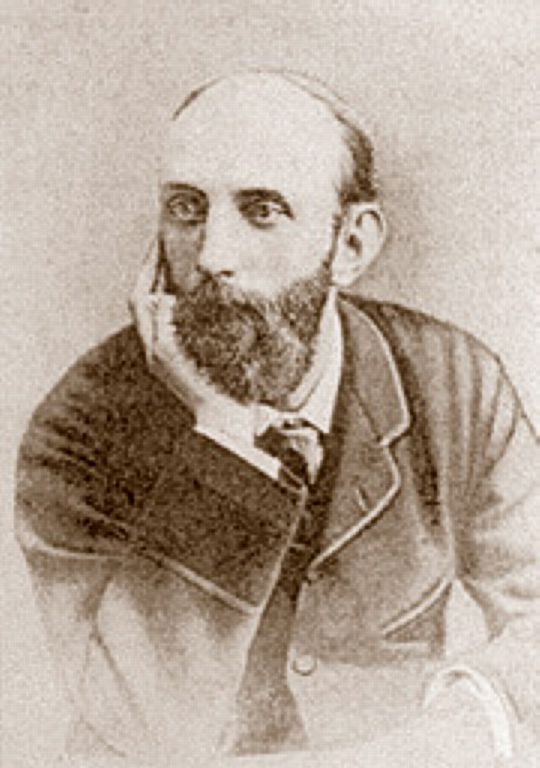
Why John Melhuish Strudwick matters
John Melhuish Strudwick was among the last committed painters of the Pre-Raphaelite and Aesthetic tradition, producing a small, densely worked body of allegorical and literary paintings, many carrying titles taken from invented lines of verse, that carried the movement's ideals into the early twentieth century. For collectors, he is a useful case study in how a niche, thinly traded market for a historically significant but non-canonical artist can still produce a genuine price record when a strong, fresh-to-market example reaches auction.
- Born
- 1849-05-06, Clapham, London, England
- Nationality
- British
- Media
- Painting
- Movement
- Pre-Raphaelite
- Education
- St Saviour's Grammar School, Southwark; National Art School of Design, South Kensington; Royal Academy Schools from 1868 (no degree documented); studio assistant to John Roddam Spencer Stanhope and Edward Burne-Jones
- Signature motifs
- Poetic, verse-derived titles, Musical and literary allegorical female figures
By the numbers
- USD 2.0MAuction highThy Music, faintly falling..., Christie's London, 2026
- 1849 to 1937LifespanBritish Pre-Raphaelite painter
- 5 public collectionsMuseum collectionsTate, Sudley House, National Museum Cardiff, Manchester Art Gallery, AGNSW
- None currentGallery representationMarket handled through major auction houses
Selected works
Click any work to view it full screen.
Biography
Strudwick was born on 6 May 1849 in Clapham, London. He attended St Saviour's Grammar School in Southwark, leaving at around age sixteen, then studied at the National Art School of Design in South Kensington, and from 1868 at the Royal Academy Schools, where, by contemporaries' accounts, he was not a distinguished student. He found his footing instead as a studio assistant, working first for the painter John Roddam Spencer Stanhope and then for Edward Burne-Jones, an apprenticeship that shaped his mature style of tightly layered, richly colored compositions built around single female figures set against elaborate architectural or garden backdrops.
From the late 1870s Strudwick showed regularly at the Grosvenor Gallery and, later, the New Gallery in London, the two principal exhibition venues for artists associated with the Aesthetic movement. He worked slowly and produced a comparatively small body of paintings over a long career, many of them given titles drawn from invented lines of verse, among them Summer Songs, Acrasia, and the 1893 painting now known by its verse title, Thy Music, faintly falling, dies away, Thy dear eyes dream that Love will live for aye. He sometimes signed works with his home address, a detail auction houses still cite when tracing provenance.
Strudwick continued to paint into old age, though his reputation had faded well before his death. He died on 16 July 1937 in Hammersmith, London, and was buried in Golders Green Cemetery. His obituary that year in The Times remembered him personally rather than critically.
Critical reception
Reception of Strudwick's work was divided during his lifetime, with some contemporary critics praising the technical qualities of his landscape and foliage passages and others remaining unconvinced by his allegorical subject matter. Strudwick received no Royal Academy medals or other formal honors, and no solo museum retrospective of his work is documented, either in his lifetime or since.
His reputation faded for much of the twentieth century before a partial revival, most visibly through his inclusion in The Last Romantics, the 1989 survey of late Romantic British painting at London's Barbican Art Gallery, and through subsequent scholarly attention to his place within Burne-Jones's circle. His 1937 obituary in The Times reportedly remembered him warmly rather than critically, recalling his personal kindness to younger artists.
Market
Strudwick's market is small and infrequent, concentrated among Victorian and Pre-Raphaelite specialist sales at major London auction houses rather than run through any dedicated gallery or estate. MutualArt records roughly 55 of his works appearing at auction, a modest total that leaves any single strong result capable of resetting his record.
His current auction high is Thy Music, faintly falling, dies away, Thy dear eyes dream that Love will live for aye (1893), which sold for GBP 1,514,000 (approximately USD 2,000,000) at Christie's London on 30 June 2026, a confirmed world auction record for the artist. That result is reported to have surpassed his previous record, held by Summer Songs (1901), which sold at Sotheby's London for GBP 848,000, roughly USD 1.4 million to 1.5 million depending on the source and exact date, which is not confirmed. No catalogue raisonne exists to anchor supply expectations, so provenance and exhibition history do most of the work in supporting price.
Top auction results
| Work | Price | Sale |
|---|---|---|
| Thy Music, faintly falling, dies away, Thy dear eyes dream that Love will live for aye (1893) | USD 2,000,000 (GBP 1,514,000) | Christie's, London, 2026-06-30 |
Selected exhibitions
| Years | Exhibition | Venues |
|---|---|---|
| Late 19th century | Annual exhibitions | Grosvenor Gallery, London |
| Late 19th century | Annual exhibitions | New Gallery, London |
| 1989 | The Last Romantics | Barbican Art Gallery, London |
| 2016 (planned) | Unnamed group exhibition | Japan, venue unspecified; realization unconfirmed |
Museum collections
- Tate, London
- Sudley House, National Museums Liverpool
- National Museum Cardiff, Amgueddfa Cymru
- Manchester Art Gallery
- Art Gallery of New South Wales, Sydney
Authentication and provenance
No catalogue raisonne.
No catalogue raisonne has been published for Strudwick. Attribution relies on signed inscriptions, sometimes including the artist's home address, and on exhibition history tracing back to the Grosvenor Gallery and New Gallery.
Primary reference: https://www.tate.org.uk/art/artists/john-melhuish-strudwick-536
What collectors should know
No catalogue raisonne exists for Strudwick, and no gallery or estate currently represents his market; his paintings surface through major auction houses and specialist Victorian sales rather than through an ongoing dealer program. Attribution generally rests on signed inscriptions, sometimes including his home address, along with exhibition history tracing back to the Grosvenor Gallery and New Gallery. With only a modest number of works reaching auction in any given decade, collectors should treat his auction record, and any comparison to it, as reflecting one exceptional sale rather than a stable trend line. His institutional presence, in the Tate, National Museums Liverpool's Sudley House, National Museum Cardiff, Manchester Art Gallery, and the Art Gallery of New South Wales, remains the more durable signal of his standing.
Further reading and resources
Data current as of 2026-07-10.

