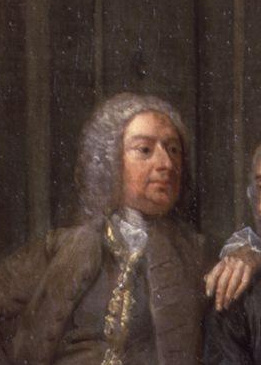
Why John Wootton matters
John Wootton was the leading painter of horses and hunting scenes in early eighteenth century England, and one of the first native-born painters to establish landscape as a serious subject in the English tradition. For a collector, he represents an Old Master category rather than a living market: a historical figure whose reputation rests on deep institutional holdings and elite period patronage rather than gallery representation, and whose auction activity is thin, high-value, and concentrated in a small number of documented sporting and landscape subjects.
- Nationality
- English
- Media
- Painting
- Movement
- British sporting art, Old Master landscape painting
- Education
- No formal academic education documented. Likely informal training under sporting painter Jan Wyck before 1700, an apprenticeship described by biographers as probable but unconfirmed.
- Signature motifs
- Horse and hunting portraiture, Classical landscape composition
By the numbers
- GBP 194,000Auction highA Grey Horse, Christie's, 5 December 2002 (best-documented public result; some auction databases are access-limited)
- c. 1700 to 1764ActiveLeading English sporting and landscape painter of the Augustan age
- 13 November 1764DeathLondon
Selected works
Click any work to view it full screen.
Biography
John Wootton was an English painter of sporting scenes, hunting subjects, battle paintings, and classical landscapes, active in London from the early 1700s until his death in 1764. His exact birth date is not documented; the principal sources reviewed place his birth at approximately 1682, though some give circa 1686. His birthplace is recorded in some sources as Snitterfield, Warwickshire, though this rests on limited documentation.
Wootton's early training is likewise not fully documented. It is likely, though not certain, that he received informal artistic instruction from the sporting painter Jan Wyck before 1700. Some accounts suggest he may have begun his working life as a page in the household of the Dukes of Beaufort, a courtly connection consistent with the elite access he later enjoyed as a painter.
By the early eighteenth century Wootton had established himself as the foremost painter of horses and hunting scenes in England, and he extended his practice into battle paintings and into classical, Claude-influenced landscape composition. His patrons included George II, Frederick, Prince of Wales, and the Duke of Marlborough, reflecting his standing among the highest ranks of British society. He died in London on 13 November 1764.
Critical reception
Art historians generally credit Wootton as one of the first significant native-born landscape painters in England and as the outstanding sporting painter of the Augustan age, working in a period before the Royal Academy existed to organize public exhibitions or formal honors. His reputation rested on courtly and aristocratic patronage rather than prizes. Art UK's account of his career notes a favorable period assessment from the writer and connoisseur Horace Walpole, situating Wootton's landscapes within the classical continental tradition. Modern academic treatment, including a monograph-length study published through Pennsylvania State University's Open Publishing program, frames him in similar terms, as the first landscape painter of consequence working in a distinctly English idiom. No comprehensive record of exhibitions survives from his lifetime, which is expected given that public exhibiting societies did not yet exist in Britain. His standing today is instead measured through continuous institutional collecting, from the Metropolitan Museum of Art to the National Horseracing Museum in Newmarket, which added further Wootton portraits to its holdings in 2026.
Market
Wootton's market is that of a historical Old Master rather than a gallery-represented artist. His paintings circulate through auction houses and specialist dealers in British sporting and Old Master pictures, and no gallery or estate currently represents his work. The best-documented public auction result is GBP 194,000, for A Grey Horse at Christie's on 5 December 2002, though incomplete access to some auction databases means this may not be the definitive all-time high. Because two and a half centuries separate his working life from today's market, results are sparse and concentrated in a small number of high-value equine and sporting subjects, so a single sale should not be read as a stable trend.
Top auction results
| Work | Price | Sale |
|---|---|---|
| A Grey Horse (2002) | GBP 194,000 | Christie's, 2002-12-05 |
Selected exhibitions
| Years | Exhibition | Venues |
|---|---|---|
| 2026 | Three historic Wootton paintings unveiled | National Horseracing Museum, Newmarket |
| 1748 | Classical Landscape with Roman Figures, on view | The Metropolitan Museum of Art, New York, Gallery 511 |
| ongoing | Morning and Evening, Wootton classical landscapes | Yale Center for British Art, New Haven |
| 1715 | Horses exercising on Warren Hill, Newmarket, commissioned by Lord Harley | Portland Collection, Welbeck Abbey |
| ongoing | Stag Hunt, on view | Walmer Castle, English Heritage |
| ongoing | A View of Cassiobury Park, on view | Watford Museum |
| ongoing | Drovers at a Harbour, on view | York Art Gallery |
Museum collections
- The Metropolitan Museum of Art, New York
- Yale Center for British Art, New Haven
- Tate, London
- National Horseracing Museum, Newmarket
- Portland Collection, Welbeck Abbey
- York Art Gallery
Authentication and provenance
No catalogue raisonne.
No catalogue raisonne has been identified for John Wootton and no certificate-of-authenticity program exists. Attribution relies on provenance research and connoisseurship, benchmarked against documented works in institutions such as Tate, the Metropolitan Museum of Art, and the National Horseracing Museum.
Primary reference: https://www.tate.org.uk/art/artists/john-wootton-613
What collectors should know
Collectors approaching Wootton should expect an Old Master market rather than a contemporary one: there is no catalogue raisonne, no gallery or estate representation, and authentication depends on provenance research and connoisseurship rather than a certifying body. Public collections, particularly the National Horseracing Museum, the Metropolitan Museum of Art, and Tate, are the most reliable benchmarks for attribution and quality. Given the small number of high-value auction results, any single sale, including the 2002 result for A Grey Horse, should be treated as one data point from an infrequent market rather than evidence of a smooth pricing trend.
Further reading and resources
Data current as of 2026-07-11.

