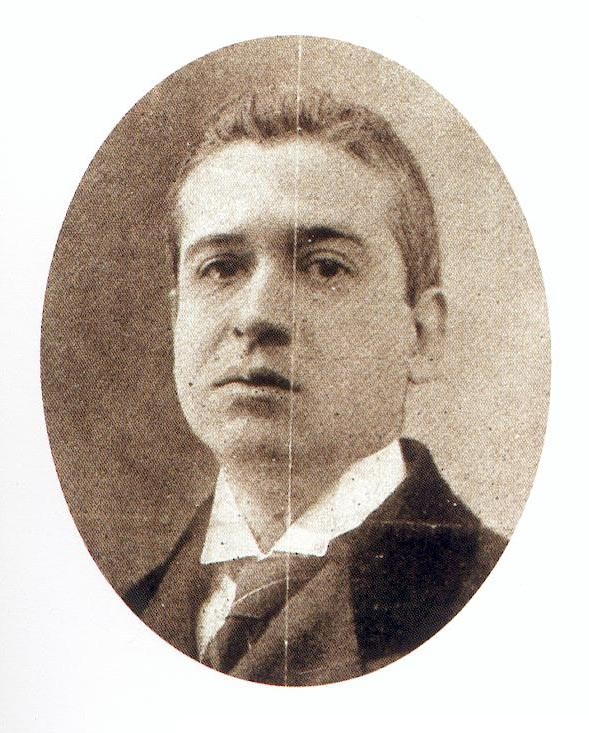
Why Jose Gutierrez Solana matters
Jose Gutierrez Solana is one of the pivotal figures of early twentieth century Spanish painting, an early Spanish exponent of Expressionism best known for his unflinching depictions of what critics have long called Espana Negra, the dark, carnivalesque underside of Spanish popular and provincial life: taverns, brothels, masked processions, and death. For a collector, Solana is a historically important but market thin artist. He is deeply held in Spanish and international museum collections and was decorated with national medals throughout his lifetime, yet he is rarely offered at public auction and has no confirmed catalogue raisonne, which places unusual weight on provenance and institutional documentation.
- Born
- 1886-02-28, Madrid, Spain
- Nationality
- Spanish
- Media
- Painting, Printmaking
- Movement
- Expressionism, Espana Negra (Black Spain)
- Education
- Instituto San Isidro, Madrid (documented in some reference sources); Real Academia de Bellas Artes de San Fernando, Madrid, 1900 to 1904 (no completed degree documented)
- Signature motifs
- Carnival masks and processions, Taverns, brothels, and itinerant performers, Memento mori and funeral imagery
- Representation
- No confirmed exclusive gallery or estate representation, Galeria Marita Segovia, Madrid (secondary market), Galeria La Aurora, Murcia (secondary market)
By the numbers
- GBP 400,000 (reported)Highest reported auction priceLa cupletista; auction house and exact sale date not confirmed in available sources
- 1886 to 1945LifespanBorn and died in Madrid, Spain
- 2004Museo Reina Sofia retrospectiveColeccion Banco de Espana exhibition
- No confirmed exclusive representationRepresented bySecondary market via Spanish galleries and auction houses
Selected works
Click any work to view it full screen.
Biography
Jose Gutierrez Solana, born Jose Romano Gutierrez-Solana y Gutierrez-Solana, was born on 28 February 1886 in Madrid. Some reference sources also document attendance at the Instituto San Isidro before he studied, from 1900 to 1904, at the Real Academia de Bellas Artes de San Fernando; available sources do not document a completed degree. He first presented work at the Exposicion Nacional de Bellas Artes in 1904.
Solana built his style around a grotesque, satirical realism of Spanish popular life, a vein of work later grouped under the label Espana Negra, or Black Spain. He held his first solo exhibition at the Ateneo de Santander in 1921, the same year a Spanish painting exhibition at the Royal Academy of Arts in London included his work. Recognition in Spain came steadily: a First Medal at the Exposicion Nacional de Bellas Artes in 1922 for Vuelta de la pesca, and a Gold Medal at the 1929 Exposicion Internacional de Barcelona for Las coristas. His international profile widened through the late 1920s and 1930s, with a solo exhibition at the Galerie Bernheim-Jeune in Paris in 1928, another at the Gazette des Beaux-Arts gallery in Paris in 1938, and participation in the 1930 Venice Biennale alongside shows in Pittsburgh, Oslo, and Chicago that same year.
After the Spanish Civil War, Solana continued exhibiting and collecting honors in Spain, including a national medal at the 1942 Exposicion Nacional de Bellas Artes in Barcelona, whose exact designation is not fully documented in available sources, and a Gold Medal from the Circulo de Bellas Artes in Madrid in 1943. According to the Biblioteca Nacional de Espana, he entered a sanatorium in 1945 after an attack of uremia and died there on 24 June 1945 in Madrid; he was buried in the Cementerio de la Almudena. The Exposicion Nacional de Bellas Artes awarded him its Medalla de Honor posthumously later that year. Encyclopaedia Britannica gives a death year of 1947, and Swedish Wikipedia gives 24 April 1945; the Biblioteca Nacional de Espana, Wikidata, and Spanish-language reference sources concur on 24 June 1945 in Madrid, the date this profile follows.
Critical reception
Solana's reception has centered on his unsparing, expressionist treatment of Spanish popular and provincial life, a body of work critics have long grouped under the label Espana Negra. His national medals came early, including a Gold Medal in 1922 and another in 1929, and further honors into the early 1940s, and Spanish institutions have continued to revisit his work through retrospectives at the Museo Reina Sofia in 1998 and 2004, the Museo de Bellas Artes de Bilbao in 2007, the Museo Picasso Malaga in 2010, and the Fundacion Botin in 2013. The 2004 Reina Sofia exhibition drew on the Coleccion Banco de Espana and renewed critical attention to his work.
Market
Solana's market is thin and largely European, and public auction results are infrequently and unevenly documented across sources. Specialist dealer listings report higher prices than those most commonly cited: La cupletista at GBP 400,000, The Hermits at EUR 360,250, and La mesa china at EUR 344,250, though the auction house and exact sale date for each are not confirmed in available sources, so these figures should be treated as reported rather than fully verified records. Separately, a 1980 sale of El Lechuga y su cuadrilla for 14,100,000 pesetas at a public auction in Barcelona was reported at the time as a record for Spain, though this has not been independently corroborated. In February 2016, Ansorena in Madrid sold the work Mascaras de las escobas; sources disagree on the exact total, reporting figures of EUR 133,100 and EUR 110,000 including premium, and no single, fully reconciled all time auction record for Solana could be confirmed from available sources as of this writing. The bulk of his most significant paintings sit outside the auction market entirely, held by the Museo Reina Sofia and by the Coleccion Banco de Espana, which regularly lends works to museum exhibitions.
Top auction results
| Work | Price | Sale |
|---|---|---|
| La cupletista | GBP 400,000 (reported) | Not confirmed in available sources, Not confirmed in available sources |
| El Lechuga y su cuadrilla (1980) | ESP 14,100,000 (pesetas) | Public auction, Barcelona, Spain, 1980-04-25 |
| Mascaras de las escobas (2016) | EUR 133,100 or EUR 110,000 (sources disagree) | Ansorena, Madrid, Spain, 2016-02-25 |
Selected exhibitions
| Years | Exhibition | Venues |
|---|---|---|
| 1904 | Exposicion Nacional de Bellas Artes | Madrid |
| 1921 | First solo exhibition | Ateneo de Santander |
| 1921 | Exhibicion de Pintura Espanola | Royal Academy of Arts, London |
| 1928 | Solo exhibition | Galerie Bernheim-Jeune, Paris |
| 1930 | Venice Biennale exhibition circuit | Venice Biennale; also Pittsburgh, Oslo, and Chicago |
| 1938 | Solo exhibition | Gazette des Beaux-Arts gallery, Paris |
| 2004 | Jose Gutierrez Solana, Coleccion Banco de Espana | Museo Reina Sofia, Madrid |
| 2026 | Solana. Grabados | Museo Ramon Gaya, Murcia |
Museum collections
- Museo Nacional Centro de Arte Reina Sofia, Madrid
- Museo de Bellas Artes de Bilbao
- Coleccion Banco de Espana
Awards and honors
- First Medal, Exposicion Nacional de Bellas Artes, Madrid (for Vuelta de la pesca) (1922)
- Gold Medal, Exposicion Internacional de Barcelona (for Las coristas) (1929)
- National medal, Exposicion Nacional de Bellas Artes de Barcelona (exact designation not fully documented) (1942)
- Gold Medal, Circulo de Bellas Artes, Madrid (1943)
- Medalla de Honor, Exposicion Nacional de Bellas Artes (awarded posthumously) (1945)
Authentication and provenance
No catalogue raisonne.
No published catalogue raisonne has been confirmed and there is no known certificate of authenticity program. Attribution rests on museum archives, exhibition history, and documentation held by the Biblioteca Nacional de Espana and the Museo Reina Sofia, along with specialist Spanish dealers.
Primary reference: https://www.museoreinasofia.es/en/exhibition/jose-gutierrez-solana
What collectors should know
Solana's estate has no confirmed exclusive gallery representation. His work moves mainly through Spanish auction houses and secondary market galleries such as Ansorena and Setdart, with dealers including Galeria Marita Segovia in Madrid and Galeria La Aurora in Murcia recently active with his paintings and prints. No catalogue raisonne has been confirmed to exist, so attribution typically rests on museum archives, exhibition history, and documentation held by the Biblioteca Nacional de Espana and the Museo Reina Sofia. Given the small and irregular number of public sales, and disagreement between sources on some individual results, collectors should treat any single auction result, including the figures cited above, as an imperfect guide to value and should weight provenance and prior museum or corporate collection history heavily when evaluating a work.
Further reading and resources
Data current as of 2026-07-18.

