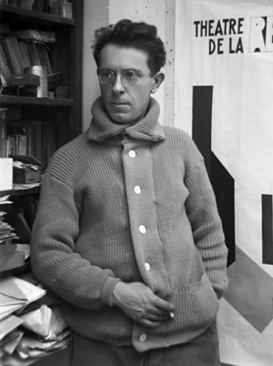
Why Joseph Csaky matters
Joseph Csaky was among the first sculptors to carry Cubism's pictorial logic into three dimensions, working in Paris alongside Picasso, Braque, Juan Gris, Fernand Leger, and Jean Metzinger from the early 1910s onward. His standing today rests less on market volume than on historical position: he exhibited at the landmark 1912 Section d'Or show, was championed for three years by dealer Leonce Rosenberg, and is held by the Guggenheim and the Centre Pompidou. For a collector, he is a case study in a historically important but thinly traded market, where museum and scholarly validation runs well ahead of auction liquidity.
- Born
- 1888-03-18, Szeged, Hungary
- Nationality
- Hungarian, naturalized French
- Media
- Sculpture, Drawing
- Movement
- Cubism, School of Paris
- Education
- School of Decorative Arts (Mintarajziskola), Budapest, 1905 to 1906, no degree completed; Academie de la Palette, Paris, private academy, from 1910 on a Ferenc Jozsef Art Scholarship
- Signature motifs
- Cubist heads, Geometric figuration
- Representation
- Sladmore Gallery, London, Kalman Maklary Fine Arts, Budapest, Galerie Marcilhac, Paris
By the numbers
- About USD 1.08MAuction highTete, 2017; exact house and date unconfirmed
- Salon de la Section d'Or, 1912Landmark exhibitionGalerie La Boetie, Paris, with Duchamp, Gris, Leger, Picabia
- Guggenheim; Centre PompidouMuseum collectionsNew York and Paris
- Paris, 1908 to 1971Active yearsCubist sculptor of the School of Paris
Selected works
Click any work to view it full screen.
Biography
Joseph Csaky was born on 18 March 1888 in Szeged, Hungary. Around 1905 he entered the School of Decorative Arts (Mintarajziskola) in Budapest to study under the sculptor Matrai Lajos, but found the teaching too conservative and left after about a year and a half without completing the program. He went on to work in the workshop of the photographer-painter Laszlo Kimnach in Buda, spent roughly six and a half months in 1907 producing ceramic ashtrays and vases at the Zsolnay factory in Pecs, and took further practical training as a metal founder and with a taxidermist.
Csaky moved to Paris around 1908. In 1910 he won the Ferenc Jozsef Art Scholarship in Szeged, which allowed him to study at the private Academie de la Palette in Paris under painters including Jean Metzinger, Andre Dunoyer de Segonzac, and Henri Le Fauconnier. He began exhibiting at the Salon de la Societe Nationale des Beaux-Arts in 1910 and 1911, and at the Salon des Independants and Salon d'Automne from 1911. In October 1912 he showed at the Salon de la Section d'Or at Galerie La Boetie, the exhibition widely regarded as the pre-war public debut of Cubism as a movement, alongside Marcel Duchamp, Juan Gris, Fernand Leger, Jean Metzinger, Francis Picabia, and Alexander Archipenko.
Dealer Leonce Rosenberg purchased Csaky's entire production for three years and later included him in the group exhibitions "Les Maitres du Cubisme" at the Galerie de l'Effort Moderne in 1921 and 1924, alongside Albert Gleizes, Piet Mondrian, Georges Braque, and others. In 1937 he received a major public commission, executing four monumental statues for the Exposition Internationale des Arts et Techniques dans la Vie Moderne in Paris. He continued to work in Paris in later decades, though he lived in financial hardship toward the end of his life, prompting the critic and museum director Jean Cassou to organize an assistance committee on his behalf in 1969. Joseph Csaky died in Paris on 1 May 1971.
Critical reception
Museums and specialist dealers consistently describe Csaky as a pioneer of modern, Cubist sculpture, among the first to translate Cubism's pictorial vocabulary into three-dimensional form. His inclusion in the 1912 Section d'Or exhibition and his long arrangement with dealer Leonce Rosenberg anchor that reputation within the historical record of the movement. Much of his recognition has been retrospective. No exact, reliably sourced contemporary review could be confirmed for this profile, but the appearance of a dedicated 1930 monograph by the critic Waldemar George, and the later scholarly monograph by Edith Balas, which frames him as a pioneer of modern sculpture, reflect sustained art-historical work to restore him to the center of the Cubist sculpture narrative, a status that his presence in the collections of the Guggenheim and the Centre Pompidou now supports.
Market
Csaky's auction record is Tete (Head), a sculpture reported to have achieved about USD 1,078,411 at auction in 2017, a price cited by Artsy as a record for the artist. The exact currency amount, auction house, and sale date could not be independently confirmed from available sources and are treated here with lower confidence. Beyond that peak, his broader market is modest and irregularly traded: Lempertz has recorded results such as EUR 46,800 for L'Etudiante and EUR 7,735 for Adam et Eve, both well below the 2017 high. Pricing depends heavily on medium, period, and provenance rather than following a smooth trend line.
Top auction results
| Work | Price | Sale |
|---|---|---|
| Tete (Head) (1923) | USD 1,078,411 |
Selected exhibitions
| Years | Exhibition | Venues |
|---|---|---|
| 1910 to 1911 | Salon de la Societe Nationale des Beaux-Arts | Paris |
| 1911 to 1914 | Salon des Independants | Paris |
| 1912 | Salon d'Automne | Paris |
| 1912 | Salon de la Section d'Or | Galerie La Boetie, Paris |
| 1921 to 1924 | Les Maitres du Cubisme | Galerie de l'Effort Moderne, Paris (dealer Leonce Rosenberg) |
| 1930 | Gallery exhibition | Reid and Lefevre Art Gallery, London |
| 1937 | Exposition Internationale des Arts et Techniques dans la Vie Moderne | Paris, Union des Artistes Modernes pavilion and Pavilions of Elegance and Ornament |
| 1988 | Joseph Csaky 1888 to 1971: Kubistische und Nachkubistische Skulpturen 1913 to 1950 | Galerie Rene Reichard, Frankfurt |
Museum collections
- Solomon R. Guggenheim Museum, New York
- Centre Pompidou, Paris
- Metropolitan Museum of Art, New York
Awards and honors
- Commissioned to create four monumental statues for the Exposition Internationale des Arts et Techniques dans la Vie Moderne, Paris (1937)
- First monograph on Csaky published, written by critic Waldemar George (1930)
- Comite d'Assistance a Csaky, an assistance committee organized by critic and museum director Jean Cassou (1969)
Authentication and provenance
No catalogue raisonne.
No published catalogue raisonne is documented for this artist. Edith Balas's scholarly monograph and the records of specialist dealers, including Sladmore Gallery, Kalman Maklary Fine Arts, and Galerie Marcilhac, are the primary references used to situate and research individual works, alongside auction-house cataloguing.
Primary reference: https://www.guggenheim.org/artwork/artist/joseph-csaky
What collectors should know
No catalogue raisonne is documented for Csaky, and no gallery has publicly identified itself as the official representative of his estate, so provenance and dealer attribution deserve particular care. Sladmore Gallery, Kalman Maklary Fine Arts, and Galerie Marcilhac are the specialist dealers most consistently associated with handling his work today. His auction activity is thin relative to his historical importance, so a single high result, including the 2017 record, should not be read as typical of prices for lesser or later works.
Further reading and resources
Data current as of 2026-07-10.

