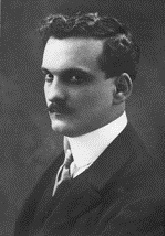
Why Julio Romero de Torres matters
Julio Romero de Torres, 1874 to 1930, is one of the defining Spanish painters of the early twentieth century, celebrated for symbolist depictions of Andalusian women that fused regional identity, flamenco culture, and allegories of sacred and profane love. For a collector, he represents a historical, museum-anchored market: his reputation rests on Spanish state honors and public institutions rather than a network of commercial galleries, and his auction activity is comparatively thin, so any single sale carries outsized weight.
- Born
- 1874-11-09, Córdoba, Spain
- Nationality
- Spanish
- Media
- Painting
- Movement
- Symbolism
- Education
- Apprenticed under his father at the School of Fine Arts, Córdoba, from around age ten; unsuccessful bid for a scholarship to the Spanish Academy in Rome, 1897. No formal art degree is documented.
- Signature motifs
- Andalusian women, Allegories of sacred and profane love
By the numbers
- GBP 769,250Auction highFuensanta, Sotheby's, London, 10 June 2014; best documented result
- First-class medalMajor honorNational Exhibition of Fine Arts, Madrid, 1908, for Musa gitana
- Museo Julio Romero de TorresDedicated museumCórdoba, Spain, in the artist's former home
- No current galleryRepresented byCore collection held by the Museo Julio Romero de Torres, Córdoba
Biography
Romero de Torres was born in Córdoba on 9 November 1874, the son of Rafael Romero Barros, a realist painter who served as director of the city's Museum of Fine Arts. He began his training under his father at the School of Fine Arts in Córdoba from around age ten. In 1897 he applied unsuccessfully for a scholarship to the Spanish Academy in Rome; no formal art degree is documented for him.
His exhibition career built steadily through the official National Exhibitions of Fine Arts in Madrid: an honourable mention in 1895, third-class medals in 1899 and 1904, and a first-class medal in 1908 for Musa gitana. He won first prize at the 1911 Barcelona Exhibition and first prize at the 1913 Munich International Exhibition. In 1916 he was appointed professor of antique drawing and costume at the Real Academia de Bellas Artes de San Fernando in Madrid.
In 1922 he traveled to Buenos Aires with his brother Enrique and exhibited at the Witcomb Gallery, a show reported as extremely well received by the Argentine public and critics. His final exhibition came in 1930 at the Ibero-American Exhibition in Seville. He died at his family home in Córdoba on 10 May 1930, reportedly following a liver ailment, at age fifty-five, and was buried at the Cemetery of San Rafael in Córdoba. His widow and children kept the paintings remaining in the studio, which became the core holding of the Museo Julio Romero de Torres, opened in his former home.
Critical reception
During his lifetime, Romero de Torres accumulated an unusually dense record of official Spanish recognition: an honourable mention and medals at the National Exhibitions of Fine Arts in Madrid between 1895 and 1908, and first prize at the 1911 Barcelona Exhibition. His 1922 exhibition at the Witcomb Gallery in Buenos Aires was reported as extremely well received by the Argentine public and critics. Later art-historical writing situates him within Spanish Symbolism and regionalist costumbrismo, reading his recurring subject, the Andalusian woman rendered as allegory, as a vehicle for ideas about Córdoba, flamenco, and Spanish identity. No verbatim contemporary review from a named critic could be confirmed for this profile, so no direct quotation is included here.
Market
Romero de Torres's market centers on Spain, and his works surface infrequently at auction. The best-documented result is Fuensanta, which sold for GBP 769,250 at Sotheby's London on 10 June 2014 and has been widely reported as a record for the artist. A separate market aggregator lists results up to USD 1,702,212 for his paintings, but no title, house, or date could be confirmed for that higher figure, so it is not treated as the settled record here. Auction listings for him appear under both "Julio Romero de Torres" and, on some platforms such as AskArt, the normalized form "Julio Romero De Torres" with a capitalized preposition; both forms refer to the same painter. Because so few of his works reach auction in any given year, a single strong or weak result can move the picture of his market considerably, and collectors should treat the current record as provisional rather than a settled benchmark.
Top auction results
| Work | Price | Sale |
|---|---|---|
| Fuensanta (2014) | GBP 769,250 | Sotheby's, London, United Kingdom, 2014-06-10 |
Selected exhibitions
| Years | Exhibition | Venues |
|---|---|---|
| 1930 | Ibero-American Exhibition | Seville, Spain |
| 1922 | Exhibition at the Witcomb Gallery | Buenos Aires, Argentina |
| 1913 | Munich International Exhibition | Munich, Germany |
| 1911 | Barcelona Exhibition | Barcelona, Spain |
| 1908 | National Exhibition of Fine Arts | Madrid, Spain |
| 1895 | National Exhibition of Fine Arts | Madrid, Spain |
Museum collections
- Museo Julio Romero de Torres, Córdoba
Awards and honors
- Honourable mention, National Exhibition of Fine Arts, Madrid (1895)
- Third-class medal, National Exhibition of Fine Arts, Madrid (1899)
- Third-class medal, National Exhibition of Fine Arts, Madrid (1904)
- First-class medal, National Exhibition of Fine Arts, Madrid, for Musa gitana (1908)
- First prize, Barcelona Exhibition (1911)
- First prize, Munich International Exhibition (1913)
- Professor of Antique Drawing and Costume, Real Academia de Bellas Artes de San Fernando, Madrid (1916)
Authentication and provenance
No catalogue raisonne.
No published catalogue raisonne has been identified for this artist. Attribution and provenance work rest principally on the Museo Julio Romero de Torres in Córdoba, formed from the artist's studio holdings by his widow and children after his death in 1930.
Primary reference: https://museojulioromero.cordoba.es/en/museum/
What collectors should know
There is no published catalogue raisonne for Romero de Torres, and no current gallery or estate representation could be confirmed. Attribution and provenance research lean heavily on the Museo Julio Romero de Torres in Córdoba, which holds the core body of work assembled directly from the artist's studio by his family. His auction market is thin by international standards, and the exact current record price is not fully settled between auction-house reporting and aggregator data, so collectors should treat any single data point, including the auction record itself, with appropriate caution and confirm current figures before relying on them.
Further reading and resources
Data current as of 2026-07-10.

