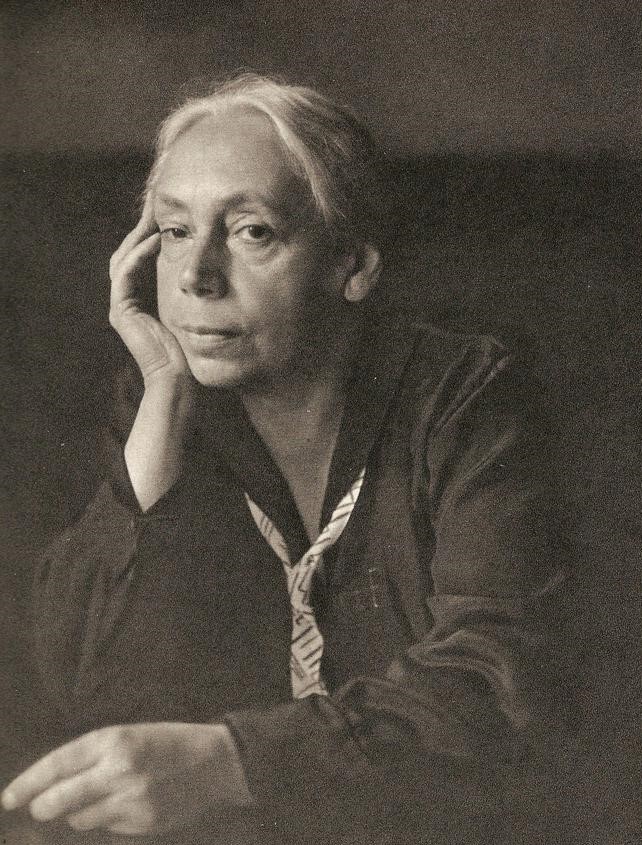
Why Kathe Kollwitz matters
Kathe Kollwitz is one of the most consequential German artists of the early twentieth century, a printmaker, draftsman, and sculptor whose work on grief, motherhood, poverty, and war remains a touchstone for socially engaged art. Her market looks different from that of most artists on a Masterworks worklist: there is no living studio, no gallery representing new work, and no catalogue raisonne to anchor authentication. Instead, value and trust are built almost entirely on museum stewardship, most notably the two institutions that carry her name in Cologne and Berlin, and on the depth of her presence in major public collections.
- Born
- 1867-07-08, Konigsberg, East Prussia (now Kaliningrad, Russia)
- Nationality
- German
- Media
- Printmaking, Drawing, Sculpture, Painting
- Movement
- Expressionism, Social Realism
- Education
- Private instruction in Konigsberg from 1879, including study with engraver Rudolf Mauer and painter Emile Neide; School for Women Artists, Berlin, circa 1885 to 1886, under Karl Stauffer-Bern; Academy for Women Artists, Munich, circa 1888 to 1889, under Ludwig Herterich. No formal academic degree was awarded; German art academies did not admit women to regular study in this period.
- Signature motifs
- Grief and motherhood, War and the working class, Death and mourning
- Representation
- No commercial gallery represents the estate. Rights are administered by VG Bild-Kunst, Bonn, and the Artists Rights Society (ARS), New York.
By the numbers
- about USD 1.13MAuction highPieta, 1903, color chalk drawing, sold 2022; exact house and date not confirmed in available sources
- 1919Prussian Academy of ArtsFirst woman elected full member; appointed professor
- 1929Order Pour le MeriteFirst woman awarded the order for Science and Art
- No commercial galleryRepresented byEstate rights administered by VG Bild-Kunst, Bonn, and ARS, New York
Selected works
Click any work to view it full screen.
Biography
Kathe Kollwitz was born Kathe Schmidt on 8 July 1867 in Konigsberg, East Prussia (now Kaliningrad, Russia). Her father arranged her first drawing instruction at about age twelve, and she went on to private lessons in Konigsberg, including study with engraver Rudolf Mauer and painter Emile Neide, before pursuing formal art training, first at the School for Women Artists in Berlin around 1885 to 1886 under Karl Stauffer-Bern, then at the Academy for Women Artists in Munich around 1888 to 1889 under Ludwig Herterich. German academies did not admit women to regular study at the time, so this women's-school track was the standard professional route. She married Karl Kollwitz and settled in Berlin, where she raised two sons.
Her public breakthrough came in the 1890s, when her cycle "A Weavers' Revolt" won wide recognition at exhibitions in Berlin and Dresden; sources vary on the exact year and prize, but multiple accounts agree that Kaiser Wilhelm II blocked a gold medal for the cycle at the 1898 Grosse Berliner Kunstausstellung. In 1919 she became the first woman elected a full member of the Prussian Academy of Arts and was appointed professor. In 1929 she became the first woman awarded the Order Pour le Merite for Science and Art. Her sixtieth birthday, in 1927, brought a wave of state honors and exhibitions, including a show at the Prussian Academy of Arts and an early Kollwitz solo exhibition in the Soviet Union, organized by the State Academy of the Science of Art in Moscow.
Her later years were shaped by loss and persecution. Her younger son, Peter, was killed in the First World War in 1914, a loss that became a driving force in her subsequent work. Under Nazi rule in the 1930s she was stripped of her professorship, forbidden to exhibit, and, according to museum accounts of the period, threatened with relocation to a concentration camp; international attention is credited with helping to protect her from a worse fate. Much of her work was destroyed in a 1943 Allied air raid on Berlin. She was evacuated to Moritzburg, near Dresden, where she died on 22 April 1945 at the age of seventy-seven, shortly before the end of the war in Europe.
Critical reception
Kollwitz's critical standing has only grown with time. Contemporaries recognized her importance early, evidenced by the 1898 gold medal nomination that Kaiser Wilhelm II personally blocked, and by her 1919 election as the first woman member of the Prussian Academy of Arts. Twenty-first-century institutions have treated her as overdue for wider recognition: the Museum of Modern Art's 2024 exhibition and a concurrent major retrospective at the Stadel Museum in Frankfurt were widely covered as a moment of rediscovery for an artist whose humane, unsparing treatment of grief, poverty, and war critics have described as without close parallel among her printmaking peers. Recent surveys at the Kunsthaus Zurich and the reopened Kathe Kollwitz Museum in Cologne have continued to frame her not as a niche graphic artist but as a central figure of German modernism whose subject matter, working-class life, mourning mothers, the costs of war, has only gained resonance.
Market
Kathe Kollwitz's market is unusual for a Masterworks profile: she has no commercial gallery, and reproduction rights are handled by the collecting society VG Bild-Kunst in Bonn and by the Artists Rights Society in New York, rather than by anyone marketing new supply. The best-documented high point of her auction market is a color chalk drawing of "Pieta" (1903), which market databases place at roughly USD 1.13 million, a figure that a separate secondary source corroborates at approximately EUR 1,081,380 in a 2022 sale; the exact auction house and sale date are not confirmed in the sources available. Below that level, her market is driven mainly by prints and drawings: one secondary market guide puts documented print prices from roughly EUR 10 for common later impressions up to about EUR 667,900 for the rarest early states, with drawings ranging up to the Pieta record noted above. This spread, a handful of exceptional unique works and rare states far above a much larger population of modestly priced multiples, is typical of a historic printmaker's market and means headline auction numbers should always be read against the specific work, state, and impression.
Top auction results
| Work | Price | Sale |
|---|---|---|
| Pieta (1903), color chalk drawing (2022) | USD 1,132,037 (EUR 1,081,380 (approximate, per secondary source)) |
Selected exhibitions
| Years | Exhibition | Venues |
|---|---|---|
| 1898 | Grosse Berliner Kunstausstellung | Berlin |
| 1927 | 60th-birthday exhibition | Prussian Academy of Arts, Berlin |
| 1927 | Early Kollwitz solo exhibition in the Soviet Union | State Academy of the Science of Art (GAChN), Moscow |
| 2024 | Kathe Kollwitz | Museum of Modern Art, New York |
| 2024 | Retrospective | Stadel Museum, Frankfurt |
| 2025 to 2026 | Taking a stand, Kathe Kollwitz | Kunsthaus Zurich, with Kunsthalle Bielefeld and Kathe Kollwitz Museum Cologne |
| 2025 to 2026 | Kollwitz neu sehen | Kathe Kollwitz Museum, Cologne (reopening exhibition) |
| 2026 | Kathe Kollwitz and Theater | Kathe Kollwitz Museum, Berlin |
Museum collections
- Kathe Kollwitz Museum, Cologne
- Kathe Kollwitz Museum, Berlin
- Museum of Modern Art, New York
- Kunsthaus Zurich
- Indianapolis Museum of Art at Newfields
- National Museum of Women in the Arts, Washington, D.C.
- Staatliche Museen zu Berlin (Alte Nationalgalerie and Kupferstichkabinett)
Awards and honors
- Order Pour le Merite for Science and Art (first woman recipient) (1929)
- First woman elected a full member of the Prussian Academy of Arts; appointed professor (1919)
- Gold medal nomination for A Weavers' Revolt vetoed by Kaiser Wilhelm II at the Grosse Berliner Kunstausstellung; accounts vary on the ensuing prize and year (1894 to 1899) (1898)
Authentication and provenance
No catalogue raisonne.
No published catalogue raisonne is confirmed in current research. Authentication and provenance questions are handled through the dedicated Kathe Kollwitz museums in Cologne and Berlin and through the rights societies that administer her estate.
Primary reference: https://www.kaethe-kollwitz.berlin/en/kaethe-kollwitz/biography/
What collectors should know
There is no catalogue raisonne of Kollwitz's work confirmed in current research, so authentication rests on the expertise of the dedicated Kollwitz museums in Cologne and Berlin, on the rights societies that administer her estate, and on documented exhibition and collection history rather than a single reference catalogue. Her market is bifurcated: a small number of unique drawings can reach seven figures, while prints, the far more common form in which her work circulates, trade across a wide range from roughly ten euros to several hundred thousand euros for the rarest states, depending on subject, state, and condition. Collectors should treat any single auction result with care, confirm the specific edition or state, and expect that provenance research will lean on museum and archival sources rather than a market-standard authentication program.
Further reading and resources
Data current as of 2026-07-10.

