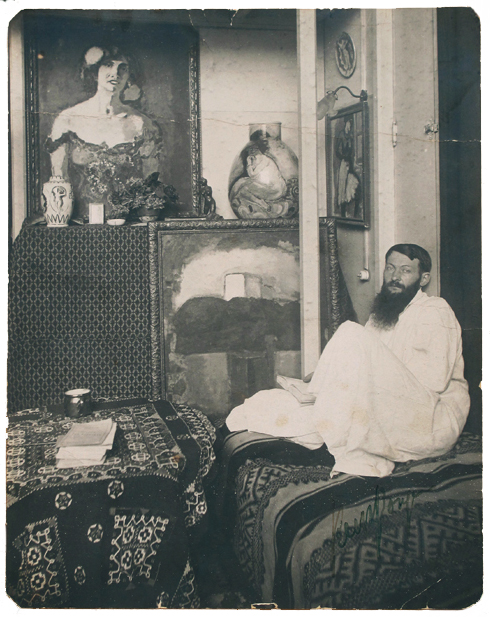
Why Kees van Dongen matters
Kees van Dongen was one of the founding figures of Fauvism, the revolutionary art movement that transformed early-20th-century painting through bold color and expressive formal distortion. His evolution from the Parisian avant-garde's "painter of brothels" to a celebrated portraitist of high society epitomizes a major cultural trajectory of the early 20th century. His 2023 auction record of roughly USD 13.1 million (GBP 10.8 million) places him among the most established historical modernist painters in the secondary market, with steady institutional presence across Europe and North America.
- Born
- 1877-01-26, Delfshaven, Rotterdam, Netherlands
- Nationality
- Dutch
- Media
- Painting
- Movement
- Fauvism, Modernism, Post-Impressionism
- Education
- Royal Academy of Fine Arts, Rotterdam, 1892-1897
- Signature motifs
- Bold color, Elongated forms, Society portraiture, Fauvist landscapes, Expressive portraiture
By the numbers
- GBP 10.8M (approx. USD 13.1M)Auction highLa Quietude (1918), Christie's London, October 13, 2023
- 1877-1968 (91 years)LivedDutch painter, lifelong resident of Paris and Monaco
- Fauvism (founding member)MovementParticipated in landmark 1905 Salon d'Automne
- European and London auction housesPrimary marketEstablished historical market; limited activity in Asia
Selected works
Click any work to view it full screen.
Biography
Kees van Dongen was born on January 26, 1877, in Delfshaven, a working-class neighborhood of Rotterdam in the Netherlands. At age 16 in 1892, he enrolled at the Royal Academy of Fine Arts in Rotterdam, where he studied until 1897 under instructors J. Striening and J.G. Heyberg. During these formative years, he absorbed both traditional academic training and the emerging modernist aesthetics that were beginning to circulate through European art schools in the 1890s.
In 1897, at the age of 20, van Dongen made his first journey to Paris, the cultural capital of European art. He remained for only several months before returning to Rotterdam, but the experience of Paris's avant-garde artistic ferment planted seeds that would shape his life's direction. In 1899, at age 22, he returned to Paris permanently, settling among the community of artists, poets, and intellectual figures congregating around Montmartre and later the Bateau Lavoir studio complex.
Van Dongen's early Parisian years positioned him at the center of revolutionary artistic developments. In 1901, he married fellow painter Augusta Preitinger, establishing a domestic partnership that supported his artistic ambitions during years of financial struggle. His early work of this period adopted modernist approaches that were increasingly radical. By 1905, van Dongen was prepared to participate in the landmark Salon d'Automne exhibition, where his work appeared alongside Henri Matisse, André Derain, and other painters whose bold use of unmixed color and expressive distortion of form earned them the epithet "Fauves" (Wild Beasts), as critics derisively named the movement.
Van Dongen's participation in the 1905 Salon d'Automne and subsequent exhibitions positioned him as one of the leading Fauve painters. His contributions to the movement were distinguished by particular attention to portraiture and figure painting, which he rendered with audacious color combinations and elongated, almost caricatural formal distortion. In 1906, he relocated to the Bateau Lavoir in Montmartre, placing himself at the epicenter of Parisian modernism alongside Pablo Picasso, Georges Braque, and other young radical painters.
From 1912 forward, van Dongen taught at the Académie Vitri in Paris, an institution that provided him financial stability while allowing him to guide younger artists. During the 1910s and 1920s, his practice underwent significant transformation. He increasingly focused on portraiture of Parisian high society and wealthy collectors, a shift that coincided with his growing recognition and financial success. The contrast between his earlier Fauvist bohemianism and his later role as portraitist to the social elite marked a major turn in his career.
In 1917, van Dongen entered into a significant relationship with Léa Alvin, a prominent Parisian socialite, which lasted until 1927. This decade-long connection positioned him further within elite social circles and influenced the subject matter and tone of his portrait work. In 1921, he divorced from his first wife Augusta, formalizing the end of an earlier chapter of his artistic life.
Over the course of the 1920s and 1930s, van Dongen became one of the most sought-after portraitists in Paris, creating elegant, flattering images of wealthy collectors, society figures, and cultural celebrities. His work from this period demonstrates remarkable technical facility and psychological acuity in portraiture, though some critics argued that his transition from Fauvist innovation to commercial society painting represented a retreat from artistic radicalism.
Van Dongen received major institutional recognition throughout his career. In 1926, he was named Knight of the Legion of Honour by the French government. In 1927, he received the Order of the Crown of Belgium. In 1929, he was granted French citizenship. In 1954, he was elevated to Officer of the Legion of Honour. These honors reflected his establishment as a major figure in French cultural life.
In 1959, late in his life at age 82, van Dongen relocated to Monaco, settling in Monte Carlo. A retrospective exhibition at Museum Boijmans Van Beuningen in Rotterdam in 1967, one year before his death, provided a major institutional evaluation of his life's work. He died on May 28, 1968, at age 91 in Monte Carlo.
Critical reception
Critical consensus places van Dongen among the founding figures of Fauvism and a pivotal artist in the transition from Post-Impressionism to modernism. His contributions to the 1905 Salon d'Automne alongside Matisse and Derain are recognized as foundational to the development of 20th-century painting.
However, van Dongen's critical reputation has been complex, shaped by tensions between his early radical innovations and his later career as a commercial society portraitist. Modernist critics of the mid-20th century sometimes dismissed his later work as aesthetically conservative and commercially motivated. More recent scholarship has taken a more nuanced view, recognizing that his shift toward portraiture represented a sophisticated engagement with psychology, fashion, and social power rather than a simple abandonment of artistic ambition.
His Fauvist period work is consistently praised for formal innovation, bold color orchestration, and expressive intensity. The elongated forms and intense hues of works from 1905-1910 are recognized as major contributions to modernism. His portrait work, while sometimes dismissed as commercial, demonstrates remarkable technical skill and psychological insight into his subjects.
Market
Kees van Dongen occupies a significant position in the market for early-20th-century European modernism. As a Fauve founder and major historical figure, his work appears regularly at major auction houses in Europe and North America, with a secondary market concentrated primarily in London, Paris, and New York.
His all-time auction record is held by "La Quietude (1918)," which sold for GBP 10,775,000 (approximately USD 13.1 million) at Christie's London on October 13, 2023, well above its GBP 3-5 million estimate. The dreamlike composition, from the collection of Sam Josefowitz, reflects influences from van Dongen's 1913 travels along the Nile in Egypt. It surpassed his previous record, "Jeune arabe (1910)," which sold for USD 13,802,500 at Sotheby's New York on November 4, 2009. That earlier painting emerged from van Dongen's travels to Spain and North Africa and gained additional prestige when it graced the cover of Beaux-Arts magazine in 1985.
The 2023 result demonstrates renewed strength at the top of van Dongen's market following a long plateau after the 2009 sale. Outside these headline results, secondary-market activity for van Dongen has remained consistent but not particularly dynamic, with most works typically achieving prices in the USD 1-5 million range depending on size, provenance, and condition.
Works from all periods of his career appear at auction, from early Fauvist pieces to later society portraits. Early Fauvist works typically command higher prices than the commercial society portraits of the interwar period, reflecting modern critical preferences for his innovative rather than commercial output. Provenance, condition, and exhibition history significantly influence individual work values.
Museum holdings are extensive across European institutions, reflecting van Dongen's historical significance and institutional validation. Works are held in major collections including the Musee de l'Orangerie in Paris, the Hermitage in Saint Petersburg, the National Gallery of Denmark in Copenhagen, Museum Boijmans Van Beuningen in Rotterdam, and the New National Museum of Monaco. This geographic distribution of institutional holdings reflects his pan-European significance and his final residence in Monaco.
Top auction results
| Work | Price | Sale |
|---|---|---|
| La Quietude (1918) (2023) | USD 13,130,000 (GBP 10,775,000) | Christie's, London, 2023-10-13 |
| Jeune arabe (1910) (2009) | USD 13,802,500 (USD 13,802,500) | Sotheby's, New York, 2009-11-04 |
Selected exhibitions
| Years | Exhibition | Venues |
|---|---|---|
| 1967 | Late retrospective | Museum Boijmans Van Beuningen, Rotterdam |
| 1905 to 1906 | Salon d'Automne and early exhibitions | Salon d'Automne, Paris |
Museum collections
- Musée de l'Orangerie, Paris
- Hermitage, Saint Petersburg
- National Gallery of Denmark, Copenhagen
- Museum Boijmans Van Beuningen, Rotterdam
- New National Museum of Monaco
Awards and honors
- Knight of the Legion of Honour (France) (1926)
- Order of the Crown of Belgium (1927)
- Officer of the Legion of Honour (France) (1954)
Authentication and provenance
Catalogue raisonne for prints only.
A complete catalogue raisonne of van Dongen's graphic work (prints, illustrated books, posters) was published in 2002 by Jan Juffermans. No comprehensive catalogue raisonne of his paintings has been published; the Wildenstein Plattner Institute began a digital catalogue raisonne project for the paintings in 2017, which remains in progress and unpublished as of 2026. Estate records and auction-house specialists provide painting authentication in the interim.
Primary reference: https://en.wikipedia.org/wiki/Kees_van_Dongen
What collectors should know
Van Dongen's market occupies a distinct position: he is an established historical modernist with museum presence and stable secondary-market activity, but his work does not command the market dominance or price appreciation of contemporary art. His auction records and regular secondary-market presence indicate a mature, historically validated artist whose work appeals to collectors of early-20th-century modernism and museum professionals seeking Fauvist examples.
The October 2023 sale of "La Quietude" for roughly USD 13.1 million set a new artist record, fourteen years after the previous high, and suggests renewed top-end demand for exceptional, well-provenanced Fauvist-period works rather than a simple flat plateau. Works by van Dongen regularly appear at Christie's and Sotheby's in London, Paris, and New York, with estimated prices typically in the USD 1-4 million range for quality pieces outside the rare headline lot.
Collectors should note that only van Dongen's graphic work (prints, illustrated books, posters) has a published, comprehensive catalogue raisonne, compiled by Jan Juffermans in 2002. No equivalent catalogue raisonne exists yet for his paintings; the Wildenstein Plattner Institute began a digital catalogue raisonne project for the paintings in 2017, but it remains unpublished as of 2026. In the interim, paintings are typically authenticated through estate records, exhibition history, and auction-house specialist review. The combination of historical importance, institutional presence, mature secondary market, and a documented (if partial) authentication apparatus makes van Dongen appealing to collectors seeking validated historical modernist work with lower volatility than contemporary artists.
The concentration of his market activity in Europe (London, Paris) versus Asia reflects the geographical focus of Fauvist collecting. Unlike contemporary Asian artists whose markets are concentrated in Hong Kong, van Dongen's secondary market remains primarily European.
Data current as of 2026-07-06.

