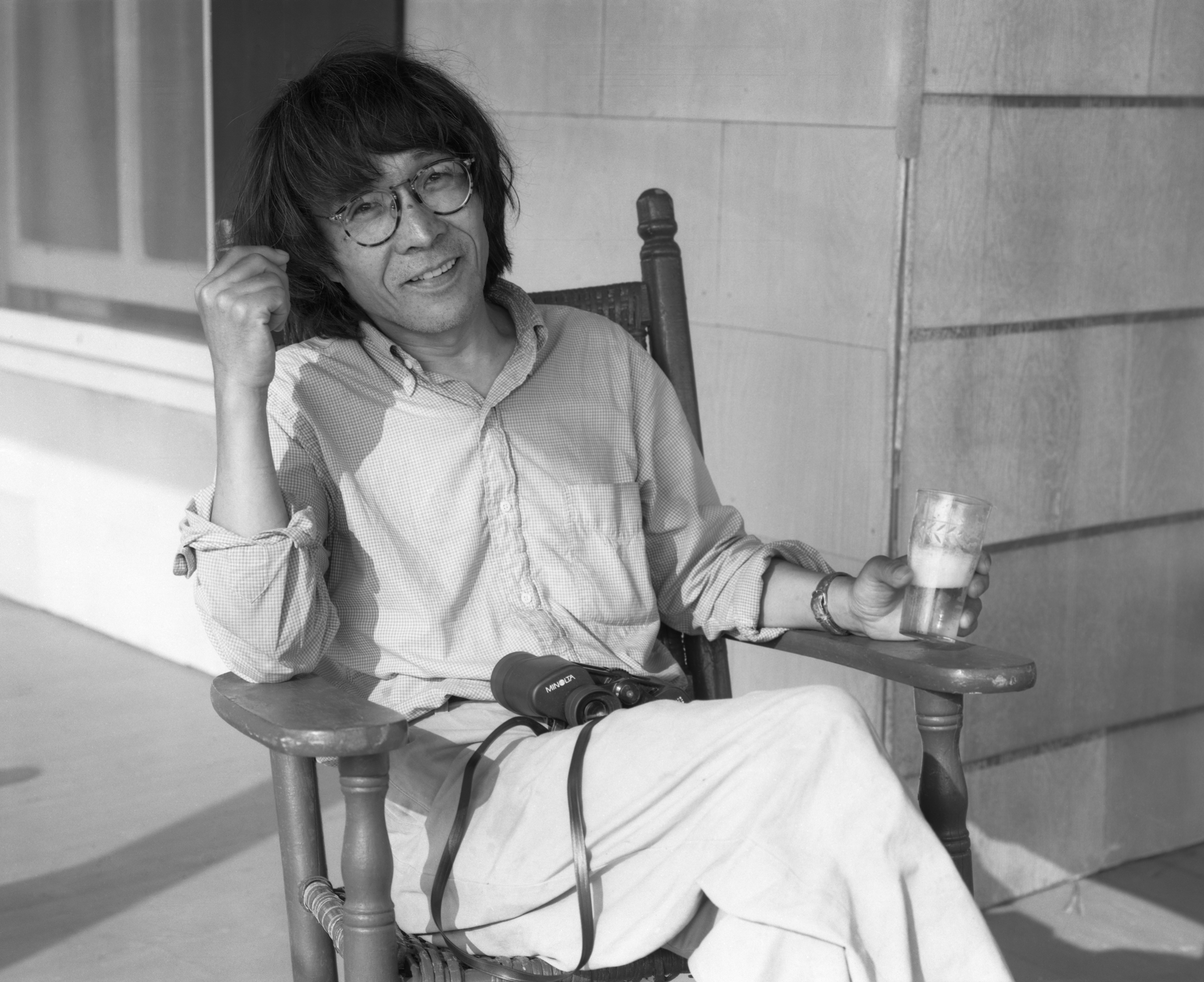
Why Kikuo Saito matters
Kikuo Saito occupies a distinctive place in postwar American abstraction: a Japanese-born painter who trained in a traditional Tokyo studio, worked as a studio assistant to Helen Frankenthaler, Kenneth Noland, and Larry Poons after moving to New York in 1966, and built a parallel career as an experimental theater designer before devoting himself fully to Color Field painting. For collectors, he represents a finite, estate-managed market: all supply is fixed following his death in 2016, gallery representation has consolidated around a small number of dealers working directly with the estate, and recent auction activity suggests renewed critical and market attention to a body of work that remained comparatively under-recognized during much of his lifetime.
- Nationality
- Japanese-American
- Media
- Painting, Works on paper
- Movement
- Color Field, Lyrical Abstraction
- Education
- Studied (non-degree) at the Art Students League of New York; trained in Japan as a studio technician in the atelier of the painter known as Sensei Itoh before emigrating to New York in 1966. No formal degree or academic credential is documented in available sources.
- Signature motifs
- Color field abstraction, Gestural brushwork rooted in stage and set design
- Representation
- "James Fuentes Gallery (estate, New York)"
By the numbers
- USD 245,100Auction highCerise (2009), Phillips New York, 21 May 2026
- James Fuentes GalleryEstate representationNew York (estate representative)
- MoMA, Whitney, Nasher, Aldrich, MFAHMuseum collectionsSelected public collections
- KinoSaito Art CenterLegacy institutionNonprofit art center, Verplanck, New York
Selected works
Click any work to view it full screen.
Biography
Kikuo Saito was born in 1939 in Tokyo, Japan. Before emigrating, he studied Japanese and Western art and worked for several years as a studio technician in the workshop of a traditional painter referred to in gallery sources as Sensei Itoh, learning academic Western painting methods such as drawing from plaster casts. He moved to New York in 1966, where he studied at the Art Students League and worked as a studio assistant to Helen Frankenthaler, Kenneth Noland, and Larry Poons, placing him in close proximity to the leading Color Field painters of the period.
For much of his career Saito pursued two parallel practices, abstract painting and experimental theater, designing sets and directing avant-garde theater pieces before gradually concentrating on painting. His first solo exhibition, at the Deitcher-O'Reilly Gallery in New York, opened in 1976; by the mid-2000s he had held more than sixty solo exhibitions and participated in well over a hundred group shows. He was an artist-in-residence at Duke University in 1996, a visiting professor at Musashino Art University in Tokyo, and, from 2005, a painting instructor at the Art Students League of New York, the school where he had once studied.
Saito died on February 15, 2016, in New York. His widow, Mikiko Ino, later founded KinoSaito, a nonprofit art center in Verplanck, New York, dedicated to presenting his paintings, works on paper, and theater designs on a rotating basis.
Critical reception
Saito is most closely associated in critical writing with Karen Wilkin, a curator and critic long identified with Color Field painting, who has described his mature work as marked by inventive, often surprising color, ranging from richly saturated intensities to subdued near-monochromes, paired with confident, eloquent drawing. Wilkin has also linked his two careers directly, arguing that gestures and characters from his theater and stage work reappear, transformed, as abstract configurations within the paintings. The throughline in critical assessments of Saito is this continuity between his experimental theater practice and his painting: color and gesture in the canvases are read as carrying forward the choreography and drama of the stage rather than existing as pure formal exercises.
Market
Saito's auction market is small in volume but has strengthened noticeably since his death fixed the supply of available work. His current auction record is Cerise (2009), which sold for USD 245,100 at Phillips in New York on May 21, 2026, against an estimate of USD 80,000 to 120,000. That result surpassed the previous high of USD 175,000, set by Sugar Moon (2011) at Artnet Auctions in February 2024, by roughly 40 percent.
The estate's market is anchored by James Fuentes Gallery in New York, which represents the estate and has organized recent solo presentations including Color Plays (2024 to 2025) and the group exhibition Color Codes (2024). Other galleries, including Altman Siegel in San Francisco and Octavia Art Gallery, have also exhibited the estate's work, and KinoSaito continues to mount rotating exhibitions that keep the work visible outside the commercial market.
Top auction results
| Work | Price | Sale |
|---|---|---|
| Cerise (2009) | USD 245,100 | Phillips, New York, 2026-05-21 |
| Sugar Moon (2011) | USD 175,000 | Artnet Auctions, Online, 2024-02-22 |
Selected exhibitions
| Years | Exhibition | Venues |
|---|---|---|
| 1976 | Inaugural solo exhibition | Deitcher-O'Reilly Gallery, New York |
| 1993 | Kikuo Saito: A True Colorist | Museum of Art, Fort Lauderdale, Florida |
| 2017 | Solo exhibition | Jonathan Novak Contemporary Art, Los Angeles |
| 2021 | Art Basel Miami Beach | Presented by James Fuentes Gallery, Miami Beach |
| 2022 | Ouray | Altman Siegel, San Francisco (the gallery's first exhibition with the estate) |
| 2024 | Color Codes | James Fuentes, New York, curated by Christopher Y. Lew |
| 2024 to 2025 | Kikuo Saito: Color Plays | James Fuentes Gallery, Los Angeles |
| 2026 | Kikuo Saito: Dime Lake | KinoSaito, Verplanck, New York |
Museum collections
- Museum of Modern Art, New York
- Whitney Museum of American Art, New York
- The Aldrich Contemporary Art Museum, Ridgefield, Connecticut
- Nasher Museum of Art, Duke University
- Museum of Fine Arts, Houston
- Art Gallery of Alberta, Edmonton, Canada
- Ulster Museum, Belfast
Authentication and provenance
No catalogue raisonne.
No published catalogue raisonne has been identified for this artist. Works are best verified through the estate and its representing gallery, James Fuentes Gallery, and through KinoSaito, the nonprofit art center in Verplanck, New York devoted to his legacy.
Primary reference: https://www.kikuosaito.com/
What collectors should know
Saito's market remains thin by transaction count, so any single result, including the current auction record, should be read as a data point rather than a stable trend line. There is no published catalogue raisonne, which places added weight on provenance and on verification through the estate and its representing gallery, James Fuentes Gallery. Because his output is fixed following his 2016 death and recent gallery and museum attention has coincided with rising prices, collectors should expect continued volatility as a limited body of work becomes more visible.
Further reading and resources
Data current as of 2026-07-13.

