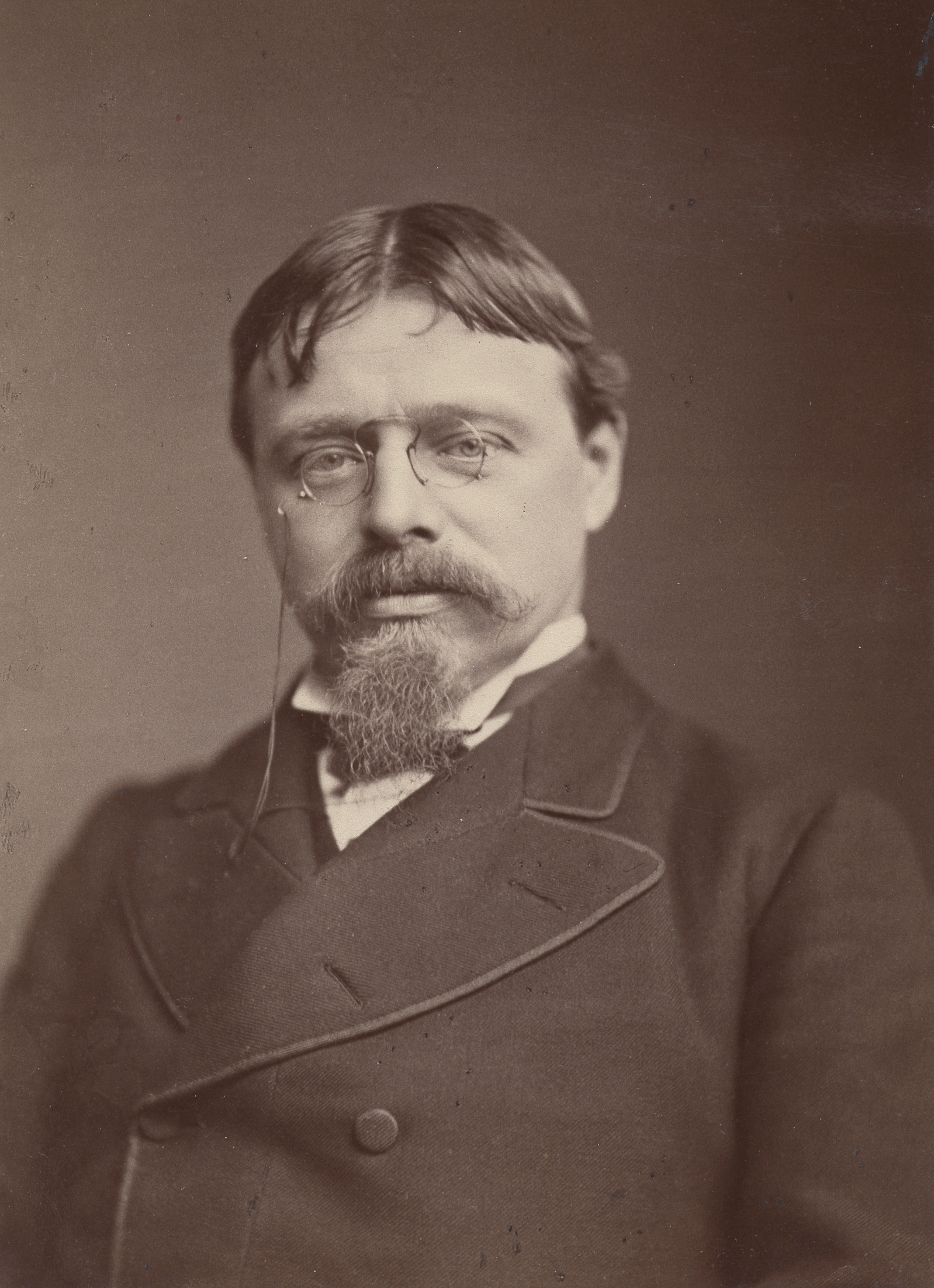
Why Lawrence Alma-Tadema matters
Lawrence Alma-Tadema is the standard-bearer of Victorian classicism at auction: his 2010 sale of The Finding of Moses for USD 35.9 million remains a benchmark price for a Victorian painter and has never been surpassed by another of his works. He was knighted in the United Kingdom in 1899 and elected a full Royal Academician in London in 1879, a rare distinction for a foreign-born painter. After decades of critical neglect in the early and mid twentieth century, his reputation has been substantially rebuilt since the 1960s through museum scholarship, and his paintings now anchor the collections of more than forty major institutions worldwide.
- Born
- 1836-01-08, Dronrijp, Netherlands
- Nationality
- Dutch, naturalized British in 1873
- Media
- Painting
- Movement
- Victorian art, Neoclassicism, Academic art
- Education
- Royal Academy of Fine Arts, Antwerp, circa 1852 to 1855/56, studying under Gustave Wappers and later assisting professor Louis Jan de Taeye and painter Hendrik Leys. No degree was conferred; formal enrollment ended when he left to complete a commission.
- Signature motifs
- Classical antiquity, Marble architecture, Historical genre scenes
- Representation
- No exclusive gallery or estate representation; the artist died in 1912, Secondary-market activity concentrated among specialist dealers, including Mark Murray Gallery (New York) and Rehs Galleries (New York)
By the numbers
- USD 35.9MAuction highThe Finding of Moses, Sotheby's New York, 4 November 2010
- United Kingdom, 1899KnightedEighth continental-born artist so honored in a century, per Rehs Galleries
- 1879Royal AcademicianRoyal Academy of Arts, London
- 40+Museum collectionsIncludes the Met, the Getty, Tate, the National Gallery London, and the Fries Museum
Selected works
Click any work to view it full screen.
Biography
Lawrence Alma-Tadema was born on 8 January 1836 in Dronrijp, in the Netherlands, and grew up in nearby Leeuwarden, where his mother arranged early drawing lessons alongside his general schooling. In 1852, at sixteen, he entered the Royal Academy of Fine Arts in Antwerp, where he studied early Dutch and Flemish art under Gustave Wappers. Toward the end of 1855 he became an assistant to professor Louis Jan de Taeye, whose courses on history and historical costume had shaped his interests, and he later worked in the studio of the painter Hendrik Leys, from whom he absorbed a concern for archaeological accuracy and tangible, realistic detail. He left formal enrollment at the Academy in 1856 to complete a commission and never returned as a regular student.
His 1861 painting The Education of the Children of Clovis, shown at the Artistic Congress in Antwerp, is credited with establishing his early reputation. He moved to England in the early 1870s and became a naturalized British subject in 1873. His adopted home city rewarded him quickly: he was made a full Royal Academician on 19 June 1879. Prizes followed at the Paris Exposition Universelle in 1889 and the Brussels Exposition Internationale des Beaux-Arts in 1897, and in 1899 he was knighted in the United Kingdom, becoming only the eighth continental-born artist to receive the honor. He died on 25 June 1912 in Wiesbaden, Germany, after a period of medical treatment there, and was buried in the crypt of St Paul's Cathedral in London, an honor reflecting the scale of his standing in British art at the time.
Critical reception
At his death in 1912, Sir Edward Poynter, then president of the Royal Academy, praised Alma-Tadema's ability to recreate the texture and detail of the ancient world with an imaginative quality he considered nearly unmatched among his contemporaries. That esteem faded through much of the early and mid twentieth century, as changing taste turned against detailed academic classicism. Wikipedia and multiple museum sources note that it was only from the 1960s onward that his work was rediscovered for its importance in the evolution of English art. The Metropolitan Museum of Art's 1973 exhibition Victorian in Togas was an early marker of that revival, and the 2016 to 2017 touring retrospective Lawrence Alma-Tadema: At Home in Antiquity, organized by the Fries Museum and shown at the Belvedere in Vienna and Leighton House Museum in London, cemented his return to serious institutional attention.
Market
Alma-Tadema's auction record is The Finding of Moses, which sold for USD 35,922,500 at Sotheby's New York on 4 November 2010, then a record for any Victorian artist at auction. Because he died in 1912, there is no living estate or gallery holding exclusive representation; his paintings move through the secondary market via major auction houses and specialist nineteenth-century dealers such as Mark Murray Gallery and Rehs Galleries in New York. Public sales at the level of the Moses result are rare, so his headline prices are driven by a small number of exceptional, museum-quality works rather than a broad, liquid market.
Top auction results
| Work | Price | Sale |
|---|---|---|
| The Finding of Moses | USD 35,922,500 (USD 35,922,500) | Sotheby's, New York, 2010-11-04 |
Selected exhibitions
| Years | Exhibition | Venues |
|---|---|---|
| 1861 | Artistic Congress | Antwerp |
| 1864 | Paris Salon | Paris |
| 1882 | Retrospective of 185 works | Grosvenor Gallery, London |
| 1889 | Exposition Universelle | Paris |
| 1897 | Exposition Internationale des Beaux-Arts | Brussels |
| 1900 | Exposition Universelle | Paris |
| 1973 | Victorian in Togas | Metropolitan Museum of Art, New York |
| 2016 to 2017 | Lawrence Alma-Tadema: At Home in Antiquity | Fries Museum, Leeuwarden; Belvedere, Vienna; Leighton House Museum, London (touring retrospective) |
Museum collections
- Metropolitan Museum of Art, New York
- J. Paul Getty Museum, Los Angeles
- National Gallery, London
- Tate, London
- Fries Museum, Leeuwarden
- Musee d'Orsay, Paris
- Clark Art Institute, Williamstown
- Guildhall Art Gallery, London
Awards and honors
- Royal Academician, Royal Academy of Arts, London (1879)
- Medal of Honour, Exposition Universelle, Paris (1889)
- Great Gold Medal, Exposition Internationale des Beaux-Arts, Brussels (1897)
- Knighted by the United Kingdom (1899)
- Grand Prix Diploma, Exposition Universelle, Paris (1900)
Authentication and provenance
No catalogue raisonne.
No catalogue raisonne of Alma-Tadema's work has been published. The Art Renewal Center maintains an online catalog of roughly 335 known works, but this is not a scholarly catalogue raisonne. Attribution, condition, and provenance are typically verified through auction-house specialist departments and museum curatorial research given the artist's death in 1912.
Primary reference: https://en.wikipedia.org/wiki/Lawrence_Alma-Tadema
What collectors should know
There is no published catalogue raisonne for Alma-Tadema; the Art Renewal Center's online catalog of roughly 335 known works is a useful reference point but not a scholarly substitute, so provenance research and auction-house specialist opinion carry unusual weight when evaluating a picture. With no gallery or estate managing his output, works surface through auction houses and a small circle of nineteenth-century specialist dealers, and exceptional prices like the 2010 Moses sale reflect the rarity of his largest, most fully resolved compositions rather than a broad trading market. Given how few works transact at the top of his market in any given year, collectors should treat any single result as informative about that specific painting rather than as a reliable read on the market as a whole.
Further reading and resources
Data current as of 2026-07-09.

