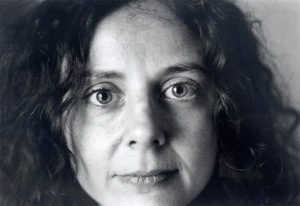
Why Lee Lozano matters
Lee Lozano is one of the most radical case studies in postwar American art: a painter of technically assured, sexually charged tool paintings in the early 1960s who moved into a body of language-based conceptual "Piece" works, then deliberately withdrew from the art world entirely in the early 1970s. For collectors, she represents a market built almost entirely in retrospect. Her reputation, and her prices, were made after her death, through museum scholarship and a single gallery's long-term stewardship of a small, hard-to-access body of work.
- Born
- 1930-11-05, Newark, New Jersey, USA
- Nationality
- American
- Media
- Painting, Conceptual art, Drawing
- Movement
- Conceptual art, Post-Minimalism
- Education
- B.A., University of Chicago, 1951; B.F.A., Art Institute of Chicago, 1960
- Signature motifs
- Tool paintings, Language-based conceptual works, "Piece" notebook works including Dropout Piece
- Representation
- Estate of Lee Lozano, represented by Hauser & Wirth
By the numbers
- USD 602,500Auction highPhillips, 2010; exact work and sale date not independently confirmed
- Hauser & WirthRepresented byEstate of Lee Lozano
- MoMA, Whitney Museum of American Art, among othersMuseum collections
- c. 1960 to 1972Career spanActive production ended with her withdrawal from the art world
Biography
Lee Lozano was born Lenore Knaster on November 5, 1930, in Newark, New Jersey. She studied natural science and philosophy at the University of Chicago, earning a B.A. in 1951, then trained as an artist at the Art Institute of Chicago, completing a B.F.A. in 1960. She moved to New York around 1960 and began exhibiting a body of large, Pop-inflected paintings of tools and, later, abstract "Wave" paintings, shown in solo exhibitions at the Bianchini Gallery in 1966 and the Whitney Museum of American Art in 1970.
Starting around 1969, Lozano shifted her practice into a series of conceptual, instruction-based "Piece" works recorded in her notebooks, including General Strike Piece and Dropout Piece. These works staged a progressive withdrawal from the systems around her: the art market, exhibiting, and eventually the art world itself. In 1971 she began what she called a boycott of speaking to women, a piece she initially framed as time-limited but never formally ended. By the mid-1970s she had left New York, returned to the Dallas, Texas area, and cut almost all contact with the art world, living in relative obscurity for the rest of her life.
Lozano died of cancer on October 2, 1999, at her home in Dallas, Texas, as reported in her New York Times obituary. Per her own instructions, she was buried in an unmarked grave at public expense.
Critical reception
Lozano's critical standing rests on the two distinct phases of her career and on the singular nature of her withdrawal. Scholarship since her rediscovery in the mid-2000s, including the 2004 exhibition at P.S.1 Contemporary Art Center and the 2006 survey at Kunsthalle Basel, has treated her boycott of speaking to women and her Dropout Piece as deliberate conceptual strategies rather than a personal lapse, reading the withdrawal itself as the work. Subsequent museum surveys, including at the Museo Nacional Centro de Arte Reina Sofia and The Fruitmarket Gallery, have continued to treat her notebook works as some of the most complete conceptual art statements of the period, because she carried the logic of withdrawal into her own life rather than stopping at the level of documentation.
Market
Lozano had almost no market during her lifetime; her withdrawal from exhibiting meant her work was largely unseen for two decades. Renewed critical and market attention followed a series of posthumous exhibitions beginning in the mid-2000s. Hauser & Wirth took on representation of the Estate of Lee Lozano in the mid-2000s, mounting a major exhibition at Kunsthalle Basel in 2006. The gallery has continued to organize solo exhibitions through the 2020s, including Lee Lozano: ALL VERBS in New York in 2022 and Lee Lozano: Hard Handshake, her first major Los Angeles exhibition, opening in late 2025. Her auction record stands at USD 602,500, achieved in a 2010 sale at Phillips; the exact work and sale date are not consistently confirmed across public sources. Supply at auction remains thin, since a large share of her surviving work sits in museum collections or the estate.
Top auction results
| Work | Price | Sale |
|---|---|---|
| Title not independently confirmed (reported variously as untitled or as 'Real Money Piece' across sources) (2010) | USD 602,500 (USD 602,500) | Phillips |
Selected exhibitions
| Years | Exhibition | Venues |
|---|---|---|
| 1966 | Solo exhibition | Bianchini Gallery, New York |
| 1970 | Solo exhibition | Whitney Museum of American Art, New York |
| 2004 | Lee Lozano | P.S.1 Contemporary Art Center, New York (curated by Bob Nickas) |
| 2006 | Lee Lozano | Kunsthalle Basel |
| 2017 | Lee Lozano | Museo Nacional Centro de Arte Reina Sofia, Madrid |
| 2018 | Lee Lozano: Slip, Slide, Splice | The Fruitmarket Gallery, Edinburgh |
| 2022 | Lee Lozano: ALL VERBS | Hauser & Wirth, New York |
| 2025 to 2026 | Lee Lozano: Hard Handshake | Hauser & Wirth, Los Angeles |
Museum collections
- Museum of Modern Art, New York
- Whitney Museum of American Art, New York
Authentication and provenance
No catalogue raisonne.
No published catalogue raisonne is confirmed as of this writing. Works are verified through the Estate of Lee Lozano, administered in association with Hauser and Wirth, which has organized the major posthumous exhibitions and estate scholarship since the mid-2000s.
Primary reference: https://www.hauserwirth.com/artists/2812-lee-lozano/
What collectors should know
There is no published catalogue raisonne for Lee Lozano, and verification runs through the Estate of Lee Lozano in association with Hauser & Wirth rather than an independent authentication board. Because she stopped exhibiting and largely stopped producing accessible objects after the early 1970s, the number of finished paintings and works on paper available to the market is small relative to her critical reputation, and a meaningful share of her strongest early work sits in institutions such as MoMA and the Whitney Museum of American Art. Collectors should treat provenance and estate documentation as central to any transaction, and should recognize that her market, unlike that of artists who built a following during their own careers, has been constructed almost entirely through posthumous scholarship and a single primary gallery relationship.
Further reading and resources
Data current as of 2026-07-11.

