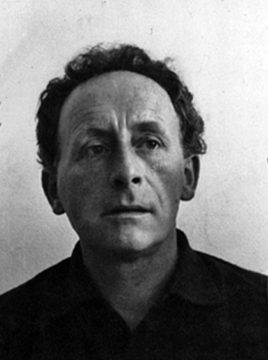
Why Leoncillo Leonardi matters
Leoncillo Leonardi, known in the art market simply as Leoncillo, is one of the central figures in the postwar revival of Italian ceramic sculpture, using color and glazed clay to carry the weight of history and political memory rather than decoration alone. For collectors, 2026 marks a turning point: the Leoncillo Foundation has entered a representation agreement with Thaddaeus Ropac, the first organized effort identified in the record to consolidate the artist's archive and market after decades of dealer-led, fragmented attention.
- Born
- 1915-11-18, Spoleto, Umbria, Italy
- Nationality
- Italian
- Media
- Sculpture, Ceramics
- Movement
- Informale (Art Informel), European Expressionism
- Education
- Istituto d'Arte, Perugia, 1931 to 1935; Accademia di Belle Arti di Roma, from 1935, studied under Angelo Zanelli
- Signature motifs
- Glazed ceramic sculpture, War and Resistance memorials
- Representation
- "Thaddaeus Ropac (representing the Leoncillo Foundation, from 2026)", "ML Fine Art"
By the numbers
- USD 168,750Auction highTaglio Bianco, Capsule Auctions, New York, 26 Sep 2018. A higher, unattributed sculpture record near USD 1.09M is cited by MutualArt without lot-level detail.
- 1968Venice Biennale sculpture prizeAwarded at the 34th Venice Biennale
- Thaddaeus RopacRepresented byRepresentation agreement with the Leoncillo Foundation, 2026
- Centre Pompidou, Guggenheim, Reina SofiaMajor museum exhibitionsAmong institutions that have shown his work
Biography
Born in Spoleto, Umbria, on 18 November 1915, Leoncillo Leonardi grew up around drawing instruction; his father taught draughtsmanship at the town's Istituto Tecnico "G. Spagna," which Leonardi himself entered in 1926. He studied at the Istituto d'Arte in Perugia from 1931 to 1935, then moved to Rome, where he attended the Accademia di Belle Arti under the sculptor Angelo Zanelli and taught drawing at the Collegio Santa Maria. In 1942 he returned to Rome to teach ceramic sculpture at the Istituto Statale d'Arte, a post he held for a decade.
Leoncillo worked almost entirely in glazed ceramic sculpture, pushing the material toward the expressive, fragmented language of Informal art and European Expressionism, and using it to address war, the body, and political memory. His best known public work, the Venetian monument to the partisan women of the Resistance, was damaged by a bomb in 1961 and remains a touchstone of postwar Italian public sculpture. He won a gold medal for applied art at the 7th Milan Triennial in 1940, the Premio Faenza in 1954 and again, ex aequo, in 1964, and the sculpture prize at the 1968 Venice Biennale, where he also had a dedicated solo section.
Leoncillo died suddenly in Rome in September 1968, shortly after that Biennale opened. Major reference sources, including Wikipedia and Olympedia, give the date as 3 September 1968; one gallery biography (ML Fine Art) gives 9 September 1968 and names a brain stroke as the cause, while another (Galleria dello Scudo) describes a fatal heart attack. The exact day and cause are unresolved between these credible but conflicting secondary sources. What is consistent across all of them is that he died suddenly in Rome, at 52 or 53 years old, in September 1968.
Critical reception
Leoncillo is consistently described by galleries and museums as one of the most significant Italian sculptors of the twentieth century, credited with reinventing ceramic, a material long associated with craft and decoration, as a vehicle for Informal art and for direct engagement with war and political trauma. His work has been included in major international exhibitions and institutions, among them the Centre Pompidou in Paris, the Museo Nacional Centro de Arte Reina Sofia in Madrid, the Solomon R. Guggenheim Museum in New York, and Palazzo Strozzi in Florence, alongside sustained attention from Italian institutions such as the Galleria Nazionale d'Arte Moderna e Contemporanea in Rome and the Galleria d'Arte Moderna in Spoleto, which holds a broad career survey of his drawings, sculptures, and ceramics. No verbatim critical quotation from a named critic in a major outlet could be confirmed for this profile.
Market
Leoncillo's auction market is thin and difficult to document with full transparency. The market database MutualArt reports a high-end realized price of roughly USD 1,093,514 for a sculpture, but it does not disclose the specific work, auction house, or sale date behind that figure, so it cannot be confirmed as a discrete, sourced auction record. The most fully documented sale identified is Taglio Bianco, which sold for USD 168,750 at Capsule Auctions in New York on 26 September 2018. Most works have historically traded through specialist secondary-market dealers such as ML Fine Art (Matteo Lampertico) rather than through a single primary gallery. In 2026, the Leoncillo Foundation entered a formal representation agreement with Thaddaeus Ropac, timed to an inaugural exhibition planned for the gallery's Milan space, the clearest institutional signal to date that his market is being more actively organized and promoted.
Top auction results
| Work | Price | Sale |
|---|---|---|
| Taglio Bianco | USD 168,750 (USD 168,750) | Capsule Auctions, New York, 2018-09-26 |
Selected exhibitions
| Years | Exhibition | Venues |
|---|---|---|
| 2026 | Inaugural exhibition of the Leoncillo Foundation | Thaddaeus Ropac, Milan |
| 2018 | Major postwar Italian sculpture exhibition | Palazzo Strozzi, Florence |
| 1994 | Group exhibition of Italian art | Solomon R. Guggenheim Museum, New York |
| 1968 | Solo section | 34th Venice Biennale, Venice |
| 1962 | Le affinita patetiche, Sculture nella citta | Festival dei Due Mondi, Spoleto |
| 1960 | Solo show | 30th Venice Biennale, Venice |
| 1960 | Sculpture Italienne Contemporaine, d'Arturo Martini a nos jours | Musee Rodin, Paris |
| 1949 | First solo exhibition | Galleria del Fiore, Florence |
Museum collections
- Galleria Nazionale d'Arte Moderna e Contemporanea, Rome
- Galleria d'Arte Moderna, Spoleto
- Centre Pompidou, Paris
- Museo Nacional Centro de Arte Reina Sofia, Madrid
- Solomon R. Guggenheim Museum, New York
- Museo Novecento, Florence
Awards and honors
- Sculpture prize, Venice Biennale (1968)
- Premio Faenza (ex aequo) (1964)
- Premio Faenza (1954)
- Gold Medal for Applied Art, 7th Milan Triennial (1940)
Authentication and provenance
No catalogue raisonne.
No catalogue raisonne has been confirmed as published. The Leoncillo Foundation, now working with Thaddaeus Ropac under a 2026 representation agreement, is undertaking the first organized effort identified in the record to consolidate the artist's legacy and archive. Works are currently verified primarily through the Foundation and through specialist dealers such as ML Fine Art.
Primary reference: https://ropac.net/artists/289-leoncillo-foundation/
What collectors should know
No published catalogue raisonne has been confirmed for Leoncillo, and the field has relied on gallery scholarship and dealer records rather than a single authenticated archive. The 2026 representation agreement between the Leoncillo Foundation and Thaddaeus Ropac is the first step toward consolidating that record, but it has not yet produced a catalogue raisonne. Collectors should also treat some biographical details, including the exact date and cause of his death, as unsettled between otherwise credible sources, and should expect auction supply to remain limited: any single sale, including the documented USD 168,750 result for Taglio Bianco in 2018, can move the market's apparent trajectory more than it would for an artist with deeper trading volume, and a higher, unattributed sculpture record near USD 1.09M reported by MutualArt has not been independently verified at the lot level.
Further reading and resources
Data current as of 2026-07-10.

