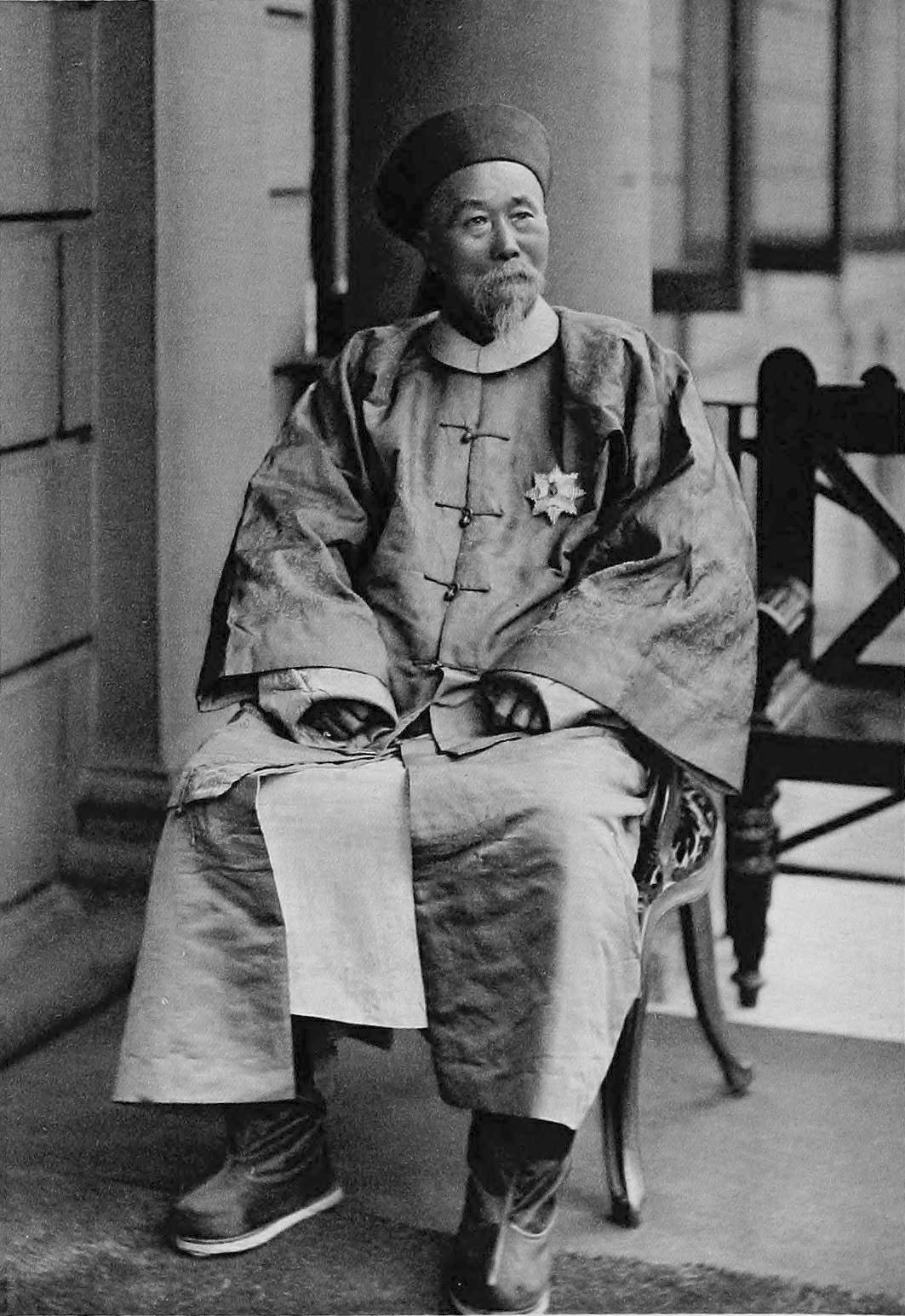
Why Li Hongzhang matters
Li Hongzhang (1823 to 1901) is one of the most consequential figures of the late Qing dynasty, a general, viceroy, and diplomat who led China's Self-Strengthening Movement and negotiated some of the era's most difficult treaties with foreign powers. He is not, however, a visual artist with a market-tracked body of work. This profile exists because his name and likeness circulate widely in the historical and decorative arts markets, almost always as the subject of nineteenth-century portraits, photographs, and personal effects rather than as the creator of paintings or works on paper. Anyone researching "Li Hongzhang" as an art-market name should understand from the outset that there is no confirmed auction record, gallery representation, or catalogue raisonne for an artistic oeuvre bearing his name.
- Born
- 1823-02-15, Hefei, Anhui, China
- Nationality
- Chinese
- Education
- Confucian classical education; passed the imperial examinations to jinshi (highest rank) in 1847; admitted to the Hanlin Academy, Beijing, as a compiler, c. 1849
By the numbers
- 1823 to 1901LifespanBorn Hefei, Anhui province; died Beijing
- None confirmedAuction market recordNo verified sale of an original artwork found as of 2026-07-16
- Qing dynasty statesman, general, and diplomatPrimary roleViceroy of Zhili; founder of the Huai Army and Beiyang Fleet
- Not applicableGallery or estate representationNo current representation identified
Selected works
Click any work to view it full screen.
Biography
Li Hongzhang was born on February 15, 1823, in Hefei, Anhui province, into a family of scholar officials, and he received a classical Confucian education from an early age. He rose through the imperial examination system, reportedly becoming a licentiate (xiucai) around 1840, obtaining provincial graduate (juren) status in 1844, and passing the highest metropolitan examination to become a jinshi in 1847. Between 1844 and 1847 he studied intensively in Beijing under the statesman Zeng Guofan, who became his lifelong mentor, and after his jinshi success he was admitted to the Hanlin Academy as a junior compiler, around 1849.
Li built his political and military career on the strength of that mentorship. He raised and commanded the Huai Army during the suppression of the Taiping Rebellion and later founded the Beiyang Fleet, becoming a central figure in the Self-Strengthening Movement's push to adopt Western military and industrial technology. He served for long stretches as Viceroy of Zhili, the province surrounding the capital, and held other senior viceregal posts including Huguang and Liangjiang. He negotiated the 1895 Treaty of Shimonoseki ending the First Sino-Japanese War and, in 1896, toured Europe and the United States as China's most internationally recognized official. He returned to public life at the end of his career to negotiate the Boxer Protocol on behalf of the Qing court. He died on November 7, 1901, in Beijing, according to Encyclopaedia Britannica, Wikipedia, and other biographical references.
Critical reception
Li Hongzhang was, by all accounts, unusually deliberate about his own public image. He is reported to have collaborated with photographers, including Liang Shitai, to circulate portraits of himself in China and abroad, and scholarship such as the 2013 Ars Orientalis essay "The Mandarin at Home and Abroad: Picturing Li Hongzhang" treats this self-presentation as a subject of art-historical study in its own right. His likeness is said to have appeared in museum programming built around this history, including the exhibition "Seizing Shadows: Rare Photographs by Late Qing Dynasty Masters" and the British Museum's "China's hidden century," reported to display a snuff bottle bearing his image. These would be exhibitions that examine or include his portrait and personal effects, not exhibitions of paintings or other artworks that Li Hongzhang made.
Market
No dossier source, including surveys of record Chinese painting and calligraphy sales at major houses such as Christie's, Poly, and Sotheby's, identifies a confirmed auction sale of an original artwork created by Li Hongzhang. Some auction listings and price databases catalog items connected to his name, including a nineteenth-century oil portrait of him and other decorative pieces bearing his likeness, but these are historical objects about Li Hongzhang made by other hands, not works by him. As of 2026-07-16, there is no verified all-time auction record, no known gallery or estate representation, and no catalogue raisonne to reference for an artistic body of work.
Awards and honors
- Grand Cross of the Order of the Red Eagle, in Diamonds (Germany) (1896)
- Order of the Double Dragon (China)
- Honorary Knight Grand Cross of the Royal Victorian Order (United Kingdom)
Authentication and provenance
No catalogue raisonne.
Li Hongzhang was a Qing dynasty statesman, general, and diplomat, not a visual artist with a market-tracked body of work. No catalogue raisonne exists and no certificate-of-authenticity program applies to him. Objects connected to his name in the market, such as portraits, photographs, and personal effects, are historical artifacts about him rather than artworks he made, and each should be authenticated on its own historical merits.
Primary reference: https://www.britannica.com/biography/Li-Hongzhang
What collectors should know
Li Hongzhang should be treated as a historical and diplomatic figure, not as a working artist, when evaluating any item offered at auction under his name. Because there is no catalogue raisonne, no gallery or estate to authenticate against, and no confirmed sale record for an original artwork, any object connected to him, whether a portrait, photograph, decoration, or personal effect, requires independent, case-by-case historical research into its actual maker and provenance rather than reliance on his name alone. Researchers should also watch for the variant romanization Li Hung Chang or Li Hung-chang in older auction catalogs and Western press, which refers to the same person.
Further reading and resources
Data current as of 2026-07-16.

