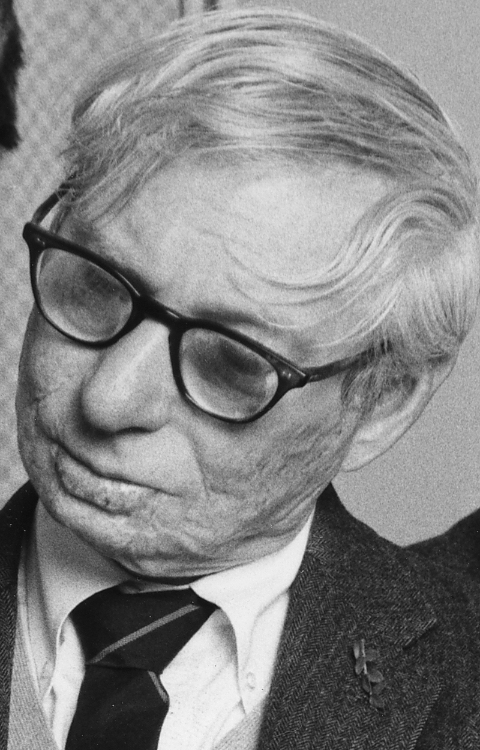
Why Louis Kahn matters
Louis I. Kahn is one of the central figures of twentieth century American architecture, an Estonian born, Philadelphia raised designer whose late, monumental buildings, the Salk Institute, the Kimbell Art Museum, the National Assembly Building in Dhaka, reshaped how modern architecture used mass, light, and geometric form. For anyone researching his name in an art market context, the essential point is that Kahn is an architect whose drawings and archive occasionally surface in the market, not a painter or sculptor with an established auction track record, and his name is easily confused with two other artists, the painter Wolf Kahn and the artist Louis Kahan.
- Born
- 1901-02-20, Kuressaare, Saaremaa, Estonia (then Russian Empire)
- Nationality
- American
- Media
- Architecture, Architectural drawing
- Movement
- Modernism, Brutalism
- Education
- University of Pennsylvania, Bachelor of Architecture, 1924
- Signature motifs
- Monumental geometric forms, Light as a structural and spatial device
- Representation
- No commercial gallery; primary archive held by the University of Pennsylvania Architectural Archives
By the numbers
- 1971AIA Gold MedalAmerican Institute of Architects, its highest honor
- 1972RIBA Royal Gold MedalRoyal Institute of British Architects
- MoMA, 1961 to 1962Major retrospectiveThe Architecture of Louis I. Kahn
- University of PennsylvaniaPrimary archiveArchitectural Archives, Stuart Weitzman School of Design
Selected works
Click any work to view it full screen.
Biography
Louis Isadore Kahn was born Itze Leib Schmuilowsky in 1901 on the island of Saaremaa, in what was then the Russian Empire and is now Estonia. Most encyclopedic sources give his birth date as February 20, 1901, though several reference works note this as an old style, or Julian calendar, date corresponding to March 5, 1901, on the Gregorian calendar. His family emigrated to Philadelphia around 1906, where he attended Central High School, took art classes at the Fleisher School of Art and the Public Industrial Art School, and turned down a scholarship to the Pennsylvania Academy of the Fine Arts to study architecture instead. He earned a Bachelor of Architecture from the University of Pennsylvania in 1924, in the school's Beaux Arts tradition.
Kahn practiced for decades in relative obscurity before his late style, developed from the 1950s onward, brought him international recognition. He taught as a design critic and professor of architecture at Yale University from 1947 to 1957, then at the University of Pennsylvania from 1957 until his death. His major built works, including the Yale University Art Gallery, the Richards Medical Research Laboratories, the Salk Institute for Biological Studies, the Kimbell Art Museum, the Phillips Exeter Academy Library, and the National Assembly Building in Dhaka, Bangladesh, are widely taught as landmarks of modern architecture.
Kahn died of a heart attack on March 17, 1974, at Pennsylvania Station in New York City, while returning from a work trip to India. He was 73. Following his death, his estate faced substantial debts, and his professional archive was ultimately sold to the Commonwealth of Pennsylvania in 1976 and placed on permanent loan to the University of Pennsylvania the following year, where it remains today as the Louis I. Kahn Collection.
This profile concerns the architect Louis I. Kahn, 1901 to 1974. He should not be confused with the painter Wolf Kahn, 1927 to 2020, or the artist Louis Kahan, 1905 to 2002, both of whom have separate and active auction markets.
Critical reception
Kahn's reputation rests on museum retrospectives and professional honors rather than commercial gallery representation. The Museum of Modern Art surveyed his work in The Architecture of Louis I. Kahn in 1961 and 1962. A large traveling retrospective, Louis I. Kahn: In the Realm of Architecture, originated at the Museum of Contemporary Art, Los Angeles, in the early 1990s and traveled to MoMA and the Philadelphia Museum of Art, cementing his place in the postwar canon. Architectural historians have long ranked him among the most influential American architects of the postwar era. Kahn's honors include the AIA Gold Medal in 1971 and the RIBA Royal Gold Medal in 1972, the two highest awards in American and British architecture respectively.
Market
Louis Kahn does not have an established fine art auction market in the way a painter or sculptor would. He is recorded in art and architecture reference sources as an architect and educator, and searches of major auction and art market databases return no verified all time high price for a work attributed to him. What does occasionally reach the market is archival material: specialty auction houses have offered lots of Kahn related architectural papers and drawings tied to specific building commissions, and the Kimbell Art Museum acquired three rare 1951 pastels by Kahn, made during a visit to the Temple of Apollo in Greece, for its fiftieth anniversary exhibition in 2022. None of these transactions establishes a conventional auction record comparable to those tracked for painters, and no reliable price, house, or date for an all time high sale could be confirmed from available sources.
Selected exhibitions
| Years | Exhibition | Venues |
|---|---|---|
| 1961 to 1962 | The Architecture of Louis I. Kahn | Museum of Modern Art, New York |
| 1991 to 1992 | Louis I. Kahn: In the Realm of Architecture | Museum of Contemporary Art, Los Angeles; traveled to the Museum of Modern Art, New York, and the Philadelphia Museum of Art |
| 2013 to 2014 | Louis Kahn: The Power of Architecture | Vitra Design Museum, Weil am Rhein; traveled to the Design Museum, London, and the San Diego Museum of Art |
| 2017 | Louis I. Kahn: Architectural Drawings, New York and Other East Coast Cities | David Nolan Gallery, New York |
| 2020 | Louis I. Kahn: The Making of a Room | Arthur Ross Gallery, University of Pennsylvania |
| 2022 | The Kimbell at 50 | Kimbell Art Museum, Fort Worth (featuring three 1951 pastels acquired for the anniversary) |
Museum collections
- University of Pennsylvania Architectural Archives, Philadelphia (primary professional archive)
- Kimbell Art Museum, Fort Worth (three 1951 pastels)
Awards and honors
- Fellow, American Institute of Architects (1953)
- Arnold W. Brunner Memorial Prize, National Institute of Arts and Letters (1960)
- AIA Gold Medal (1971)
- RIBA Royal Gold Medal (1972)
Authentication and provenance
No catalogue raisonne.
No catalogue raisonne and no certificate-of-authenticity program exist for Louis Kahn. His professional archive of drawings, models, and papers is held by the University of Pennsylvania Architectural Archives, which serves as the primary body for verifying attribution of drawings and documents.
Primary reference: https://www.design.upenn.edu/architectural-archives/collections/kahn-louis-i
What collectors should know
Anyone encountering the name Louis Kahn in an art market context should first confirm which "Kahn" is meant: the architect Louis I. Kahn, the painter Wolf Kahn, and the artist Louis Kahan are three distinct people with separate bodies of work and separate markets, and only the latter two have conventional auction records for paintings. For the architect, there is no catalogue raisonne, no certificate of authenticity program, and no meaningful secondary auction market comparable to those for studio artists. Provenance and attribution questions for drawings, sketches, or papers attributed to Kahn are best directed to the University of Pennsylvania Architectural Archives, which holds his professional archive and personal papers and is the primary institutional authority on his output.
Further reading and resources
Data current as of 2026-07-18.

