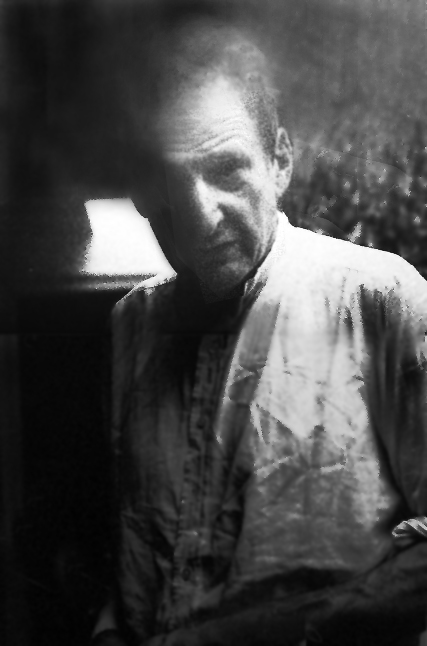
Why Lucian Freud matters
Lucian Freud is widely regarded as the foremost British figurative painter of the twentieth century, and the market treats him accordingly. His work commands prices that rival the most expensive postwar artists at auction, anchored by deep museum representation and a sustained critical consensus built over seven decades. For a collector, he is a study in how an unbroken institutional reputation, a finite body of work, and a clear catalogue raisonne combine to produce one of the most durable blue-chip markets in postwar painting.
- Born
- 1922-12-08, Berlin, Germany
- Nationality
- British
- Media
- Painting, Etching, Drawing
- Movement
- School of London, Figurative art
- Education
- Central School of Art, London; East Anglian School of Painting and Drawing, 1939 to 1942; Goldsmiths' College, University of London, 1942 to 1943
- Signature motifs
- Unflinching nude portraiture, Impasto flesh, Studio interiors
- Representation
- Acquavella Galleries, The Lucian Freud Archive
By the numbers
- USD 86.3MAuction highLarge Interior, W11 (after Watteau), Christie's New York, 2022
- USD 33.6MLiving-artist record (2008)Benefits Supervisor Sleeping, then a record for any living artist
- School of LondonMovement
- The Lucian Freud Archive; Acquavella GalleriesEstate
Selected works
Click any work to view it full screen.
Biography
Born in Berlin in 1922, Lucian Freud was a grandson of the psychoanalyst Sigmund Freud. The family emigrated to Britain in 1933 to escape the rise of National Socialism, and Freud became a British citizen in 1939. He studied briefly at the Central School of Art in London, then at Cedric Morris's East Anglian School of Painting and Drawing from 1939 to 1942, and at Goldsmiths' College from 1942 to 1943.
Freud spent his career painting the people closest to him: family, friends, lovers, fellow artists, and a small circle of recurring sitters. His early work carried a tight, linear precision touched by surrealism, but from the 1950s he moved toward a thickly worked realism, building flesh in heavy impasto over long sittings observed directly from life. He rarely worked from photographs and demanded extraordinary commitments of time from his models. The large nudes of his later decades, including the portraits of the performance artist Leigh Bowery and the benefits supervisor Sue Tilley, became his most recognized works.
He was associated with the School of London, the loose group of figurative painters that included Francis Bacon, Frank Auerbach, and Michael Andrews. Freud was appointed a Companion of Honour in 1993 and a member of the Order of Merit in 1983. He continued to paint until shortly before his death in London in 2011, at the age of 88.
Critical reception
In the thirty-five years since he painted this, Lucian Freud has become the greatest living realist painter.
Robert Hughes, The New York Review of Books, 1987
Critical opinion has placed Freud at or near the summit of postwar figurative painting for decades. Robert Hughes, writing in The New York Review of Books in 1987, called him the greatest living realist painter, a judgment that shaped his reputation through the rest of his career. Critics consistently emphasize the physical scrutiny of his portraiture: the way impasto is used to render skin as substance rather than surface, and the psychological tension between painter and sitter that comes from working slowly and directly from life. The major retrospectives, from the Hayward Gallery in 1974 through Tate Britain in 2002, the National Portrait Gallery in 2012, and the National Gallery centenary survey in 2022, repeatedly framed him as a painter who held to observation and the human figure while the art world moved toward abstraction and conceptual practice. Debate tends to concern the discomfort and candor of the nudes rather than any question of his standing.
Watch
Market
Freud's auction high is Large Interior, W11 (after Watteau), painted between 1981 and 1983, which sold for USD 86.3 million at Christie's New York on 9 November 2022, during the year of his centenary. The price beat his previous record by roughly USD 30 million. That earlier mark, USD 56.2 million, was set in 2015 by Benefits Supervisor Resting at Christie's. A third work from the same series, Benefits Supervisor Sleeping, sold for USD 33.6 million in May 2008 and at the time set a record for the most expensive work by any living artist at auction. His market rests on a relatively finite supply of major paintings and consistent demand from museums and established collectors.
Top auction results
| Work | Price | Sale |
|---|---|---|
| Large Interior, W11 (after Watteau) (1981) | USD 86,265,000 (USD 86,265,000) | Christie's, New York, 2022-11-09 |
| Benefits Supervisor Resting (1994) | USD 56,165,000 (USD 56,165,000) | Christie's, New York, 2015-05-13 |
| Benefits Supervisor Sleeping (1995) | USD 33,641,000 (USD 33,641,000) | Christie's, New York, 2008-05-13 |
Selected exhibitions
| Years | Exhibition | Venues |
|---|---|---|
| 2022 to 2023 | Lucian Freud: New Perspectives | National Gallery, London (centenary), then Thyssen-Bornemisza, Madrid |
| 2012 | Lucian Freud Portraits | National Portrait Gallery, London |
| 2002 | Lucian Freud | Tate Britain, London (toured to Barcelona and Los Angeles) |
| 1993 | Lucian Freud: Recent Work | Whitechapel Gallery, London; Metropolitan Museum of Art, New York |
| 1987 | Lucian Freud: Paintings | Hirshhorn Museum and Sculpture Garden, Washington, D.C. |
| 1974 | Lucian Freud | Hayward Gallery, London (Arts Council) |
Museum collections
- Tate, London
- National Portrait Gallery, London
- The Metropolitan Museum of Art, New York
- National Gallery of Australia, Canberra
- National Museum Cardiff (Amgueddfa Cymru)
- Museum of Modern Art, New York
Awards and honors
- Companion of Honour (CH) (1993)
- Member of the Order of Merit (OM) (1983)
- Turner Prize shortlist (1989)
- Arts Council Prize, Festival of Britain (1951)
Authentication and provenance
Catalogue raisonne published.
A catalogue raisonne of the paintings exists. Works are verified through The Lucian Freud Archive, with provenance, exhibition, and literature history central to attribution.
Primary reference: https://www.tate.org.uk/art/artists/lucian-freud-1120
What collectors should know
Freud's market is among the most established in postwar art, but his finest works appear at auction infrequently, and the largest results cluster around a small number of major paintings. The presence of a catalogue raisonne of the paintings and the role of The Lucian Freud Archive give the market an unusually firm documentary foundation, which places weight on provenance, exhibition history, and literature when assessing any individual work. For a collector, the breadth of museum holdings is the strongest signal of long-term durability, while the gap between his headline prices and the broader run of his works is the main reason to treat any single auction figure as specific to the work and the moment rather than a market-wide benchmark.
Further reading and resources
Data current as of 2026-06-20.

