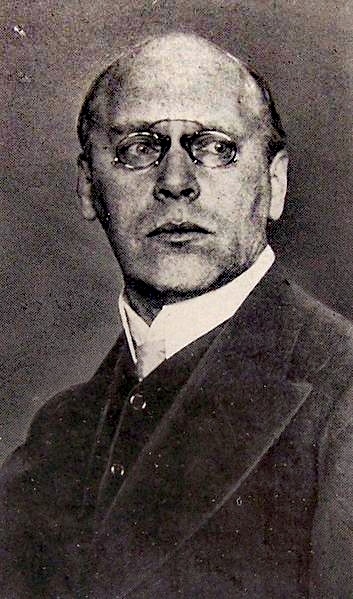
Why Ludwig von Hofmann matters
Ludwig von Hofmann was one of the leading figures of German Jugendstil and Symbolist painting around 1900, known for Arcadian scenes of nude figures in idealized landscapes and for large decorative murals in public buildings. A founding member of the Berlin Secession, he helped shape the turn away from academic historicism in German art at the turn of the twentieth century. For collectors today, he is a historically significant but thinly traded name whose market runs almost entirely through German and Austrian auction houses rather than gallery representation.
- Born
- 1861-08-17, Darmstadt, Germany
- Nationality
- German
- Media
- Painting, Drawing, Mural
- Movement
- Jugendstil (German Art Nouveau), Symbolism
- Education
- Studied law at the University of Bonn, 1880 to 1883, then switched to art: Dresden Academy of Fine Arts (from 1883), Academy of Fine Arts, Karlsruhe, under Ferdinand Keller (1886 to 1888), and the Academie Julian, Paris (1889).
- Signature motifs
- Arcadian nude figures in landscape, Dance friezes and murals
By the numbers
- EUR 375,000Auction highFruhlingssturm, Grisebach, Berlin, 2016
- 1883 to 1945ActivePainter, graphic artist, and muralist
- Founding memberBerlin Secession1898
Selected works
Click any work to view it full screen.
Biography
Ludwig von Hofmann was born on 17 August 1861 in Darmstadt, Germany. He first studied law at the University of Bonn from 1880 to 1883 before turning to art. He trained at the Dresden Academy of Fine Arts from 1883, then at the Academy of Fine Arts in Karlsruhe under Ferdinand Keller from 1886 to 1888, and finally at the Academie Julian in Paris in 1889.
His mature style combined Jugendstil decorative line with a Symbolist interest in idealized, Arcadian figures set in landscape, drawing comparisons to contemporaries working in a similar classicizing vein. He was a founding member of the Berlin Secession in 1898, the breakaway exhibition society that became a central institution of German modernism. He also worked at large scale as a muralist: large decorative paintings by his hand are recorded in the foyer of the German National Library in Leipzig and in the New Theatre in Weimar, and his 1894 to 1895 painting Fruhlingssturm, painted in Rome, is now exhibited in the foyer of the Museum Kunstlerkolonie in his hometown of Darmstadt.
He died on 23 August 1945 in Pillnitz, near Dresden, Germany, at the age of 84.
Critical reception
Hofmann is consistently framed in museum and reference sources as a central figure of German Jugendstil and Symbolism, grouped with the generation that founded the Berlin Secession in 1898 as an alternative to academic exhibition culture. His works on paper are held in depth by the Kupferstichkabinett of the Staatliche Museen zu Berlin, one of the oldest and most comprehensive public holdings of his graphic work, while his paintings appear in institutions including the Los Angeles County Museum of Art, the National Museum in Warsaw, and the German Expressionism collection at Leicester Museums and Galleries in the UK. No verbatim critical assessment from a named critic in a major outlet could be confirmed from the available sources, so none is reproduced here; his standing rests on this institutional and museum record rather than on a widely quoted critical line.
Market
Hofmann's documented auction record is Fruhlingssturm (Spring Storm), which sold for EUR 375,000 including buyer's premium at Grisebach in Berlin in 2016. Other results are well below that level: Sommer in Arkadien made EUR 70,950 at Van Ham, Fünf Akte sold for EUR 36,960 at Van Ham, Angelnde Knaben brought EUR 27,720 at Lempertz, and Reiter am Bergsee realized EUR 40,300 at Dorotheum on 22 June 2021. His works are catalogued in German auction records under "Hofmann, Ludwig von," typically signed "L. v. Hofmann" or with the ligated monogram "LvH." As of 2026, no gallery or estate is documented as actively representing him; works reach the market almost exclusively through established German and Austrian auction houses, including Grisebach, Van Ham, Dorotheum, Ketterer Kunst, and Hampel.
Top auction results
| Work | Price | Sale |
|---|---|---|
| Fruhlingssturm (Spring Storm) (2016) | EUR 375,000 | Grisebach, Berlin, Germany |
Selected exhibitions
| Years | Exhibition | Venues |
|---|---|---|
| 1898 | Founding member | Berlin Secession, Berlin |
Museum collections
- Kupferstichkabinett, Staatliche Museen zu Berlin
- Los Angeles County Museum of Art
- National Museum in Warsaw
- Leicester Museums and Galleries, UK (German Expressionism collection)
- Museum Kunstlerkolonie, Darmstadt
Authentication and provenance
No catalogue raisonne.
No published catalogue raisonne has been identified. Works are verified primarily through provenance, dealer and auction house documentation, and the artist's characteristic signature, 'L. v. Hofmann,' or the ligated monogram 'LvH.'
Primary reference: https://www.artnet.com/artists/ludwig-von-hofmann/
What collectors should know
Hofmann's market is small and infrequent, with the current auction high of EUR 375,000 set in 2016 and most other results a fraction of that figure, so any single sale should be read against a thin comparison set rather than a deep price history. No catalogue raisonne has been identified, and there is no current gallery or estate representation to consult, which places extra weight on provenance, the artist's characteristic monogram signature, and the track record of the major German and Austrian auction houses that regularly handle his work. Buyers should also be aware that some of his most important works, the large murals in Leipzig and Weimar, are permanent architectural installations and are not part of the market at all.
Further reading and resources
Data current as of 2026-07-18.

