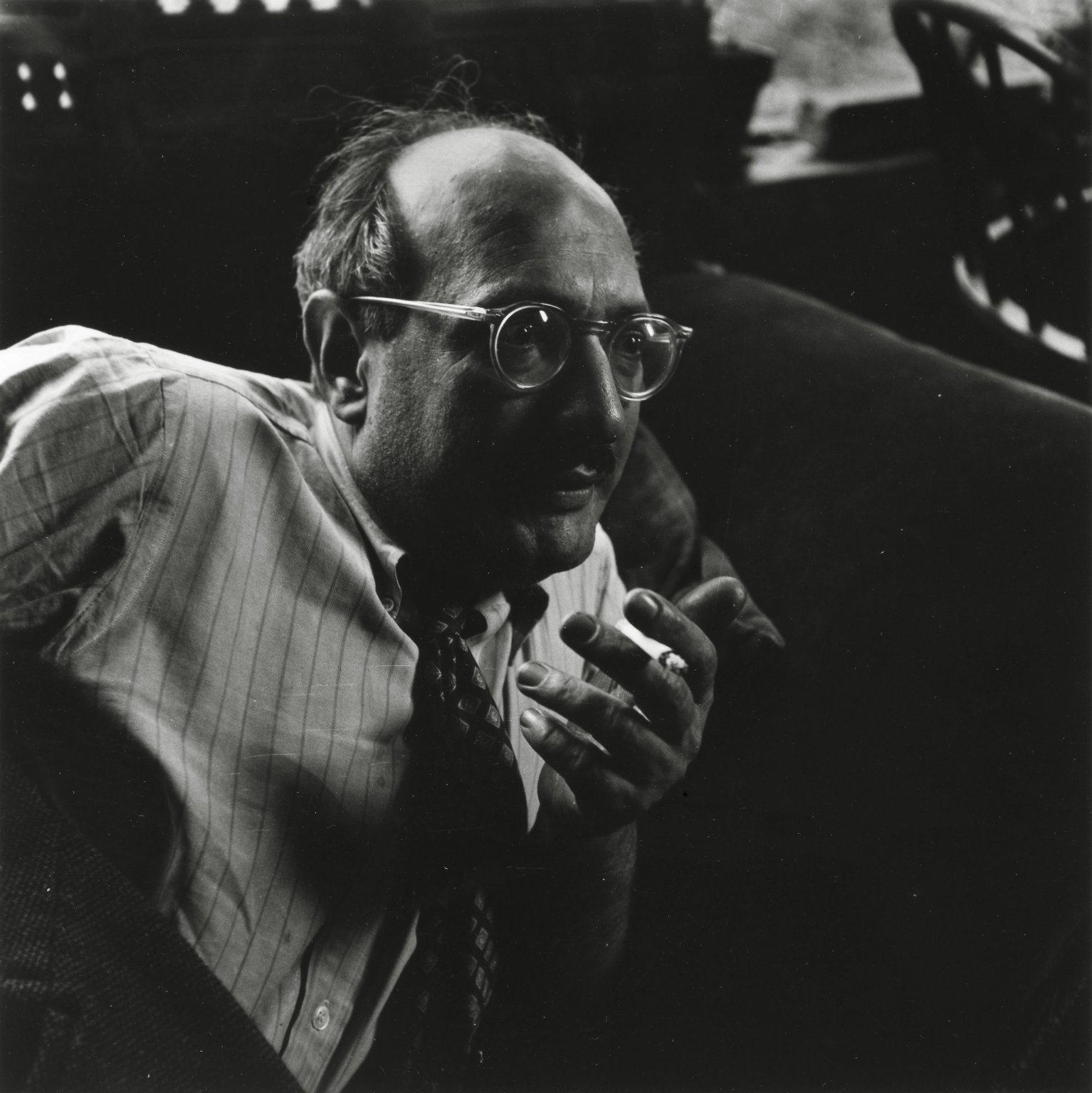
Why Mark Rothko matters
Mark Rothko sits at the top tier of the postwar market, and his work is among the clearest examples of how scarcity, museum permanence, and iconic style compound into blue-chip value. His public auction record is the USD 86.9 million paid for Orange, Red, Yellow in 2012, and a separate canvas, No. 6 (Violet, Green and Red), is reported to have changed hands for about USD 186 million in a 2014 private sale. For a collector, Rothko is a study in a market defined by extreme scarcity at the top: a small number of fully resolved classic-period canvases trade rarely and at very high prices, while the deepest holdings are locked in museums and a handful of major private collections.
- Born
- 1903-09-25, Dvinsk, Russian Empire (now Daugavpils, Latvia)
- Nationality
- American
- Media
- Painting, Works on paper
- Movement
- Abstract Expressionism, Color Field Painting, Post-War
- Education
- Yale University, 1921 to 1923 (left without degree); Parsons School of Design, New York
- Signature motifs
- Stacked rectangular color fields, Luminous soft-edged forms, Multiforms, Seagram and chapel-scale works
- Representation
- Pace Gallery
- In the Masterworks collection
- 1 works
By the numbers
- USD 86.9MAuction highOrange, Red, Yellow, Christie's New York, 2012
- ~USD 186MPrivate sale highNo. 6 (Violet, Green and Red), 2014 private sale
- 18 pairsDocumented repeat sales1996 to 2023
- Paintings published; works on paper in progressCatalogue raisonne
Selected works
Click any work to view it full screen.
Biography
Mark Rothko was born Markus Rothkowitz in 1903 in Dvinsk, then part of the Russian Empire and now Daugavpils, Latvia. In 1913 he emigrated to the United States through Ellis Island with his family. He studied at Yale for two years, from 1921 to 1923, before moving to New York and studying at the Parsons School of Design under Arshile Gorky. Rothko shared Gorky's interest in Surrealism and Jungian psychoanalysis and worked in a biomorphic style through the 1940s.
In 1947 he arrived at the compositional approach the critic Clement Greenberg would later associate with Color Field painting: large, open fields of color meant to evoke an emotional response. He devoted the rest of his career to the possibilities of color on a rectangular canvas, the stacked, soft-edged forms that became his signature. He supported himself for years by teaching children at the Center Academy of the Brooklyn Jewish Center, from 1929 to 1952.
In 1961 the Museum of Modern Art mounted his first major retrospective, which traveled to London, Amsterdam, Brussels, Basel, Rome, and Paris. In 1964 John and Dominique de Menil commissioned the large-scale paintings for the non-denominational chapel in Houston now known as the Rothko Chapel. Rothko died in New York in 1970. His works are held in most major postwar collections worldwide, including the Museum of Modern Art, the Metropolitan Museum of Art, the National Gallery of Art, the Menil Collection, and Tate Modern.
Critical reception
Rothko occupies a settled place at the center of the postwar canon, though the terms of his reputation have shifted over time. The critic Clement Greenberg situated him within the lineage he traced from Manet to Color Field painting, a formalist reading Rothko himself resisted, insisting his work was about basic human emotion rather than color relationships or pure abstraction. That tension between a formalist account and the artist's own claim to tragic and spiritual content has shaped the critical literature ever since. Major retrospectives have repeatedly reaffirmed his standing: the Museum of Modern Art's 1961 survey traveled across Europe, and institutions from Tate to the National Gallery of Art have built permanent presentations around his work, most notably the Seagram murals at Tate Modern and the meditative environment of the Rothko Chapel in Houston. Where skepticism surfaces, it tends to question whether the work can carry the metaphysical weight its admirers assign it, but the consensus that Rothko is one of the essential painters of the twentieth century has held firm for decades.
Watch
Market
Rothko's market is thin at the very top and extraordinarily expensive when it trades. The public auction record, USD 86.9 million for the 1961 canvas Orange, Red, Yellow at Christie's in 2012, sat well above its high estimate. The headline figure most often cited for the artist, about USD 186 million for No. 6 (Violet, Green and Red), was a 2014 private sale rather than an auction result and should be read in that light. Internal records track 18 repeat-sale pairs from 1996 to 2023, a small series that reflects how rarely the best works come to market rather than any lack of demand.
The classic-period canvases of the 1950s and early 1960s command the strongest prices, while works on paper and earlier pieces trade at very different levels. The scarcity of fully resolved major canvases is the defining feature of the market: supply is constrained by museum permanence and long-term private holding.
Top auction results
| Work | Price | Sale |
|---|---|---|
| Orange, Red, Yellow (1961) | USD 86,882,500 | Christie's, New York, 2012-05-08 |
Selected exhibitions
| Years | Exhibition | Venues |
|---|---|---|
| 2026 | Rothko in Florence | Palazzo Strozzi, Florence |
| 2026 to 2029 | Rothko. From the Family Collection | Rothko Museum (Rotko Muzejs), Daugavpils, Latvia |
| 2023 | Mark Rothko: Reflection | Museum of Fine Arts, Boston |
| 1961 to 1963 | Mark Rothko | Museum of Modern Art, New York; traveling to London, Amsterdam, Brussels, Basel, Rome, Paris |
Museum collections
- Museum of Modern Art, New York
- The Metropolitan Museum of Art, New York
- National Gallery of Art, Washington, D.C.
- Tate Modern, London
- The Menil Collection and Rothko Chapel, Houston
Authentication and provenance
Catalogue raisonne published.
The catalogue raisonne of paintings is published and held in reference; a works-on-paper catalogue raisonne is in progress online, hosted with the National Gallery of Art and covering the National Gallery and Rothko family holdings first, with public and private collections to follow. The Estate of Mark Rothko is represented by Pace Gallery. There is no certificate of authenticity program; verification runs through the catalogue raisonne and estate.
Primary reference: https://www.markrothko.org/
What collectors should know
Rothko's market is one where supply, not demand, sets the terms. The signature classic-period canvases rarely come up, and when they do, prices reflect that scarcity. Works on paper and smaller or earlier pieces are more available and trade far below the canvas record, so period, medium, and condition drive value. Rothko's paint surfaces are notoriously delicate, and condition is a central part of due diligence. Authentication runs through the catalogue raisonne and the estate, represented by Pace Gallery; the paintings catalogue is published, while the works-on-paper catalogue raisonne is being released online in stages, so a buyer should confirm whether a given work on paper is already documented.
Further reading and resources
Data current as of 2026-06-18.

