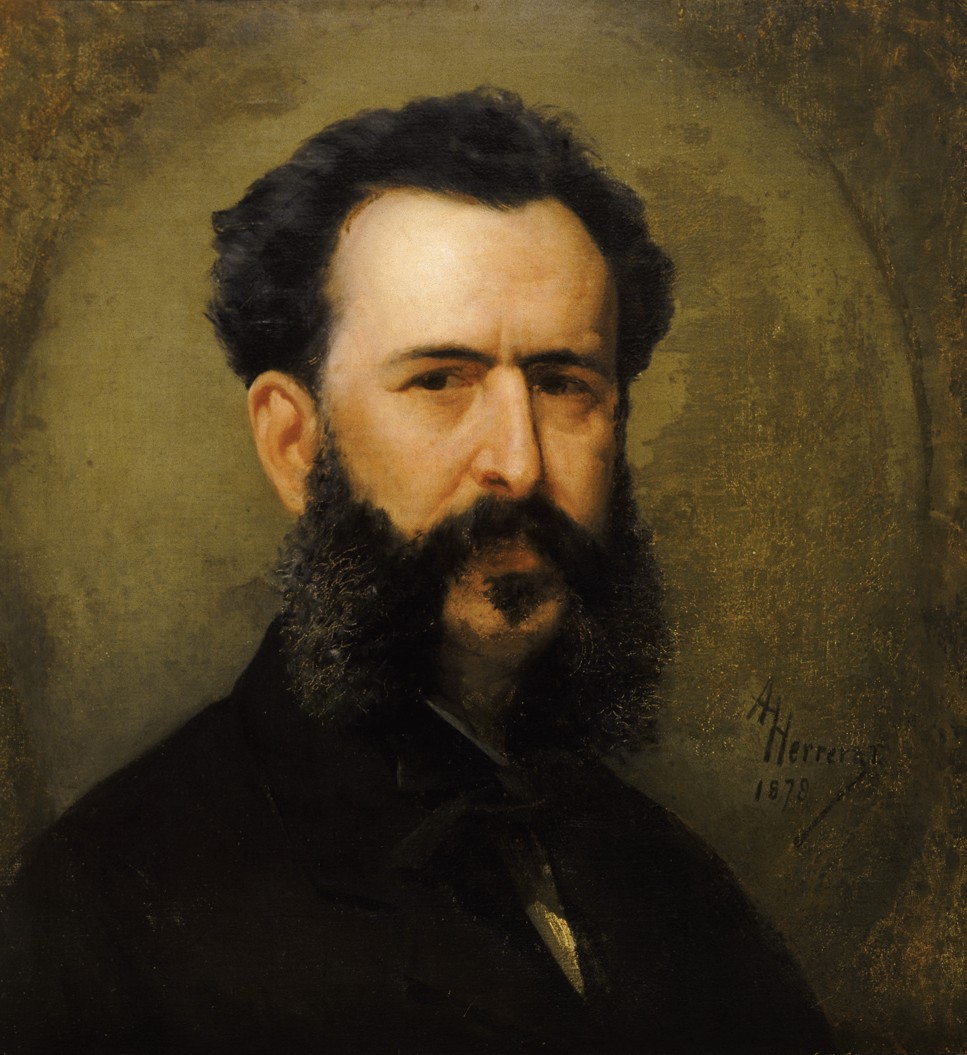
Why Martín Tovar y Tovar matters
Martín Tovar y Tovar was the leading history painter and portraitist of nineteenth century Venezuela, the artist most responsible for the visual record of the country's independence era. His murals for the Salón Elíptico of the national Capitol in Caracas, depicting the battles of Carabobo, Boyacá, Junín, and Ayacucho, remain the standard national images of that history to this day. For a collector, he represents a case in which an artist's importance is primarily historical and civic rather than driven by an active commercial market: his most significant works sit in Venezuelan public institutions rather than circulating regularly at auction.
- Born
- 1827-02-10, Caracas, Venezuela
- Nationality
- Venezuelan
- Media
- Painting
- Movement
- "19th-century academic painting", "Venezuelan history painting"
- Education
- Studied under Celestino Martínez, Antonio José Carranza, and Carmelo Fernández in Caracas; Real Academia de Bellas Artes de San Fernando, Madrid, 1850 to 1852; atelier of Léon Cogniet, Paris, from 1852.
- Signature motifs
- "History painting of Venezuelan independence", "Official state portraiture", "Battle scenes (Carabobo, Boyacá, Junín, Ayacucho)"
By the numbers
- 1867Gold MedalExposition Universelle, Paris
- 1869Academy directorDirector, Academy of Drawing and Painting, Caracas
- 1983National PantheonRemains transferred to the Panteón Nacional, Caracas
Selected works
Click any work to view it full screen.
Biography
Tovar y Tovar was born in Caracas on 10 February 1827. He received his first instruction in drawing at the home of Celestino Martínez, then studied with Antonio José Carranza at the Academia de Dibujo and with Carmelo Fernández at the Colegio de La Paz.
In 1850 he traveled to Europe and entered the Real Academia de Bellas Artes de San Fernando in Madrid, where he studied until 1852. He then moved to Paris and trained in the atelier of Léon Cogniet from 1852, an experience that shaped his academic, large-scale approach to composition. He returned to Venezuela and built his reputation through international exposure, showing at the Universal Exhibition in London in 1862 and at the Exposition Universelle in Paris in 1867, where he was awarded a Gold Medal.
In 1869 he was named director of the Academy of Drawing and Painting in Caracas. From 1873, under the patronage of President Antonio Guzmán Blanco, he undertook a major commission to produce a gallery of portraits of independence heroes and other national figures, work that fed into the decoration of the Salón Elíptico in the Palacio Federal Legislativo, including his large battle paintings of Carabobo, Boyacá, Junín, and Ayacucho. In 1875 Guzmán Blanco granted him a government scholarship to continue his studies in Paris and Rome. In 1883, on the centenary of Simón Bolívar's birth, he won a Gold Medal at the Exposición Nacional in Caracas for his painting La Firma del Acta de la Independencia.
He died in Caracas on 17 December 1902. His remains were transferred to the Panteón Nacional in Caracas on 22 September 1983, a mark of his standing as a national figure.
Critical reception
Tovar y Tovar is consistently described in Venezuelan and Latin American art history as the foremost academic painter of his country's nineteenth century, credited with defining the visual language of Venezuelan independence through both official portraiture and monumental battle scenes. His training under Léon Cogniet in Paris and his Gold Medal at the 1867 Exposition Universelle are cited as evidence of his standing within the broader European academic tradition of his time. No verbatim critical assessment from a named critic in a major outlet could be confirmed in the available research, so none is quoted here.
Market
Tovar y Tovar's market is shaped by the fact that his most important paintings are civic commissions and public collection holdings rather than works that trade privately. Artprice maintains an auction-market page for the artist, but a fully documented, verified all-time auction price, with work, currency, house, and exact date, could not be confirmed from available public sources as of 2026-07-11. One reference (MutualArt) notes a 2010 record-price sale of a work titled Portrait of a Young Girl without publishing the underlying price, currency, or venue. Collectors should treat any specific price claim for this artist with caution until it can be traced to a documented sale record.
Selected exhibitions
| Years | Exhibition | Venues |
|---|---|---|
| 1862 | Universal Exhibition | London |
| 1867 | Exposition Universelle | Paris, where he was awarded a Gold Medal |
| From 1873 | Salón Elíptico commissions | Palacio Federal Legislativo, Caracas |
| 1883 | Exposición Nacional (Gold Medal for La Firma del Acta de la Independencia) | Caracas, on the centenary of Simón Bolívar's birth |
| Ongoing | Permanent collection display | Galería de Arte Nacional, Caracas |
| 2026 | Group exhibition (host institution unconfirmed) | Santiago de Compostela, Spain, 26 May to 18 September 2026 |
Museum collections
- Galería de Arte Nacional, Caracas
- Museo de Bellas Artes de Caracas
- Palacio Federal Legislativo (Capitolio), Caracas, Salón Elíptico murals
Awards and honors
- Gold Medal, Exposition Universelle, Paris (1867)
- Director, Academy of Drawing and Painting, Caracas (1869)
- Government scholarship for study in Paris and Rome, granted by President Antonio Guzmán Blanco (1875)
- Gold Medal, Exposición Nacional de Venezuela, for La Firma del Acta de la Independencia (1883)
Authentication and provenance
No catalogue raisonne.
No catalogue raisonne has been identified and no certificate-of-authenticity program is confirmed. Attribution relies on institutional provenance, including records held by the Galería de Arte Nacional in Caracas.
Primary reference: https://es.wikipedia.org/wiki/Mart%C3%ADn_Tovar_y_Tovar
What collectors should know
There is no confirmed catalogue raisonne and no confirmed certificate-of-authenticity program for this artist; attribution depends on institutional provenance, including records held by the Galería de Arte Nacional in Caracas. No current commercial gallery or estate representation could be confirmed as of 2026-07-11. The great majority of his major works are held in Venezuelan public institutions and civic buildings, which limits the pool of works available to private collectors and makes any individual auction result difficult to benchmark against a reliable price history.
Further reading and resources
Data current as of 2026-07-11.

