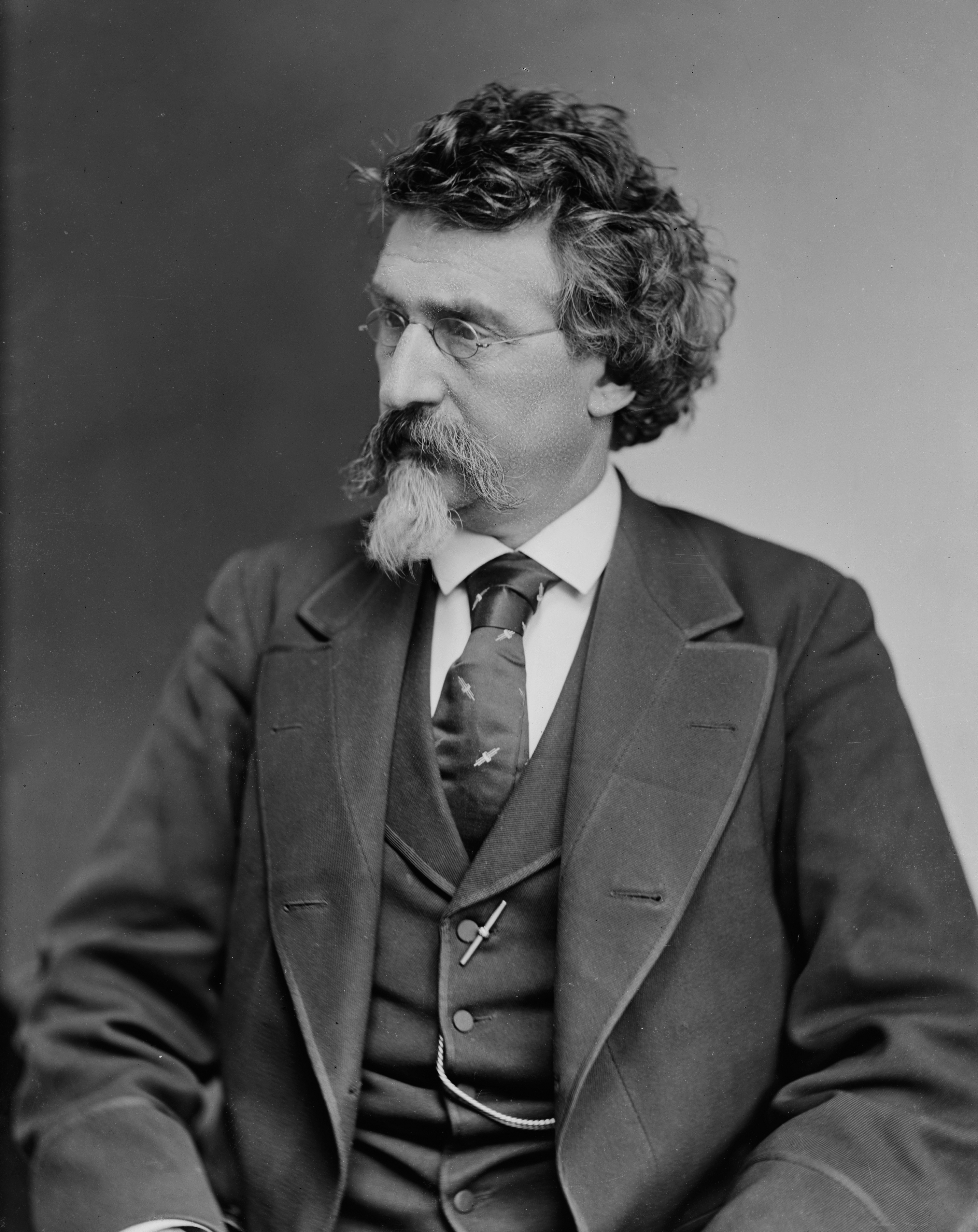
Why Mathew B. Brady matters
Mathew B. Brady is the photographer most closely associated with the visual record of the American Civil War, and he is often called the father of photojournalism for his effort to organize a team of operators to document the war systematically rather than leave it to isolated images. Before the war he had already built a national reputation as a studio portraitist, photographing prominent Americans, including roughly 18 U.S. presidents, for his "Gallery of Illustrious Americans." For collectors and historians, Brady matters less as a market figure than as a foundational one: his negatives and prints, now held largely by the Library of Congress, the National Archives, and major museums, form much of the base visual archive of mid-19th-century America.
- Nationality
- American
- Media
- Photography, Daguerreotype
- Movement
- Early American photography, Civil War documentary photography
- Education
- No documented formal schooling. Informal training in painting under William Page from about 1838 to 1839, then in the daguerreotype process under Samuel F. B. Morse in New York City from 1839.
- Signature motifs
- Civil War battlefield photography, Studio portraits of American statesmen and presidents
By the numbers
- USD 20,000Highest documented auction resultEdgar Allan Poe carte de visite, University Archives, 2020-11-19; a definitive all-time record could not be confirmed
- 1844 to 1896Active yearsNew York and Washington, D.C. studios
- 1851Great Exhibition medalCrystal Palace, London
- Approximately 18U.S. presidents photographedStudio and field portraiture; figure widely repeated in secondary sources
Selected works
Click any work to view it full screen.
Biography
Mathew B. Brady was born around 1823, likely in Warren County, New York near Lake George; no source establishes an exact birth date, and his early life is largely undocumented. At about age 16 he moved to Saratoga, New York, where he met the portrait painter William Page and became his student. In 1839 he traveled with Page to Albany and then New York City, where he continued studying painting with Page and also studied with Samuel F. B. Morse, then teaching at the University of New York, becoming one of Morse's first students in the newly developed daguerreotype process. Brady had no documented formal schooling and no degrees; his training was entirely informal, under these two mentors.
In 1844 Brady opened his first studio, the Daguerrian Miniature Gallery, at 207 Broadway in New York. His daguerreotype portraits won the top award at the American Institute's annual fair repeatedly through the 1840s and 1850s, and in 1851 he exhibited at the Great Exhibition at the Crystal Palace in London, where he received a prize medal, a result he used heavily in his subsequent advertising. He later opened a studio in Washington, D.C., where he photographed politicians and government officials alongside his New York clientele.
When the Civil War began, Brady organized and financed a corps of photographers, including Alexander Gardner and James Gibson, to document the conflict, and he is credited with the concept even though many of the surviving negatives were made by his employees rather than by Brady personally. In 1862 his New York gallery exhibited "The Dead of Antietam," battlefield photographs that brought the direct visual reality of war to a civilian audience for the first time; the New York Times wrote that October that Brady "has done something to bring home to us the terrible reality and earnestness of war," adding that if he had not laid the bodies "in our door-yards and along the streets, he has done something very like it." The war effort left Brady financially ruined, and he spent his later years in declining circumstances.
Brady died on January 15, 1896, in New York City. Sources describing his death in more detail place it in the charity ward of Presbyterian Hospital, following complications connected to a streetcar accident, and note that his funeral was paid for by veterans of the 7th New York Infantry; this additional detail is corroborated by fewer sources than the basic date and place of death.
Critical reception
Brady's standing rests on institutional and historical consensus rather than a conventional exhibition-review record. The label most consistently applied to him, "father of photojournalism," reflects his role in organizing systematic documentation of the Civil War rather than his own hand behind every negative attributed to his studio. Contemporary press response to his 1862 Antietam exhibition, quoted above from the New York Times, captured the shock of seeing battlefield dead presented as visual evidence for a home audience, and that reaction is still cited as a turning point in the public understanding of war photography. Later institutional actions, especially the Library of Congress's 1954 purchase of roughly 10,000 of his Civil War plates and negatives, effectively canonized his corpus as a foundational archive of the period. Recent scholarship has also drawn attention to the extent to which images bearing Brady's studio name, particularly Civil War battlefield work, were often made by employees such as Alexander Gardner and Timothy O'Sullivan operating under his gallery's imprint rather than by Brady personally.
Market
Brady's auction market is thin and difficult to benchmark precisely. The best-documented individual result identified is USD 20,000, paid for a possibly unique carte de visite portrait of Edgar Allan Poe, sold by University Archives on November 19, 2020, five times its presale high estimate. Major auction-house databases list additional Brady sales, but detailed realized prices are often behind paywalls or presented only as summary indices without specific lots or dates, so a reliable, ranked all-time auction record cannot currently be confirmed. Most Brady material that reaches the market consists of period salt prints, albumen prints, and studio portraits of Civil War-era and antebellum figures, generally carrying modest estimates, with value driven heavily by sitter, print quality, and documented studio attribution rather than by broad price appreciation.
Top auction results
| Work | Price | Sale |
|---|---|---|
| Edgar Allan Poe, carte de visite portrait (possibly unique) (2020) | USD 20,000 (USD 20,000) | University Archives, 2020-11-19 |
Selected exhibitions
| Years | Exhibition | Venues |
|---|---|---|
| 1844 to 1857 | Highest-award daguerreotype entries at the American Institute annual fairs | American Institute, New York |
| 1844 | Daguerrian Miniature Gallery opens | 207 Broadway, New York |
| 1851 | Great Exhibition (Fair of All Nations) | Crystal Palace, London |
| 1851 | Industrial Exhibition | Crystal Palace, New York |
| 1862 | The Dead of Antietam | Brady's Gallery, New York |
| mid-1850s to 1860s | Washington, D.C. studio operations | Washington, D.C. |
| 1954 | Purchase of approximately 10,000 Civil War plates and negatives | Library of Congress, Washington, D.C. |
Museum collections
- Smithsonian American Art Museum, Washington, D.C.
- National Portrait Gallery, Smithsonian Institution, Washington, D.C.
- Library of Congress, Washington, D.C.
- Museum of Modern Art, New York
Awards and honors
- Highest award, American Institute annual fair, New York, for daguerreotype portraiture (1844)
- Prize medal, Great Exhibition, Crystal Palace, London (1851)
- Top honors for daguerreotypes, Industrial Exhibition, Crystal Palace, New York (1851)
- Highest award, American Institute annual fair, New York (fifth and final of five top awards, 1844 to 1857) (1857)
Authentication and provenance
No catalogue raisonne.
No published catalogue raisonne exists. Brady's negatives and prints were dispersed among dealers, government purchases, and institutions after his 1896 death, and later research has flagged misattribution between Brady and his studio operators as a documented problem. Works are generally authenticated through institutional provenance, chiefly the Library of Congress and the National Archives, rather than through a certificate program.
Primary reference: https://americanart.si.edu/artist/mathew-b-brady-6668
What collectors should know
There is no catalogue raisonne for Brady, and attribution is complicated by the fact that many images bearing his studio's name, particularly Civil War battlefield work, were made by operators such as Alexander Gardner and Timothy O'Sullivan rather than by Brady himself. Because the market is thin, with only a small number of high-quality, well-provenanced prints changing hands at auction, prices can vary widely based on sitter, period, print condition, and how clearly a given print can be tied to Brady's own hand versus his studio. No current commercial gallery or estate representation could be confirmed, so collectors should expect to transact through specialist photography departments at major auction houses and dealers rather than through a living representation structure, and should prioritize institutional provenance research given the well-documented dispersal of Brady's archive after his death.
Further reading and resources
Data current as of 2026-07-11.

