Matthias Stom
Dutch (Netherlandish); a Flemish origin has been proposed but is not the scholarly consensus, b. 1600
Painting
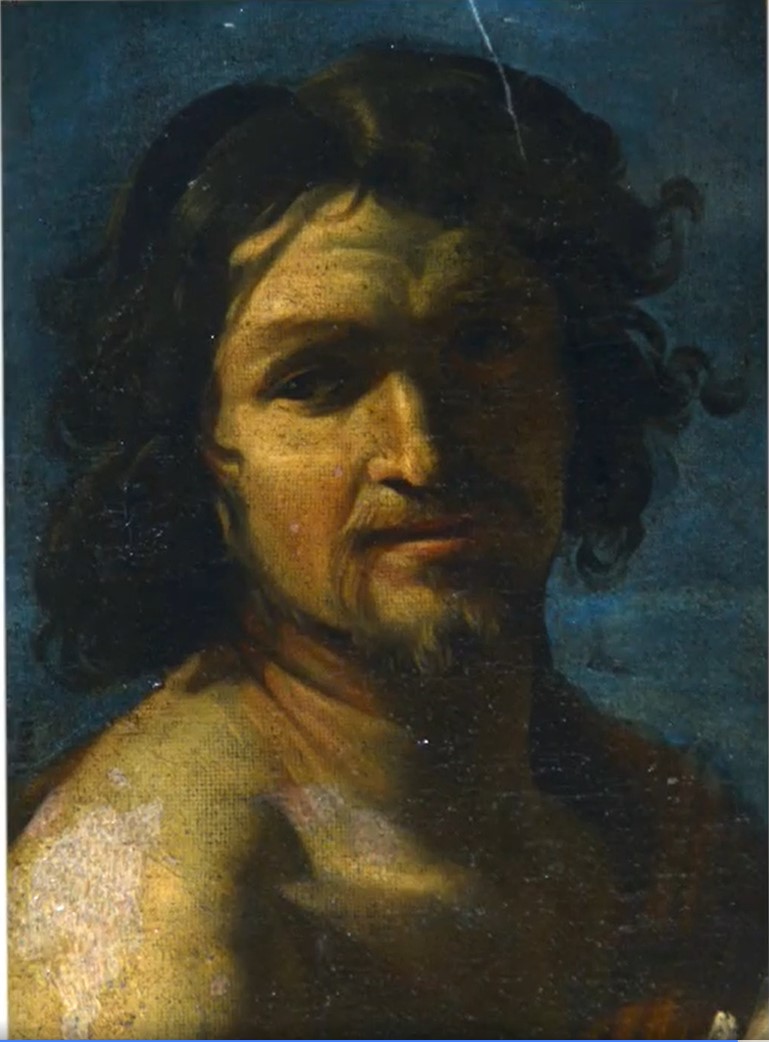
Why Matthias Stom matters
Matthias Stom, also cataloged as Matthias Stomer, was one of the last and most accomplished Dutch Caravaggesque painters working in Italy, prized for candlelit nocturnal scenes built from deep chiaroscuro and richly colored drapery. For collectors, he matters as a bridge figure between the Dutch Golden Age and Italian Baroque markets, a painter whose work sits in the Louvre, the National Gallery, the Rijksmuseum, and the Prado, yet whose biography is so thinly documented that even his exact name, birthplace, and death date remain open scholarly questions. That scarcity of documentation, combined with steady institutional demand, keeps connoisseurship and provenance research central to how his market functions.
- Nationality
- Dutch (Netherlandish); a Flemish origin has been proposed but is not the scholarly consensus
- Media
- Painting
- Movement
- Baroque, Caravaggisti
- Education
- No documented schools, degrees, or dated study period survive. Art historians have proposed, on stylistic grounds only, a possible Utrecht training under Gerard van Honthorst or another Utrecht Caravaggist, but no archival evidence supports this.
- Signature motifs
- Candlelit nocturnal chiaroscuro, Half-length biblical and genre figures
By the numbers
- GBP 842,500Auction highChrist before Pilate, Christie's London, Evening Sale of Old Master and British Paintings, 7 July 2010, credited by Christie's as a world record for the artist at auction
- None publishedCatalogue raisonneFirst dedicated monograph reported in preparation as of 2025
- NoneRepresentationDeceased Old Master; works trade through auction houses and specialist dealers
- c. 1615 to 1650sActiveDocumented activity in Rome, Naples, Sicily, and Venice
Selected works
Click any work to view it full screen.
Biography
Matthias Stom was probably born around 1600, with Amersfoort in the Dutch Republic the traditional but undocumented attribution for his birthplace. Nothing is known of his early training. The long-repeated claim that he studied under the Utrecht Caravaggist Gerard van Honthorst is now considered unlikely by most scholars, since Honthorst only returned to Utrecht from Italy in 1620 to 1621, by which point Stom, if born around 1600, would probably have already begun his training elsewhere. No documentary evidence supports any specific teacher or school, whether in Utrecht or in the Southern Netherlands.
The earliest secure documentary trace of him is a 1630 to 1631 parish record in San Nicola in Arcione, Rome, which lists him living on the strada dell'Olmo and gives his age as thirty, consistent with a birth around 1600. He worked in Rome in the Caravaggist idiom before moving south. By the late 1630s he was active in Sicily, and in 1641 he signed and dated The Miracle of Saint Isidorus Agricola in Caccamo. He is documented in Venice by 1642. After the mid-1640s the archival record falls silent. Major reference sources, including the National Gallery, state plainly that it is not known when or where he died; the best-supported scholarly position is that he died sometime after 1650 or 1652, possibly in Sicily or northern Italy. Occasional precise death dates found in minor or tertiary sources (variously 1650, 1659, or 1670) are internally inconsistent and are not supported by any cited archival record, so they are not treated as reliable here.
The artist signed his paintings "Stom," while the majority of the art-historical literature and the auction market use "Stomer." Both forms, along with "Mathias," refer to the same painter, and cataloguers should treat them as a single artist identity.
Critical reception
The Metropolitan Museum of Art characterizes Stom's mature style as built on exaggerated Caravaggesque effects of light and shadow, with a leathery handling of skin and texture well suited to his frequent depictions of elderly sitters. French-language scholarship emphasizes his skill as a colorist, noting his combination of deep shadow with vivid, costly pigments such as ultramarine and azurite blue, and his careful attention to faces as vehicles for psychological expression. No exact, attributable verbatim quotation from a named critic in a major outlet could be confirmed from the available sources, so none is reproduced here. Recent scholarship, including a University of Amsterdam research article, stresses how little is documented about Stom's life and training, and a first dedicated monograph on the artist was reported to be in preparation as of 2025, a sign that his critical and archival reassessment is ongoing rather than settled.
Market
Stom's market is that of a specialist Old Master name: steady demand from Caravaggisti and Dutch Golden Age collectors, occasional strong prices for major, well-preserved compositions, and a wide range of typical trade values for smaller or more routine studio works. Christie's has explicitly credited its sale of Christ before Pilate, at its Evening Sale of Old Master and British Paintings in London on 7 July 2010, with realizing GBP 842,500 and setting a new world record price for the artist at auction. A 2018 Sotheby's London appearance of The Supper at Emmaus, an Old Masters Evening sale, carried an estimate of GBP 100,000 to 150,000. Dealer commentary describes a broad working range for lesser Stom paintings, generally in the low thousands to low hundreds of thousands of euros, with headline results reserved for major, securely attributed compositions.
Top auction results
| Work | Price | Sale |
|---|---|---|
| Christ before Pilate | GBP 842,500 | Christie's, London, 2010-07-07 |
Selected exhibitions
| Years | Exhibition | Venues |
|---|---|---|
| 2020 to 2021 | Matthias Stom: A Caravaggesque Painter in Lombardy's Collections | Pinacoteca Tosio Martinengo, Brescia |
Museum collections
- Musee du Louvre, Paris
- National Gallery, London
- Rijksmuseum, Amsterdam
- Museo del Prado, Madrid
- Museo Thyssen-Bornemisza, Madrid
- Gemaldegalerie, Staatliche Museen zu Berlin
- Museum of Fine Arts, Houston
Authentication and provenance
No catalogue raisonne.
No catalogue raisonne of Stom's work has been published. A first dedicated monograph on the artist was reported to be in preparation as of 2025. Attribution and dating rely on connoisseurship, documentary research, and comparison across the artist's dispersed oeuvre rather than a certificate program, and cataloguing is complicated by the fact that the artist signed his works 'Stom' while much of the literature and the auction market use 'Stomer.'
Primary reference: https://www.nationalgallery.org.uk/artists/matthias-stom
What collectors should know
There is no catalogue raisonne and no certificate-of-authenticity program for Stom; attribution rests on connoisseurship, provenance, and comparison with securely documented works, a task complicated by his own use of "Stom" set against the "Stomer" form used across much of the literature and the market. He has no living gallery or estate representation, since he is a seventeenth-century painter; his works surface through Old Master specialists such as Christie's, Sotheby's, and Dorotheum rather than through primary-market dealers. Because his death date, place, and even birthplace are undocumented, collectors should expect institutions and auction houses to sometimes date and attribute individual paintings differently, and should treat any single reported price, including headline auction results, with awareness that the underlying sale record for this artist is thin and unevenly documented.
Further reading and resources
Data current as of 2026-07-16.

