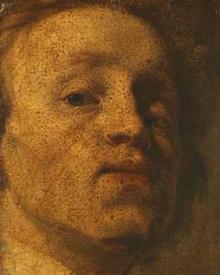
Why Matthijs Maris matters
Matthijs Maris occupies an unusual position in nineteenth-century Dutch painting: trained alongside his brothers Jacob and Willem Maris in the Realist Hague School, he pulled away from it into a hazier, visionary style of veiled figures and dreamlike atmosphere that anticipated Symbolism. His work sits in museum collections across the Netherlands, the United Kingdom, and the United States, including the Rijksmuseum, the Burrell Collection, and the Metropolitan Museum of Art. For collectors, he is a useful case study in a historical artist whose institutional standing is well documented even though his auction market is thin and irregularly recorded.
- Born
- 1839-08-17, The Hague, Netherlands
- Nationality
- Dutch
- Media
- Painting, Etching, Lithography
- Movement
- Hague School, Symbolism
- Education
- Private lessons with Isaac Cornelis Elink Sterk, 1851; Hague Drawing Academy (Koninklijke Academie van Beeldende Kunsten), 1852 to 1855; studio apprenticeship with marine painter Louis Meijer, circa 1853 to 1855; Royal Academy of Fine Arts, Antwerp, 1855 to 1858, under Nicaise de Keyser
- Signature motifs
- Veiled female figures, Misty dreamlike atmospheres
By the numbers
- 1839 to 1917LifespanBorn The Hague, died London
- Hague School to SymbolismMovementLater work influenced by the Pre-Raphaelites
- Rijksmuseum, Amsterdam, 2017 to 2018Major retrospectiveFirst large monographic museum survey, marking the centenary of the artist's death
- 8Museum collectionsIncluding the Rijksmuseum, the Burrell Collection, and the Metropolitan Museum of Art
Biography
Matthijs Maris was born in The Hague, Netherlands, on 17 August 1839. After primary schooling and private French lessons, he took his first painting lessons in 1851 from Isaac Cornelis Elink Sterk, then studied at the Hague Drawing Academy (Koninklijke Academie van Beeldende Kunsten) from 1852 to 1855. During this period he also worked in the studio of the marine painter Louis Meijer. With a monthly grant from Queen Sophie, he followed his brother Jacob to the Royal Academy of Fine Arts in Antwerp, studying under Nicaise de Keyser from 1855 to 1858 before returning to The Hague.
Back in the Netherlands, Matthijs worked closely with his brothers Jacob and Willem, and his early work is associated with the Hague School's tonal Realism. After 1869 he moved to Paris, where his career gained momentum, before settling permanently in London in 1877. In his later decades his painting shifted decisively away from Realism toward a personal, symbolic idiom built around veiled or half-formed female figures and soft, misty compositions, a direction often linked to the influence of the Pre-Raphaelites even though his handling remained distinct from theirs. He remained in London for the rest of his life and died there, following a short illness, on 22 August 1917 at the age of seventy-eight. He was buried in London.
Critical reception
Maris's reputation rests on the split between two phases of his career: the early, Hague School-aligned realism he shared with his brothers, and the later, more private visionary manner that dominates his mature output. Curators and museums have treated the later "dream" paintings, the veiled women and soft, indistinct interiors, as the more historically significant body of work, and the concentration of these late paintings and charcoals in the Burrell Collection in Glasgow has made that collection central to modern scholarship on him. The Rijksmuseum organized a large monographic retrospective in 2017 to 2018, marking the centenary of the artist's death, framed by the museum as a rediscovery of an artist whose late work had been comparatively overlooked relative to his Hague School contemporaries. No exact, attributable verbatim quotation from a major named critic could be confirmed for this profile, so none is reproduced here.
Market
Matthijs Maris is not currently represented by any commercial gallery or estate; his work reaches the market through museums, scholarship, and a small number of secondary-market dealers, among them Simonis & Buunk in the Netherlands. Publicly available auction databases do not yield a clearly documented, fully sourced all-time auction record for the artist, so this profile does not assert one. Secondary-market activity for his recurring veiled-figure subject, sometimes catalogued as The Bridal Veil or Dutch Veiled Lady, surfaces periodically through Dutch and UK dealers and auction houses, but specific prices could not be independently confirmed with adequate sourcing for this profile, so none are asserted here. What is clear is that his overall auction presence is thin and inconsistently recorded relative to his museum standing.
Selected exhibitions
| Years | Exhibition | Venues |
|---|---|---|
| 2017 to 2018 | Matthijs Maris | Rijksmuseum, Amsterdam |
Museum collections
- Rijksmuseum, Amsterdam
- Kunstmuseum Den Haag, The Hague
- The Mesdag Collection, The Hague
- Kroller-Muller Museum, Otterlo
- Burrell Collection, Glasgow Museums
- National Gallery, London
- Metropolitan Museum of Art, New York
- The Phillips Collection, Washington, D.C.
Authentication and provenance
No catalogue raisonne.
No published catalogue raisonne has been identified for Matthijs Maris. Attribution and authentication in the current market rely on provenance research and comparison with the artist's well-documented institutional holdings, notably at the Rijksmuseum, the Burrell Collection, and the Mesdag Collection.
Primary reference: https://www.britannica.com/biography/Matthijs-Maris
What collectors should know
There is no catalogue raisonne for Matthijs Maris and no current gallery or estate structure managing his market, which means attribution leans heavily on provenance research and comparison with the extensive, well-documented holdings at institutions such as the Rijksmuseum, the Burrell Collection, the Mesdag Collection, and the Metropolitan Museum of Art. His auction presence is thin and inconsistently recorded in public sources, so any single sale result should be treated with caution rather than as a stable benchmark. Works, particularly variants of his recurring veiled-figure compositions, surface mainly through specialist Dutch and UK dealers, and buyers should expect to rely on connoisseurship and documented exhibition history rather than a centralized market record.
Further reading and resources
Data current as of 2026-07-13.

