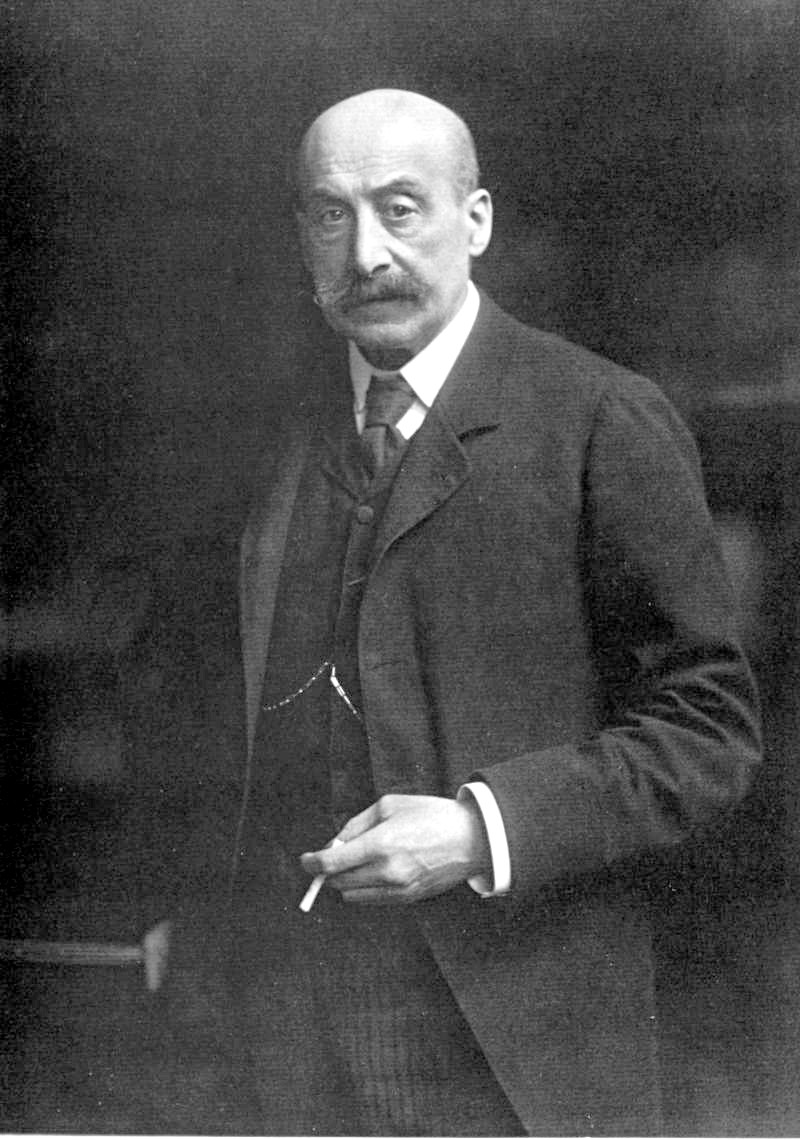
Why Max Liebermann matters
Max Liebermann was the foremost German Impressionist and a founding president of the Berlin Secession, the artists' association that helped bring German painting into dialogue with French Impressionism and modern European art at the turn of the twentieth century. His long institutional career, capped by forced resignation from public office under Nazi persecution and his death in Berlin in 1935, makes his work a touchstone for both German Modernism and twentieth-century European history. For collectors, he represents a historically significant, museum-anchored market where paintings and works on paper trade at very different levels and where provenance from the 1930s and 1940s deserves particular care.
- Born
- 1847-07-20, Berlin, Kingdom of Prussia (now Germany)
- Nationality
- German
- Media
- Painting, Printmaking
- Movement
- German Impressionism, Berlin Secession
- Education
- Grand Ducal Saxon Art School (Weimar Art School), circa 1868 to 1872; private studio training under Carl Steffeck, Berlin, circa 1866 to 1868; briefly enrolled at Friedrich Wilhelm University, Berlin, 1866 to 1868, no degree completed.
- Signature motifs
- Garden and beach landscapes, Dutch and German genre scenes, Portraiture
- Representation
- No confirmed commercial gallery or estate representation as of 2026. His work is stewarded by the Liebermann-Villa am Wannsee, Berlin, and circulates through auction houses and secondary-market dealers.
By the numbers
- GBP 1.9M (approx. USD 3.7M)Auction highBlumenstauden vor dem Gartnerhauschen nach Norden, Sotheby's London, 2006
- Berlin SecessionFounding presidentElected 1898
- 1868 to 1935Career spanFrom enrollment at the Weimar Art School to his death in Berlin
- 14+ institutions confirmedMuseum collectionsIncluding the Metropolitan Museum, Musee d'Orsay, and Alte Nationalgalerie Berlin
Selected works
Click any work to view it full screen.
Biography
Max Liebermann was born on 20 July 1847 in Berlin. After finishing secondary school in Berlin in 1866, he briefly enrolled at Friedrich Wilhelm University, reported variously as studying chemistry, law, or philosophy, but left by 1868 without completing a degree after spending much of his time drawing and training privately with the Berlin painter Carl Steffeck. Later that year he enrolled at the Grand Ducal Saxon Art School in Weimar, where he studied under Ferdinand Pauwels and Karel Verlat until 1872. His early genre paintings of laborers and rural life, including Women Plucking Geese (1872), established him as a serious realist painter influenced by the Dutch masters and by time spent near Barbizon studying the work of Camille Corot.
Liebermann settled permanently in Berlin, married Martha Liebermann, and by the 1890s had shifted from somber realism toward the lighter palette and garden and beach subjects associated with Impressionism, working from his house and garden at Wannsee. He held a fiftieth-birthday solo exhibition at the Prussian Academy of Arts, Berlin, in 1897 and was elected to the academy the following year. In 1898 he also became the founding president of the Berlin Secession, the breakaway exhibition society that championed modern art against the conservative academic establishment, though some sources date the start of his presidency to 1899. He went on to serve as president of the Prussian Academy of Arts. In 1933, following the Nazi seizure of power and the imposition of anti-Jewish measures, Liebermann, who was Jewish, resigned his academy presidency and was later stripped of his honorary titles; he withdrew from public life. He died on 8 February 1935 at his home on Pariser Platz in Berlin, of natural causes according to the Leo Baeck Institute.
Critical reception
Liebermann is consistently described by museums and market platforms as one of the most important representatives of German Impressionism and a pioneer of Modernism in Germany, credited with steering German painting away from academic historicism and toward a modern, light-filled naturalism. His leadership of the Berlin Secession from 1898 placed him at the center of the German avant-garde of his era, and his forced resignation in 1933 is treated by historians as emblematic of the Nazi assault on Jewish cultural figures. Renewed institutional attention, including the 2025 to 2026 exhibitions at the Museum Frieder Burda in Baden-Baden and the Museum Barberini in Potsdam, has reframed his garden and coastal paintings within a broader European Impressionist context rather than as a purely German phenomenon. No exact verbatim critical assessment from a major outlet could be confirmed in current sourcing, so none is quoted here.
Market
Liebermann's auction record is Blumenstauden vor dem Gartnerhauschen nach Norden (1928), a garden scene that sold for GBP 1,900,000 (roughly USD 3.7 million) at Sotheby's London on 8 February 2006, more than doubling its high estimate. His top paintings reach similar multi-million-dollar levels, while prices for his works on paper are considerably lower. A more recent benchmark came in November 2024, when Sotheby's Cologne sold Gartenlokal am Wannsee (Haus am See) (1933) for USD 765,500 as the headline lot of a Modern and Contemporary Art sale, indicating continued demand for his late garden subjects well below the 2006 peak. No auction house, gallery, or estate currently claims exclusive representation of his work; it circulates through the general secondary market.
Top auction results
| Work | Price | Sale |
|---|---|---|
| Blumenstauden vor dem Gartnerhauschen nach Norden (1928) (1928) | USD 3,725,584 (GBP 1,900,000) | Sotheby's, London, 2006-02-08 |
| Gartenlokal am Wannsee (Haus am See) (1933) (1933) | USD 765,500 | Sotheby's, Cologne, 2024-11-12 |
Selected exhibitions
| Years | Exhibition | Venues |
|---|---|---|
| 2026 | Avant-Garde: Max Liebermann and Impressionism in Germany | Museum Barberini, Potsdam (28 February to 7 June 2026) |
| 2025 to 2026 | Impressionism in Germany: Max Liebermann and His Times | Museum Frieder Burda, Baden-Baden (through 8 February 2026) |
| 2026 | Pastels exhibition | Liebermann-Villa am Wannsee, Berlin (summer 2026) |
| 1897 | 50th-birthday solo exhibition | Prussian Academy of Arts, Berlin |
| 1880 | Paris Salon | Paris |
Museum collections
- Alte Nationalgalerie, Berlin
- Metropolitan Museum of Art, New York
- Hermitage Museum, St. Petersburg
- Musee d'Orsay, Paris
- Stadel Museum, Frankfurt am Main
- Van Gogh Museum, Amsterdam
- National Gallery of Art, Washington, D.C.
- Art Institute of Chicago
- Belvedere, Vienna
- Neue Pinakothek, Munich
- Museo Nacional Thyssen-Bornemisza, Madrid
- Albertinum, Staatliche Kunstsammlungen Dresden
- Folkwang Museum, Essen
- Leo Baeck Institute, New York (archive and works)
Awards and honors
- Honorable mention, Paris Salon (1880)
- Founding president, Berlin Secession (1898)
- Elected to the Prussian Academy of Arts, Berlin (1898)
Authentication and provenance
No catalogue raisonne.
No published catalogue raisonne is confirmed by current research. Some paintings carry documented Nazi-era provenance gaps that have been the subject of formal restitution review. Collectors should verify works through the Liebermann-Villa am Wannsee and standard provenance research rather than a catalogue raisonne.
Primary reference: https://liebermann-villa.de/en/museum/max-liebermann/
What collectors should know
There is no confirmed published catalogue raisonne for Liebermann's paintings, and no gallery or estate currently represents his work in the market; verification runs through the Liebermann-Villa am Wannsee and standard provenance research. Because he was a persecuted Jewish artist under the Nazi regime, some works carry documented ownership gaps from the 1930s and 1940s, and at least one painting has been the subject of a formal Dutch restitution recommendation; buyers should expect and request full Nazi-era provenance documentation. Auction data also shows a wide spread between his top paintings, which can reach several million dollars, and his works on paper, which trade at a small fraction of that level, so collectors should treat headline prices as specific to medium and subject rather than representative of the whole market.
Further reading and resources
Data current as of 2026-07-09.

