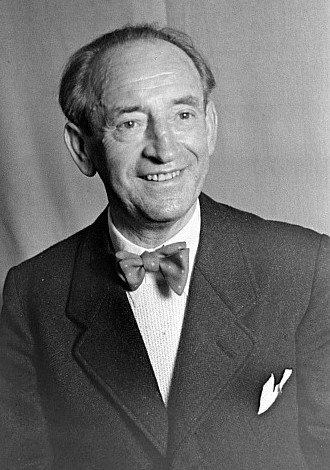
Why Max Pechstein matters
Max Pechstein was a founding member of Die Brucke and, in 1923, among the first Expressionist artists admitted to the Prussian Academy of Arts, a marker of how quickly the movement moved from the avant garde fringe to official recognition. That recognition was then reversed by the Nazi regime, which labeled his work degenerate and removed hundreds of his paintings from German museums, before a full postwar rehabilitation that included a senior professorship in Berlin and the country's highest civilian honor. For collectors, his career is a case study in how state persecution, confiscation, and later restitution can shape the provenance and supply of an artist's surviving work.
- Born
- 1881-12-31, Zwickau, Germany
- Nationality
- German
- Media
- Painting, Printmaking, Woodcut
- Movement
- German Expressionism, Die Brucke, Novembergruppe
- Education
- Kunstgewerbeschule (School of Applied Arts), Dresden, 1900 to 1903; Konigliche Akademie der bildenden Kunste (Royal Academy of Fine Arts), Dresden, 1903 to 1906, under Otto Gussmann
- Signature motifs
- Bathers and nude figures in landscape, Bold Expressionist color, Woodcut printmaking
- Representation
- Galerie Ludorff, Dusseldorf, Galerie Schuller, Munich
By the numbers
- EUR 3.5M (about USD 4.66M)Auction recordWeib mit Inder auf Teppich (+ Fruchte II, verso), 1910; Ketterer Kunst, Munich, 10 Dec 2011
- EUR 3.04MSecond-highest documented saleSelbstbildnis, liegend, Lempertz, Cologne, 21 Nov 2015
- 1948 and 1953Venice Biennale
- Elected 1923Prussian Academy of ArtsAmong the first Expressionists admitted
Selected works
Click any work to view it full screen.
Biography
Hermann Max Pechstein was born on 31 December 1881 in Zwickau, Germany, and trained first as a decorator and house painter before entering the Kunstgewerbeschule (School of Applied Arts) in Dresden in 1900. He continued at the Royal Academy of Fine Arts in Dresden from 1903 to 1906, studying under Otto Gussmann and receiving the Saxon State Prize on completion. He joined Die Brucke in 1906. His 1909 inclusion in the Berlin Secession's spring exhibition was, in his own later account, his artistic breakthrough, and in 1913 the Fritz Gurlitt Kunstsalon in Berlin gave him his first major solo exhibition. He was also a founder of the Neue Sezession in Berlin and an active member of the Novembergruppe.
In 1923 Pechstein became one of the first Expressionist artists elected to the Prussian Academy of Arts, which also awarded him a professorship. Under the Nazi regime his work was condemned as degenerate art: more than 300 of his paintings were removed from German museums, and a number were displayed in the notorious 1937 Entartete Kunst exhibition in Munich. He remained in Germany through the war and reemerged publicly in July 1945 in the first large exhibition mounted after the war by the Kammer der Kunstschaffenden, and served as a juror and exhibitor at the landmark Allgemeine Deutsche Kunstausstellung in Dresden in August 1946. Postwar honors followed steadily: honorary citizenship of Zwickau and the founding of the Max Pechstein Prize in his name in 1947, a full professorship and masterclass directorship at the Berlin Academy in November 1949, honorary senator status at Berlin's fine arts university, participation in the Venice Biennale in 1948 and 1953, and, in December 1952, the Grand Cross of the Order of Merit of the Federal Republic of Germany, making him the first painter to receive it. He died in Berlin, in the Schmargendorf district, on 29 June 1955, from the effects of tuberculosis, according to the Brucke-Museum.
Critical reception
Pechstein's contemporaries, including the critic Paul Fechter, who published one of the first books on Expressionism in 1914, at times regarded him as the leading figure of Die Brucke, a view the Los Angeles County Museum of Art's Unframed blog notes was unwelcome to Ernst Ludwig Kirchner. His work was central enough to the movement to draw specific Nazi attention: the 1937 Entartete Kunst exhibition and the mass confiscation of his paintings marked him as one of the regime's primary targets among the Expressionists. Postwar institutional treatment has favored steady rehabilitation over reinvention, with LACMA's 2014 survey Expressionism in Germany and France: From Van Gogh to Kandinsky presenting him within the broader movement, and a 2025 to 2026 touring retrospective, organized with the Max Pechstein Foundation and the Kunstsammlungen Zwickau, traveling to the Buchheim Museum and Lentos Kunstmuseum in Linz. Scholars generally note that his historical importance has sometimes been overshadowed by Kirchner's, even as his early role in Die Brucke and his singular path through persecution and honor remain distinctive.
Market
Pechstein's auction record is the double sided painting Weib mit Inder auf Teppich, with Fruchte II on the verso, 1910, sold at Ketterer Kunst in Munich on 10 December 2011 for EUR 3.5 million, reported at the time as the most expensive work sold at a German auction that year; Artnet lists the same sale at USD 4,658,011 on a currency converted basis. The next highest documented result for a distinct work is Selbstbildnis, liegend (Self-portrait, reclining), sold at Lempertz in Cologne on 21 November 2015 for EUR 3,036,000. Lower, single sourced results reported only by Wikipedia include The Yellow Mask I (1910), said to have sold at Sotheby's in 1999 for about USD 1.37 million, and Zirkus mit Dromedaren (c. 1920), said to have sold in London in 2008 for about GBP 1.9 million; treat both with caution pending a primary auction record. HENI's market data describes roughly USD 134.6 million in cumulative auction turnover for the artist, with about USD 8.37 million transacted in a recent period, consistent with a market that is active but comparatively thin.
Top auction results
| Work | Price | Sale |
|---|---|---|
| Weib mit Inder auf Teppich (+ Fruchte II, verso) (1910) | USD 4,658,011 (EUR 3,500,000) | Ketterer Kunst, Munich, Germany, 2011-12-10 |
| Selbstbildnis, liegend (Self-portrait, reclining) | EUR 3,036,000 | Lempertz, Cologne, Germany, 2015-11-21 |
| The Yellow Mask I (1910) | USD 1,370,000 | Sotheby's, 1999 |
| Zirkus mit Dromedaren (1920) | GBP 1,900,000 | London, 2008 |
Selected exhibitions
| Years | Exhibition | Venues |
|---|---|---|
| 1909 | Spring exhibition of the Berlin Secession | Berlin Secession, Berlin |
| 1913 | First major solo exhibition | Fritz Gurlitt Kunstsalon, Berlin |
| 1937 | Entartete Kunst (Degenerate Art) | Munich, touring Nazi state exhibition |
| 1945 | First exhibition by the Kammer der Kunstschaffenden | Germany, first large postwar art exhibition |
| 1946 | Allgemeine Deutsche Kunstausstellung | Dresden (juror and exhibitor) |
| 1948 and 1953 | Venice Biennale | La Biennale di Venezia, Venice |
| 2014 | Expressionism in Germany and France: From Van Gogh to Kandinsky | Los Angeles County Museum of Art |
| 2025 to 2026 | Max Pechstein, Visions of a Better World | Buchheim Museum, Bernried; Lentos Kunstmuseum, Linz (April to August 2026), organized with the Max Pechstein Foundation and Kunstsammlungen Zwickau |
Museum collections
- Museum of Modern Art, New York
- Kunstsammlungen Zwickau, Max Pechstein Museum
- Brucke-Museum, Berlin
- Saint Louis Art Museum
Awards and honors
- Saxon State Prize, on completion of studies at the Dresden Academy (1906)
- Elected member, Prussian Academy of Arts (among the first Expressionists admitted) (1923)
- Honorary Citizen of Zwickau; Max Pechstein Prize established in his honor (1947)
- Full professor and masterclass director, Berlin Academy of Fine Arts (1949)
- Grand Cross of the Order of Merit of the Federal Republic of Germany (first painter to receive it) (1952)
Authentication and provenance
No catalogue raisonne.
No published catalogue raisonne was confirmed in research for this profile. Verification generally runs through the Max Pechstein Foundation and the Kunstsammlungen Zwickau, Max Pechstein Museum, which steward the artist's archive and estate.
Primary reference: https://www.bruecke-museum.de/en/sammlung/kuenstler/793/max-pechstein
What collectors should know
No catalogue raisonne could be confirmed for Pechstein in current research; verification runs primarily through the Max Pechstein Foundation and the Kunstsammlungen Zwickau, Max Pechstein Museum, which hold the largest concentration of his work and archival material. Provenance research matters more than usual for this artist: the large scale Nazi era seizure of his paintings in the 1930s has produced documented restitution matters, including a settlement with an heir that preceded a Christie's sale reported by The Art Newspaper in 2023. Collectors should note that the widely cited USD 4.66 million figure and the EUR 3.5 million Ketterer Kunst figure are the same 2011 sale reported in two currencies, and that the next best documented result, the 2015 Lempertz sale of Selbstbildnis, liegend, sits meaningfully lower at EUR 3,036,000.
Further reading and resources
Data current as of 2026-07-09.

